
 E-Paper



The Padmanabhaswamy Temple is much more than its riches: Manu Pillai
The author explains the significance of the Supreme Court verdict regarding the richest temple in the country and the Travancore royal family’s forgotten glory


On 13th July, the Supreme Court of India concluded a decade long dispute concerning the Padmanabhaswamy Temple in Thiruvananthapuram, Kerala, and its managerial affairs. The temple is the wealthiest in India and has attracted interest and curiosity for its riches and historic artefacts – many of which are yet to be unearthed.
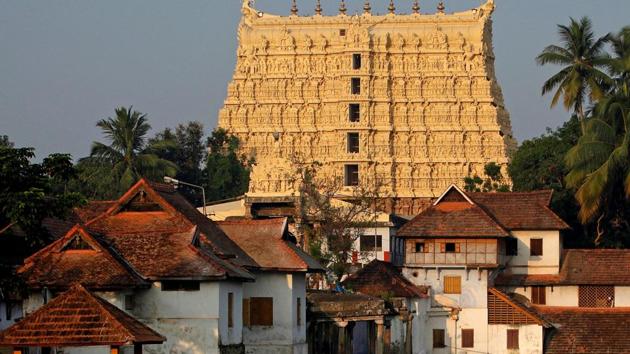
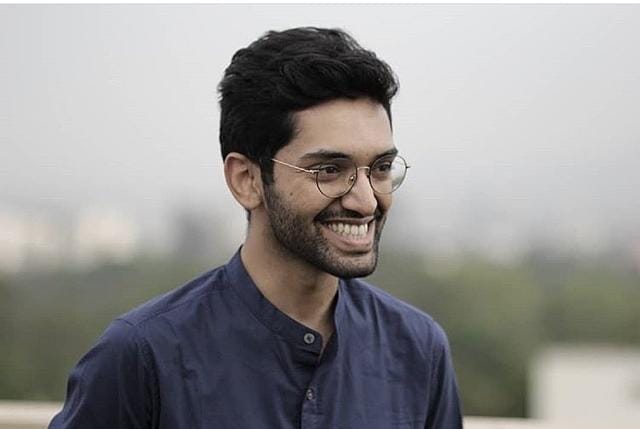
Author and historian Manu Pillai, in his Sahitya Akademi Yuva Puraskar award-winning work, The Ivory Throne, wrote extensively about the history of the Travancore Royal family on whose side the court has ruled. The issue arose when in 2011 Kerala High Court took away the managerial rights of the temple from the erstwhile royal family and handed it to the Kerala government. After the royal family challenged the ruling, the Supreme Court overturned the order, and according to Pillai, its judgement is “a welcome compromise”. “It is good that there is closure for most part on the subject,” says Pillai, adding, “the judgement offers a compromise between the traditional prerogatives of a single family in a public institution, and the necessary checks and balances required to preserve such a major institution.”
According to Pillai, the judgement maintains that “both sides have had to concede something, and so both have been accommodated.” He further explains the conclusive judgement by saying, “While ritual aspects, ceremonial details, and the fundamental practices around the temple remain the domain of the ex-royal family of Travancore, everyday management has been delegated to a committee of outsiders, replacing unilateral control with a more sensible, sustainable system of administration. The hereditary trustee retains rights, and for exceptional matters his consent is mandatory, but routine authority will reside with the committee, on which the head priest also has a seat, along with government authorities and a judicial figure. Both sides have had to concede something, and so both have been accommodated. Ironically, until the eighteenth century, the temple was controlled by a committee before a rajah grew overpowerful, so the return of a similar system is history coming full circle.”
The temple’s vaults have remained a mystery throughout the years and of the five vaults that have been opened out of six, the estimated value of its treasure is one trillion dollars. But the temple is much more than the treasure, feels Pillai. “The riches frankly don’t interest me beyond a point, but it is important to note certain things. For instance, we often find suggestions that the temple’s wealth should be put to public use — building roads, funding institutions, even settling the national debt. But as a student of history I find this uncomfortable; the gold in its vaults are not new blocks of precious metal. These are old artefacts—crowns, figurines, jewels — that are part of our cultural heritage. You cannot melt down 1000 years of material history and make roads; that would be criminal vandalism,” he says.
The author adds that, perhaps, if a few items are put out for display, it might ignite interest among many. He says, “While I understand the resistance from devotees to displaying everything in a museum (which would probably also be unsafe), I do feel there is a case to be made for a few items to be put on display. If nothing else, it would generate interest in the past, and in the temple itself. As for claims that this would be against custom, any historian can tell you that custom has often been very flexible and responsive to change; tradition does not survive by being rigid, but in fact by adapting with time through innovations.”
He adds, “ And yes, the temple is a lot more than the treasure. The legends, for instance, tell us a great deal of historical significance—one, for instance, hints that this was originally a place of worship for people later deemed untouchable. So too the architecture, the way it contributed to the evolution of the city and its urban spaces, the networks of patronage that formed around it, and so on. Equally, however, it also reminds us of feudalism, the oppressions of caste, and a lot that was unfortunate in our history. It is both a symbol of human ingenuity and kingly magnificence, as much as a reminder of the sufferings of those who were denied access to it, or a place in that system.”
Pillai, whose ancestors were from the Kingdom of Travancore, became interested in political history of the royals and their legacy for their ability to establish themselves as the greatest power in the region. “I was interested in the political history of the place: how a relatively minor royal line conquered territory after territory in Kerala and established itself as the greatest power in the region; how ritual and religion were harnessed to legitimize the fruits of bloody war and ruthless conquest; how this new edifice of power was then sustained for centuries, including through elaborate court protocols and the invention of new traditions; and how, like a house of cards, it began to come tumbling down by the 1940s, with Independence moderating the blow of rising communism in a princely dominion,” he says.


