Interview: Anjum Hasan - “In a strange way, liberalism has led to fundamentalism.”
On her novel History’s Angel’s exploration of discrimination, consumerism, fundamentalism, the spectre of Partition, and the death of the imagination
Updated on: Aug 30, 2023, 20:48:16 IST
By Simar Bhasin
Prefer HTon Google
Share via
Copy link
How did the idea for the novel take shape?
I wanted to talk about the Zeitgeist, and do it in a way that brought out the strange, even hilarious, simultaneity of crazily different things – religious reactionary positions with consumer greed; broken down historical relics with trendy lifestyles. Of course, I write in the stream-of-consciousness way we’re all used to in fiction, so the novel stands and falls with the thoughts of its main character, Alif.
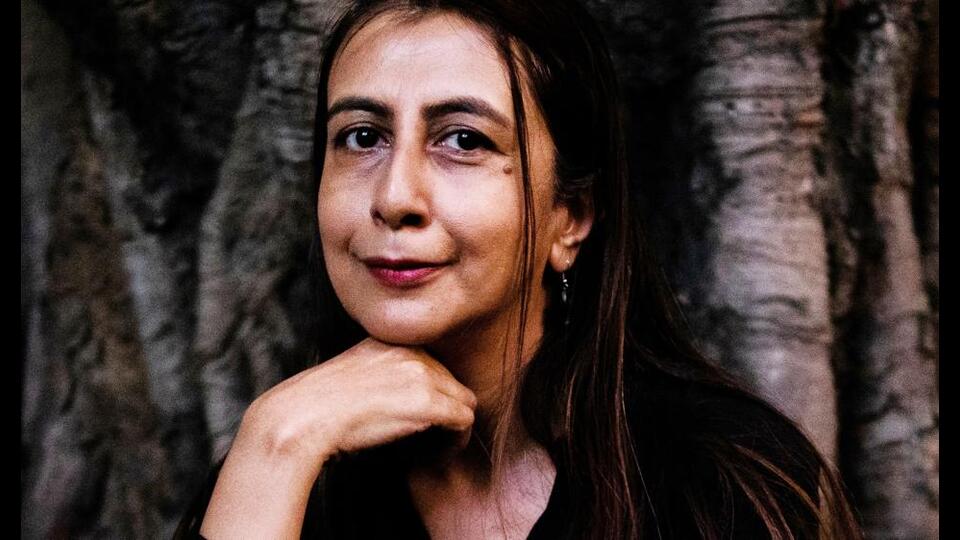
Author Anjum Hasan (Lekha Naidu)
The narrative, at times, concerns itself with the consistent distortion of historical facts while there is also the parallel idea that the teaching and reading of history involves an acceptance of the inherent subjective nature of the discipline. Was that something you wished to highlight?
Academic history is a discipline with an established set of rules to do with ascertaining the facts or the likely facts. Historical research is not subjective in the way poetry is subjective. And neither poetry nor history-writing is subjective in the way that a spiritual imagination is when it invests holiness in a tree or a stone. Perhaps there is confusion in our minds between these different worlds? The best writers – say, AK Ramanujan, RK Narayan and UR Ananthamurthy, to take three examples from Karnataka where I live – were once able to personalise or dramatise these peculiarly Indian confusions for us. I was trying to as well because all three feature in the novel – history, poetry, and religion.
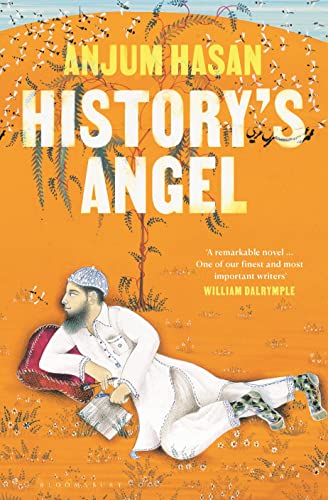
288pp, ₹699; Bloomsbury Publishing
In some ways, the novel also reads like an exposition of a post-truth world. Was that a central concern when you started out?
I’m not sure there is a place for the novel in a post-truth world because the attempt in any sort of literary writing is to try and get to the truth of things. So yes, I was thinking of uncertainty and failure, and definitely about contending narratives about our past but not the blankly empty relativism that “post-truth” suggests.
Alif, the protagonist, who is both a student and a teacher of history, is shown to be fascinated by the historical period referred to as the Delhi Renaissance. What interested you as a writer about that particular era?
It was an interesting era of Muslim modernity, centred around Delhi College, and it produced the figure of what I would call the Victorian Muslim – learned, loyal to the Queen and the English government, passionate about societal improvement through education, a pioneer of Urdu prose, completely devoted to Islam yet keen on scientific thinking. There were several such celebrated men, the most famous being Sir Syed Ahmad Khan who started what is today’s Aligarh Muslim University. Another striking example is the mathematician, historian and translator Munshi Zakaullah who was a strong believer in Hindu-Muslim unity. That great Gandhian, CF Andrews has a wonderful book on him called Zakaullah of Delhi.
Through characters such as Mrs Rawat and the politics at Alif’s school, there is also a focus on the dearth of and therefore the need for educational institutions that are not prone to becoming sites where propaganda comes to be disseminated. Was the fictional school and its functioning under a new administrative head a way for you to make a larger point about the current state of political institutions in the country?
I wanted to see what happens to ordinary people in response to new dispensations that might be radically or at least substantially different from the old, and what sorts of psychological leaps they make to fall in line. So Mrs Rawat is someone like that, who doesn’t question the received wisdom and thinks her role is to discipline her staff. The larger point is the death of imagination and a school seemed like a good place to set it in.
There is also a commentary on the growing apathy which is shown to be characteristic of a highly consumerist society, particularly through the representation of Tahira’s job. Was that something you had wished to draw attention towards?
The thing one wants to ask about a consumerist society is – can it coexist with the older social contract, what we call samaj, or does it make selfish individualists of us all? When I hear people talk of the “good life” now – a neighbour of mine used that expression the other day to explain why her daughter is doing her best to stick on in the US – the focus is money and status. Those other samajic concerns are so abstracted and externalised, they can often become the fuel for a shallow identity politics but a very powerful one. So, in a strange way, liberalism has led to fundamentalism.
The name Alif is interesting in that it signifies, being also the first letter of the Arabic alphabet, a starting point of sorts and then the novel’s title has Alif being compared with Walter Benjamin’s figure of the angel of history. How did Alif evolve as a character?
The anxiety and dread in that Benjamin essay are very compelling. And he’s talking about some of the same things I’ve mentioned above – the violent sundering from the past, the blind faith in progress. The angel of history represents the impossibility of going back to the past. Alif evolved through the conversations I imagined him having with the people in his life. Many among his friends and family have a sort of toolkit of references to the past, easy to call up in debate, but they are really fixated on success in an increasingly treacherous free market.
There are degrees of violence, both physical and emotional, that are articulated through the varied discriminations to which Alif, Tahira and their loved ones are subjected. Were any of these, such as the house hunting episode, drawn from real life incidents?
Yes, they have a hard time finding a house in Delhi in areas where they would like to live. That’s one sort of discrimination – drawn from real life but not from my life. But it’s a violent society all around – the daily acts of violence in Delhi’s homes and streets, the violence in marriages and friendships, the memories of the violence of Partition, even the violence that the peace-loving Alif is surprised to find in himself at the beginning of the novel.
Partition is represented as the haunting spectre that it is, which has also continued to shape the national imagination. Is that something that has interested you as a reader?
I have read a fair bit of especially fiction on it and sometimes a tiredness will creep in, a feeling of having had enough. I admire how Upamanyu Chatterjee in The Last Burden dispensed with the thing in six words, probably the most succinct account in writing: “Partition, refugees, trauma and all that.” But then my mother, who grew up in Peshawar and fled with her family to Delhi as a child of eight after Partition, will bring up some suddenly vivid memory in conversation, and I start to get fascinated by, yes, the sceptre, all over again. So it certainly shapes the North Indian imagination, but not the South where I live. As for the Northeast, Meghalaya, where I’m also based, they have lived through the Partition too. But that’s another story.
Poetry permeates the narrative along with art and literature. What role do you feel contemporary literary fiction can play when it comes to the representation of the present?
It still remains the vehicle most suited to exploring the traffic between public and private life but what if public life becomes so monstrous that private life starts to vanish? As is starting to happen today when corporate media has followed us even into our bedrooms and government propaganda is getting more insistent. But the Indian sensibility still has a deeply instinctual side so I think art and literature of whatever quality will continue to have some space.
What are you working on currently?
I am writing a book on Shillong, the town I grew up in, a sort of high-life and low-life portrait of a place that has been fascinatingly modern and is now increasingly provincial.

 E-Paper