
 E-Paper



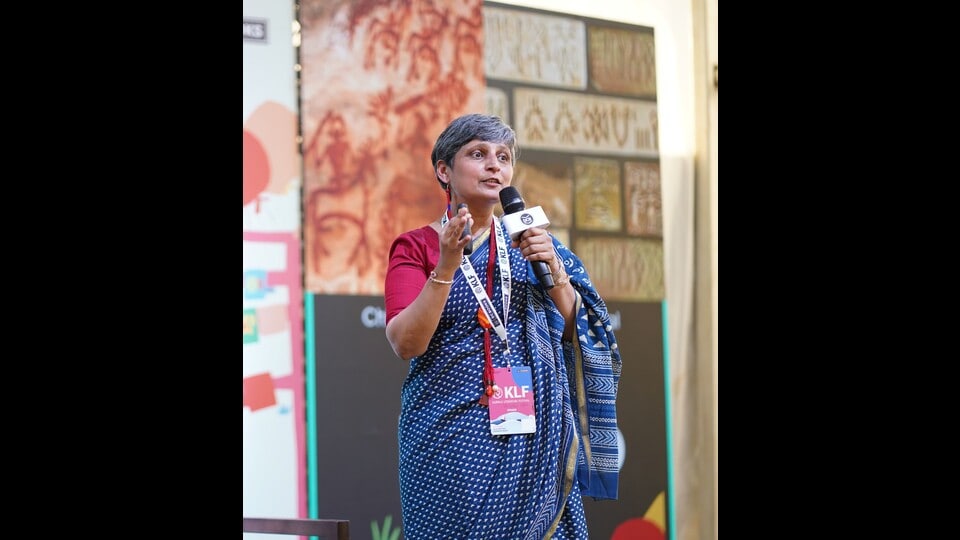
Vaishali Shroff: “Without faith and belief there cannot be activism”
At the Kerala Literature Festival, Shroff spoke about climate anxiety, rage at seeing rivers being polluted, and the need to look at rivers as living entities

 Prefer HTon Google


I was struck by this sentence in your book: “We don’t realize how much we miss being close to nature until we are thrown into its midst”. What does missing this closeness do to a person, physically, mentally, emotionally and spiritually?
When I was five or six, my grandfather told me how we could see the beach from our house in Bombay (now Mumbai). In no time, all that land was reclaimed till there were only rows of streets and other houses between us and the sea. That has stayed with me today after nearly five decades. Even though that house does not exist anymore, I keep imagining how it would be to watch the sea from the window of that house.
Most of us who live in cities, work with our heads down, wrapped in concrete and glass — so far from nature and going further away from it as the days go by. So, imagine sitting by the banks of a gushing river instead of some dead stormwater drain, high mountains around you instead of concrete walls, tall green trees instead of high rises, the call of birds instead of those blessed cement mixers and earth movers. Imagine being wrapped in nature till you become a part of it.
To me, nature is our visible God. It’s where my physical, mental, emotional and spiritual senses fuse together as I begin to flow with the river, merge with the mountains, fly with the birds. It’s a beautiful place where you’re never judged for who you are. There is complete acceptance. And that’s all one seeks anyway. We shouldn’t be imagining being in the midst of nature. We are a part of this natural world. We are nature, and that’s how it should be.
How did your relationship with nature feed your rage and your imagination as you wrote the book?
When we love someone, we would go the distance to protect them. But we treat a river, this visible god, so offhandedly. It’s hard to see her being mindlessly torn apart — untreated chemical waste, plastic pollution, sand mining, damming, dredging, diverting riverfronts, and the list is endless.
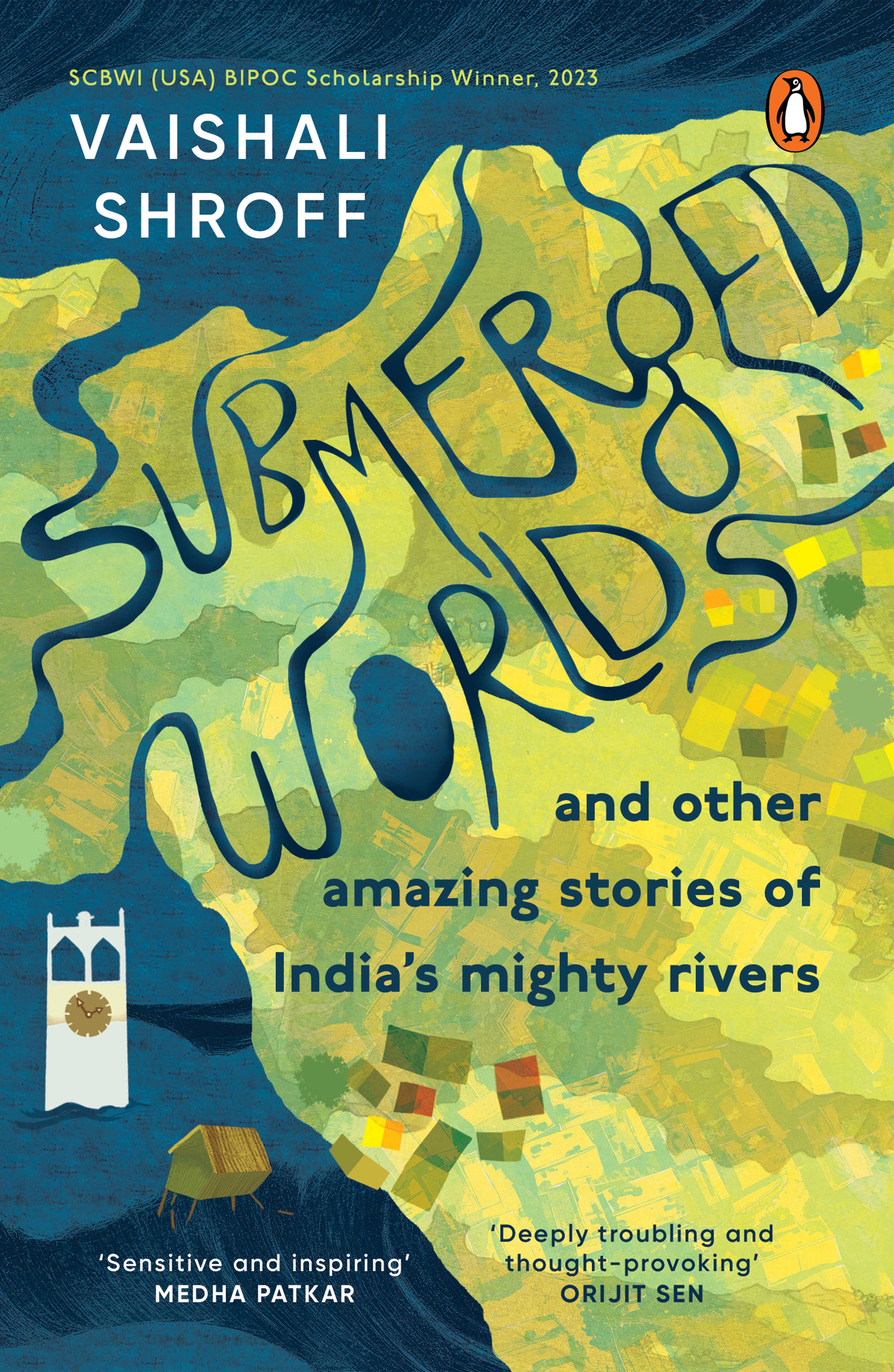
I felt the rage to write this book when I was standing by the banks of the Bhagirathi river and was told that about125 villages lay submerged under her waters. The ‘submerged worlds’ in this book stand for those lost homes, childhoods, livelihoods, neighbourhoods, cultures, traditions and everything that is now just a memory. They stand for the stories we cannot see, the stories we choose to ignore. They stand for all the voices that have been screaming hoarse but have had no listeners. This book cannot clean rivers by itself, but I am hoping it helps to bridge the vast knowledge gap that exists among people, especially young readers who are led to believe that everything is fair in the name of progress and development.
Apart from writing this book, you have also illustrated it. How was that experience?
This book began with random sketching and poetry as I hiked by the rivers and mountains of Uttarakhand. It became an integral part of my writing process. When I submitted the manuscript and my editor Sushmita Chatterjee asked me if I had an illustrator in mind for the book, I thought of all the sketches I had done. I shared a few of them with my editor and when she said, ‘Let’s do it,’ the journey became richer. I learned so much about illustrating from my editor and my awesome illustrator friend, Gina James, who is my designer at Penguin.
You write about how rivers in India are often venerated as goddesses. How can activism and faith work together to stop rivers from being treated as dumping grounds for industrial effluents?
Cleaning rivers or keeping them clean from pollutants in the first place comes from a place of respect and love for the rivers. Acknowledging that the rivers are a living entity and that they need to be treated with dignity is a way of worshipping them. Performing puja and other rituals in the river to wash away our sins and also our waste is not venerating them as goddesses. It’s polluting them, damaging their ecosystems. When people worship Maa Ganga or Yamunaji or Maa Saraswati, one is merely worshipping the notion of that goddess, not the river itself. But when we truly worship her, we will never harm her or allow others to harm her. We shall fight for her, protect her, become her voice. I feel that without faith and belief there cannot be activism.
What do you think of the Universal Declaration on the Rights of Rivers? What are the barriers to implementation? What gives you hope?
The Universal Declaration on the Rights of Rivers grants legal personhood to rivers. This means that it grants the same legal rights that a human enjoys to a river, including all those who depend on the river for their survival. Which means they have the right to flow and the right to be free of pollution, among other rights. This did not work for the Ganga and the Yamuna, the first rivers in India to be granted legal personhood, which was sadly revoked soon after it was granted. The barriers to implementation are manifold. For instance, how many people would be willing to raise their voices against industries, infrastructure development and economic growth in the favour of rivers? How would the laws be enforced once the river crosses our national boundary? I wish I understood the judiciary system and legalese better, but I do understand that while such declarations may or may not do what they set out to do, they make naysayers sit up and look at rivers differently — as living entities that deserve love and empathy. They give me hope that all’s not over yet, that there are wonderful human beings out there who care about our planet, our present and future, our rivers and, most importantly, about our children.
Chintan Girish Modi is a writer, journalist, educator, literary critic and tree hugger. He can be reached @chintanwriting on Instagram and X.


