E-Paper



Vishal Mathur picks his favourite reads of 2023
A book that follows Elon Musk’s rapid personality transformation marked by the troll persona taking over, and a volume that goes back in history to pick moments pivotal to defining the designs of tomorrow

 Prefer HTon Google


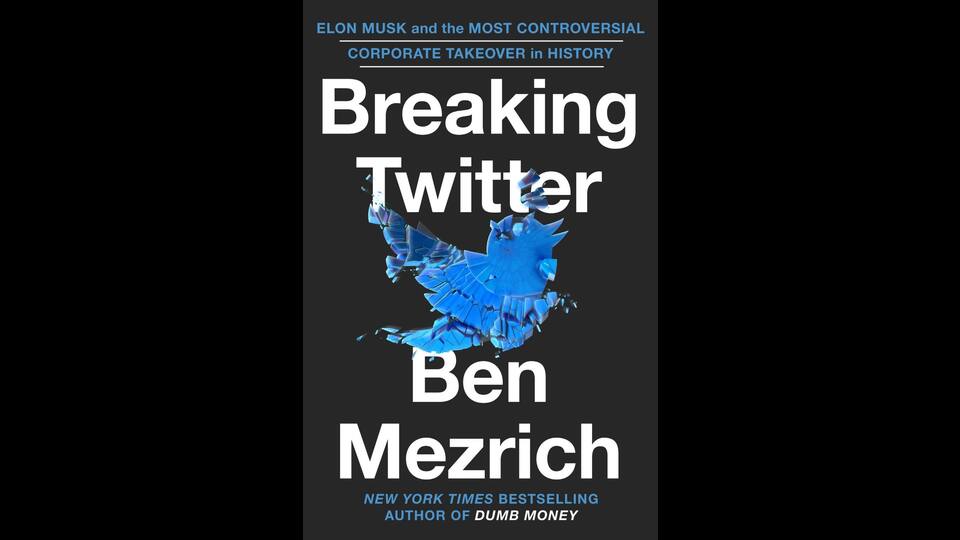
We miss the old Twitter. Even the name’s gone now. The credit for that goes to one of tech’s most polarising figures, Elon Musk. For long, I’d suspected the disintegration wasn’t one-sided. Ben Mezrich, no stranger to big tech’s eccentricities, puts it in plain words – “Twitter broke Elon Musk”. His 2023 book, Breaking Twitter, follows a rapid (and unexpected) personality transformation marked by the troll persona taking over even as undeniable brilliance often bubbled to the surface. “If things are not failing, you’re not innovating enough,” is Musk’s mantra. As X strove to become a de facto town square, Musk struggled to keep everyone onside, including Tesla shareholders, even as he faced criticism for Saudi and Qatari funding. Along the way, a devalued “blue check” became so repulsive, no one wants to be seen with one. Not even if they silently pay Elon $8 every month for it. There was also plenty of dark humour, a surprising part of this transition as then-employees tried to make sense of incoming chaos. Elon wasn’t just in the building, Elon owns the building. Annoys neighbours too, with that ghastly neon X logo.

Design is more than art. The world’s largest office building, Apple headquarters in California, isn’t a skyscraper and is designed as a spacecraft. How many other corporate offices do you remember in such detail? Visual appeal embeds what we see in our memories, and intuitiveness makes us adopt products, apps or even intelligent algorithms. Cliff Kuang and Robert Fabricant’s 2019 book, User Friendly, goes back in history to pick moments pivotal to defining the designs of tomorrow: “As banal as buttons may seem, properly viewed they can also seem like everything”. How often do we simply ignore those buttons on a remote or a microwave? Haven’t you underestimated that reassuring click of the front door lock, as you step out for work? It’s invisible feedback. There’s a sense of impatience that not all experiences tick off basic promises of ease of use. Take a jumbled number pad on a store’s payment terminal to enter your credit card pin; there’s a vacuum created by such individual experiences, and it must go. As Fabricant likes to tell his team, behaviour is the medium of our interactions, not products or technologies.