
 E-Paper



Essay: The Cape of Silent Hope
On literary residencies and the experience of writing a new book at one in a country with a fraught past and an uncomfortable present

 Prefer HTon Google


Where does one write? In the midst of life? Or does one step out, stop to smell the flowers and look forward to whole days of writing, reading, thinking? What gets the words to flow better? The sweat of quotidian labour? Or the quiet breath of leisure?
Like most enigmas of art, there are no right answers. They change with people, time, space. Perhaps one needs all kinds. Working mothers write with a baby on the lap and food simmering on the stove; aristocratic men write with jewelled pens in gilded silence. Art is blind, unpredictable, and chaotically democratic, coming from all sources, often carrying unique aromas of those very sources.
People write from within the din of other professions. Two are particularly common – the clangour of the newsroom and the tedium of grading student papers; the journalist and the academic, two professions particularly common for writers in India today. But we dream of time off, of writing retreats and residencies where we do nothing but write, sometimes in ambiences of alien beauty.
When the news came that I’d been appointed a Fellow at the Stellenbosch Institute of Advanced Study to complete my new book, my heart sang in a hundred tunes. My very first novel had marked, for me, a passage from what I imagined to be my James Joyce phase to my JM Coetzee phase – a kind of a growth, from long, indulgent, experimental sentences to a quieter, more austere style that longed for a bare-bone quality. My doctoral advisor, an English South African scholar, opened up vast worlds of South African writing, including much work that did not travel beyond Africa – such as the intricate champions of quotidian life in the midst of the spectacle of apartheid, the novelist and short story writer, Zoë Wicomb, and the educator Njabulo Ndebele, a writer of fiction and nonfiction. As I learned more of its history and culture, I came to think of South Africa as the most fascinating country in the world. A country with two contrasting forces of white settler colonialism – the Dutch-derived Afrikaner and the English – and the appalling anachronism of apartheid exactly through those decades when the world was waking up to decolonization and civil rights.
Stellenbosch, a bastion of Afrikaner power and privilege, is often considered the birthplace of apartheid due to the centrality of the segregationist Dutch Reformed Church there. Today, it is hard to imagine a place to write that is more idyllic, and one that is more troubling. Endowed by the Wallenberg Foundation in Sweden, the institute collaborates with the Nobel Foundation and the Royal Swedish Academy to run the celebrated Nobel in Africa symposium. This is where Nobel awardee Abdulrazak Gurnah began working on the project ‘Fugitive Whispers’, which eventually become his 2021 novel, Afterlives. It is where Zoë Wicomb wrote Still Life (2020), on the Scottish abolitionist Thomas Pringle, considered by many as the “father” of South African poetry. This is also where Tsitsi Dangarembga started to write her yet-unnamed trilogy of young adult dystopian fiction about three Shona-speaking high school girls from Zimbabwe.
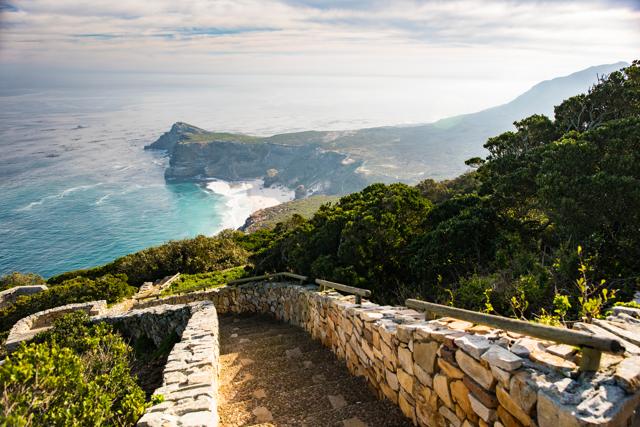
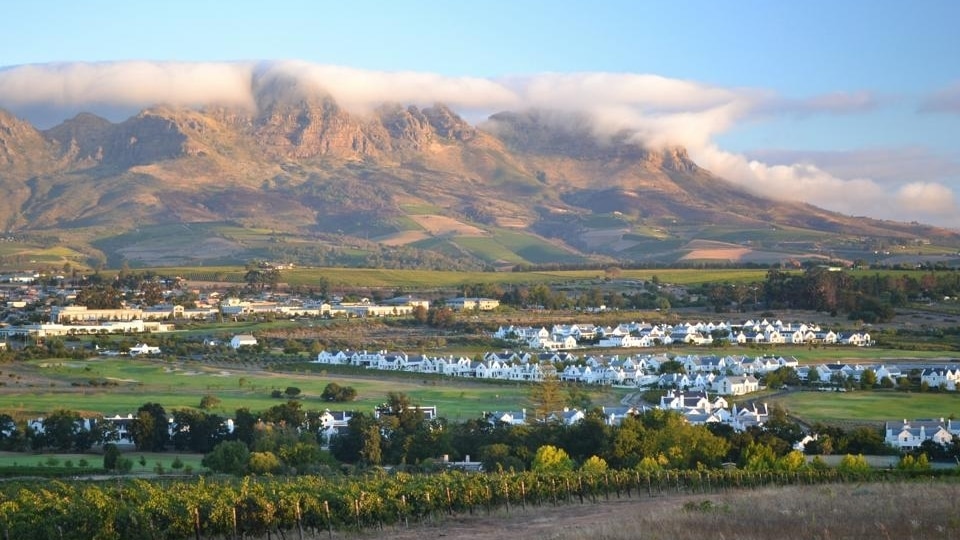
This is the heart of South Africa’s wine country, nestled in the Stellenbosch Mountains, with Cape Town’s fabled Table Mountain in view, close to the historic Cape of Good Hope, where the Atlantic meets the Indian ocean. This is where Vasco Da Gama, making his way through the cold turbulence, saw hope just as he turned past the tip of the continent to sail into the warm and more predictable winds of the Indian Ocean. My 13-year old daughter likes to repeat that meme about the Portuguese traveller where he tells the locals: “Trust me, bro, hum to sirf masala lene aye hain.” The natives trusted the white “bro” when he said he was there just to get some spices, and the rest is history. This is also the place where you see the endangered African penguin. History meets geography in the most breathtaking way here, and everything you hated in your school textbooks suddenly comes alive, seducing you into a dream.
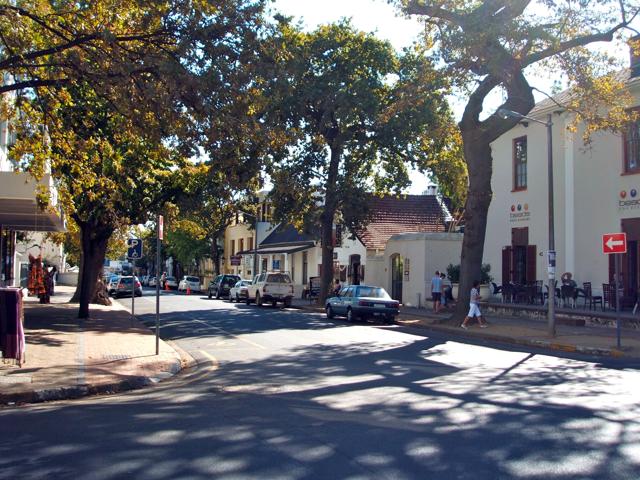
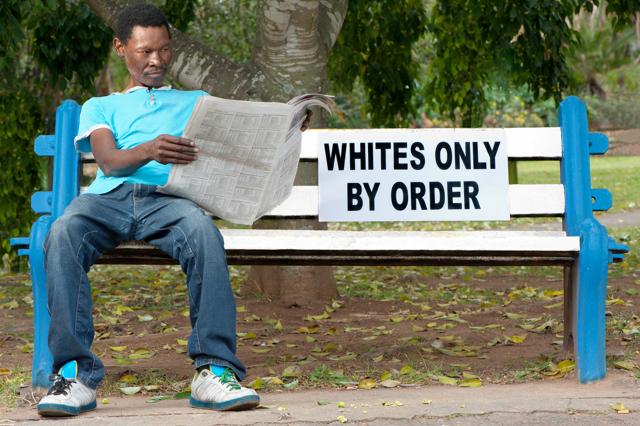
But as you walk past the beautiful Cape Dutch architecture of downtown Stellenbosch, you cannot stop thinking that this was the whites-only part of town under the former Group Areas Act – where black or “coloured” people were allowed only within designated hours when they came to cook, clean, and serve the white population. Desolate black figures come up to you, asking for money.
A story you keep hearing is that they need money for transport, to go get their AIDS treatment, the disease that took much of their family. This is the country, you remember, where one of its early presidents, Thabo Mbeki, essentially denied the reality of AIDS, denouncing all science, calling the disease a western fabrication. The human cost of that denial was colossal. Your neighbours and well-wishers here, all white, warn you against these “fabricated” tales of AIDS affliction; most of them, they tell you, are chronic substance abusers. Sometimes they just beg for food. You give them leftovers you carry from a dinner and they swoop down like ghosts, vanishing with the packet. You return to your house where the power cut lasts 10 hours and where, if you are very lucky, you have power back-up.
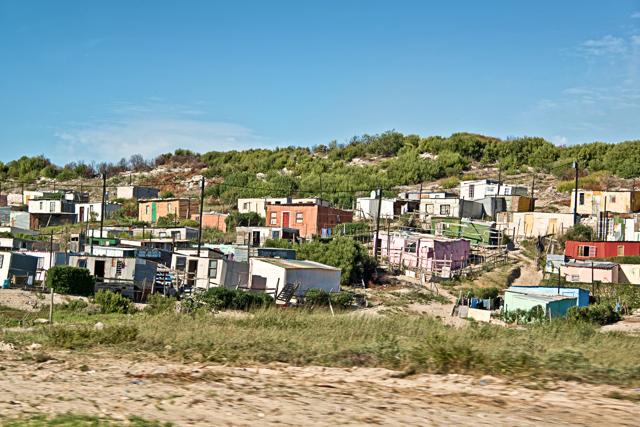
Along the highway to Cape Town you see the mass of townships, jagged iron and brick, crime and violence decimating its poor black dwellers, including the wave of immigrants from neighbouring Malawi, Zimbabwe, Botswana, Mozambique, and Namibia. You walk past the derelict and psychedelically lit Stellenbosch station, looking at the loitering shuttle minibus drivers, young black men playing loud music, making convivial rowdiness, which drives fear into the hearts of the city’s white residents.
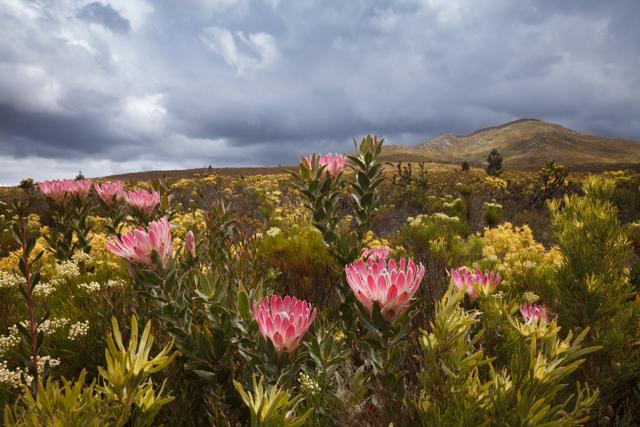
You walk back into your cottage-like office in the heart of whiteness – the place that would have kept you, an Indian, out of its fringes back in the days of Aparthood. You look out of your window, at the crest of the mountain in the distance and at the blooming protea flowers close at hand. You seek words but meet something more powerful. Silence.
Saikat Majumdar’s forthcoming work includes the novella The Remains of the Body and the nonfiction book, The Amateur.


