
 E-Paper



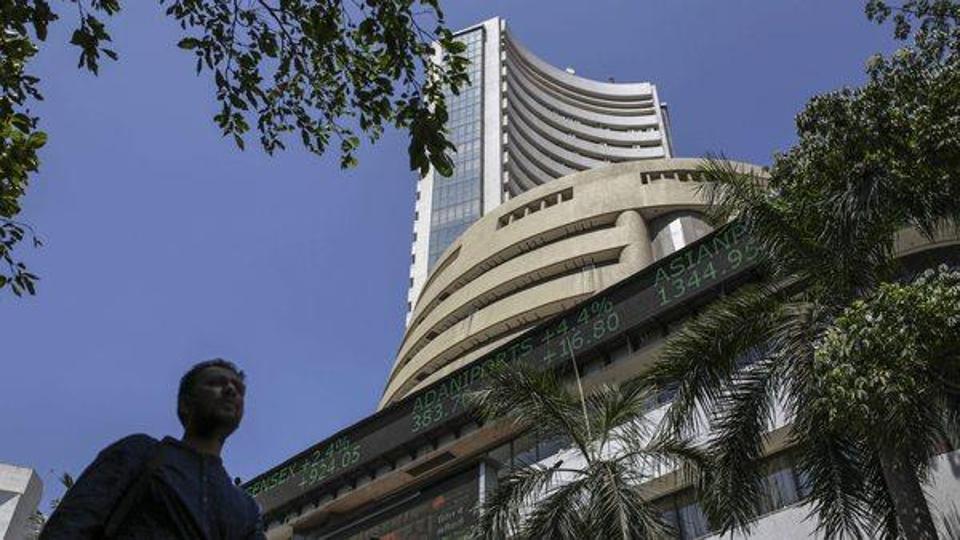
Indian equities seen under pressure on weak macros, bank stocks in focus
Banks are likely to be in focus after finance minister on Friday announced merger of state-run banks. Global shares face headwinds from tariffs Washington and Beijing slapped on each other.

 Prefer HTon Google


Indian stock markets are expected to trade weak on Tuesday after data showed that domestic economy has slowed down. India’s GDP expanded at a lower-than-expected 5% year-on-year in the April-June quarter, the slowest in over six years, driven by weak investment growth and sluggish demand. In the March quarter, the Indian economy had grown 5.8%.
Also, growth in eight infrastructure industries that make up two-fifths of the index of industrial production (IIP) slowed to 2.1% in July, indicating that India’s economic slowdown may deepen unless the government takes additional measures to reverse it.
Banks are likely to be in focus after finance minister Nirmala Sitharaman after on Friday announced merger of state-run banks.
Meanwhile, global equities on Tuesday were weak, hit by US-China trade friction, while the British pound flirted with the 2.5-year low as UK Prime Minister Boris Johnson indicated he could call an election to stymie lawmakers’ efforts to avert a no-deal Brexit.
MSCI’s broadest index of Asia-Pacific shares outside Japan shed 0.2% in early trade, while Japan’s Nikkei was flat.
US bond yields were little changed in early trade on Tuesday after a market holiday there on Monday. The 10-year US Treasury yield was flat at 1.506%.
Global shares face headwinds from tariffs Washington and Beijing slapped on each other.
An additional 15% tariff on a variety of Chinese goods, imposed by Washington, kicked in on Sunday, with Beijing retaliating with new duties on US crude oil, the latest escalation in their trade war. Although US President Donald Trump has said both sides would still meet for talks later this month, tensions have shown little sign of abating.
China on Monday said it has lodged a complaint against the US at the World Trade Organization over Washington’s import duties, trashing the latest tariff actions as violating the consensus reached by leaders of the respective countries in a meeting in Osaka.
In the currency market, sterling traded at $1.2063, little changed so far on Tuesday after having dropped 0.85% on Monday. The currency stood just a half cent above its 2.5-year low of $1.2015 hit on 12 August.
Uncertainties over Brexit have already hit the UK economy, with survey by the IHS Markit/CIPS showing British manufacturing contracted last month at the fastest rate in seven years.
The offshore Chinese yuan also dropped to a record low of 7.1975 per dollar, while the Australian dollar fetched $0.67145, not far from a decade-low of $0.66775 hit last month.
The Reserve Bank of Australia is expected to keep its policy on hold on Tuesday, though many market players expect an interest rate cut next month.
Argentine bond prices fell to record lows on Monday and the official and black market pesos diverged after the country imposed capital controls in a bid to stem a currency rout that has sharpened the risk of default. The peso closed 0.88% stronger in official markets, but closed 0.79% weaker in the black market at 63.5 per dollar.
Oil prices were also dented by concerns over the trade war. US West Texas Intermediate (WTI) crude lost 0.76% to $54.68 per barrel.
(Reuters contributed to the story.)


