
 E-Paper



MPC likely to hold policy rates as oil prices may spike inflation
It appears that the immediate priority of the RBI is to tame inflation rather than to boost growth

 Prefer HTon Google


Taking the economy out of a technical recession without stoking inflation, which is already 77-month high, is a major challenge in the preparation of Budget for FY-22, and its contours will be set by the Reserve Bank of India’s (RBI) monetary policy decision on Friday that may not immediately cut interest rates at a time when global oil prices are heading north, two officials said.
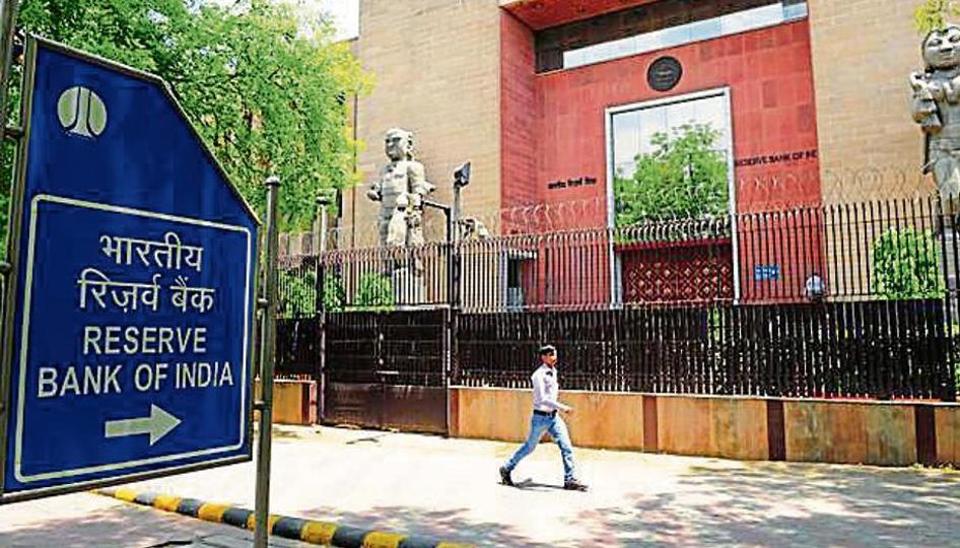
It appears that the immediate priority of the RBI is to tame inflation rather than to boost growth. Hence, the North Block may focus on a growth-oriented Budget expecting no immediate policy rate cut by the RBI, and hoping that the inflation will fall within the comfort zone soon, the officials aware of Union budget-making exercise said requesting anonymity.
“There is a need to cut policy rates to boost the economy, which fell into a ‘technical recession’ with contractions in two consecutive quarters. But, RBI may not opt for it because of two reasons – already high inflation and surging crude [oil] prices,” one of the officials said.
Indian economy that shrank 23.9% in the first quarter of 2020-21 mainly due a nationwide lockdown because of Covid-19 pandemic, saw some improvement in the second quarter as contraction reduced to 7.5%. However, the retail inflation continued its surging streak for the ninth month in a row to reach 7.61% in October, highest since May 2014.
Officials mentioned above said they do not see inflation to soften immediately as global crude oil prices jumped by over $7 a barrel in just one month and benchmark Brent crude touched $48.25 a barrel on Wednesday. A $10 per barrel increase in crude price adds about 49 basis points (bps) to inflation, they added. One bps is a hundredth of a percentage point.
“India is world’s third biggest importer of crude after the US and China. High oil prices have direct bearing on transport fuels, particularly diesel, which has inflationary impact,” a second official said. Due to a spike in global oil prices, pump prices of petrol in Delhi jumped by Rs 1.60 per lire and diesel by Rs 2.38 a litre in less than a fortnight.
“Currently, oil cartel is deliberating their strategy to raise crude prices further by squeezing supply,” the second official said. He was referring to the Organisation of the Petroleum Exporting Countries, Russia and their allies (together known as OPEC+), who are expected to continue existing output cut of 7.7 million barrels per day, about 8% of global supplies, in the first three months of 2021.
DK Srivastava, chief policy advisor at consulting firm EY India said, “With the global crude prices firming up, a cost push CPI [consumer price index or retail inflation] inflation possibly in the range of 7.5% to 8.5% would affect the forthcoming budget in three important ways.”
“First, most of the burden for supporting growth would lie squarely on the ministry of finance as the monetary authorities would be reluctant to relax the policy rate any further and provide liquidity support. Thus, the government would have to design a fiscally expansionary budget. This would be facilitated by improvement in revenue buoyancy because higher prices would result in higher nominal GDP growth and higher tax revenues,” he said.
“Second, the central government may come under pressure for reducing the tax burden on petroleum products which may partially offset the increase in the expected improvement in tax buoyancy more generally. Third, government would have to provide for higher food, fertilizer and petroleum subsidies since these are directly linked to petroleum prices,” he said.
The Union finance ministry declined comments. Earlier on November 27, while reacting to the latest official data on the gross domestic product (GDP), Krishnamurthy Subramanian, chief economic adviser (CEA) said, “Food inflation is expected to soften in the third quarter.”
The finance ministry’s latest edition of ‘Monthly Economic Review’ for November also said that the “inflation rates are expected to have peaked and decelerate gradually from here, helped by lower food inflation and base effects”.
The report, released on Thursday, acknowledge that global oil prices are moving north. “The Indian basket crude oil touched USD 47.05 a barrel on 30th November as against average crude oil prices of USD 40.8 a barrel in October, signalling upbeat oil market sentiment with increasing economic activity and Covid-19 vaccine prospects,” it said.
Anupam Manur, assistant professor at the think tank Takshashila Institution, said that most of the increase in inflation rates are driven by transitory aspects, mainly higher food inflation, which will reduce in a few months time.
“Core inflation is proving to be sticky at about 5.5% mainly due to increase in transportation and communications, which will decrease with gradual opening up of public transport. Global oil prices are increasing, which will reflect in India’s inflation, which the government can ease by reducing the extremely high fuel taxes,” he said.
According to Manur, “The budget should still focus on providing relief to those hurt by the pandemic, increasing aggregate demand, and focus on long term investments in infrastructure and capital expenditure, which can help in employment generation as well.”
Srivastava said in order to boost growth the government should focus on boosting public capital expenditure far more than revenue expenditure. “For protecting the poor, higher subsidies as well as targeted income support programmes such as those for the farmers and other low-income groups may have to be increased in the upcoming budget. For the farmers, the cost of production would increase because of higher energy prices and the MSP [minimum support price] will also have to be increased accordingly,” he added.


