
 E-Paper



Sebi chairman on why bond markets shiver when central banks sneeze
Unconventional policies of central banks after the global financial crisis have created serious challenges and uncertainties in the bond market, UK Sinha said at a CII summit


Securities and Exchange Board of India chairman UK Sinha on Tuesday pitched for easier taxation norms for the corporate bond market while also raising concerns that the easy money policies followed by central banks were creating uncertainties among international investors in the bond market.
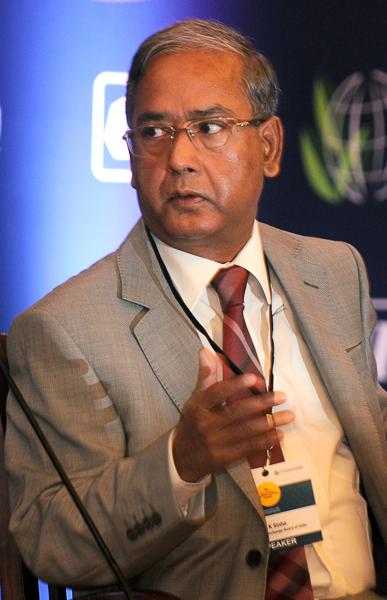
“Taxation on income from bond market is rather high and that will be a issue. There is a need to have a relook at it,” Sinha said in his address at the CII summit on developing the bond market in BRICS countries (referring to Brazil, Russia, India, China and South Africa).
Sinha blamed the unconventional policies of central banks post the global financial crisis for creating serious challenges and uncertainties in growth of the bond market.
“Given the volatile nature of capital flows, any sneezing by central banks can create wide fluctuations in the bond market,” he said.
A bond market can only develop if there is international interest in the bond market and not just domestic participation, but the easy money policies and negative interest rates in some markets was creating uncertainties, Sinha added.
He also pointed to the problem in transmission of unconventional monetary policies to the private sector.
“The broad money supply from 2007 has increased by more than $9 trillion, but the actual flow to the private sector is only $1.8 trillion,” said Sinha.
He is also raised the issue of stamp duty levied by different state governments at different slabs, and said there is a need to have one rate for stamp duty across the country.
“There is an element of uncertainty about whether a particular rate of stamp duty that an issuer has taken into consideration will continue or there will be a negative surprise,” he said.
Sinha said access to foreign portfolio investors to the Indian bond market has been liberalised substantially. There is a quantitative restriction, currently at $51 billion and there is still some headroom available as the entire amount has not been utilised.
Total amount raised via fresh issues of private placement of bonds last fiscal (2015-16) was at $75 billion, he said.
A complete repository of information on corporate bonds has already been made available for secondary market and from October, it will also be available for the primary market.
Ajay Tyagi, additional secretary (investment), ministry of finance, pointed out that the ratio of corporate bond market to GDP in India was just 14% versus 25% in Brics and 99% in developed markets.


