
 E-Paper



All eyes on MPC in Patel’s first RBI policy: Here’s all you need to know
The upcoming monetary policy review on Tuesday has two firsts. It will be Urjit Patel’s first as governor of the Reserve Bank of India. It will also be the first interest rate review by the recently constituted monetary policy committee (MPC), which will function on lines followed by developed nations that ropes in more experts from varied backgrounds.


The upcoming monetary policy review on Tuesday has two firsts. It will be Urjit Patel’s first as governor of the Reserve Bank of India. It will also be the first interest rate review by the recently constituted monetary policy committee (MPC), which will function on lines followed by developed nations that ropes in experts from varied backgrounds.
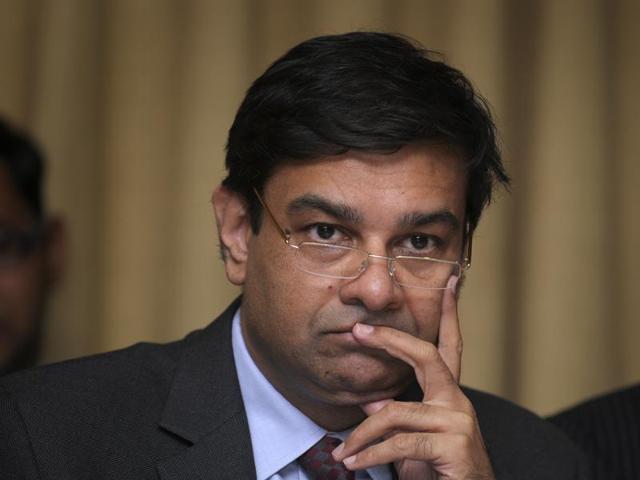
Interest rates will now be a consensus based decision of the six-member MPC that consists of three nominees (including the governor) each from the government and the RBI, with the governor getting to caste a decisive vote in the case of a tie. Here are the members of MPC and their monetary policy stance, known so far:
RBI nominees: RBI Governor, RBI Deputy Governor, a Board member
Urjit Patel
Served as the RBI Deputy Governor from January 2013 to September 2016
Appointed as RBI Governor on August 20.
Bachelor’s in Economics from the London School of Economics, M. Phil. degree from Oxford University, doctorate (Ph.D.) in Economics from Yale University.
Worked at the IMF from 1990–95. Has also been a non-resident Senior Fellow at the Brookings Institution since 2009, went on deputation by the IMF to the Reserve Bank of India as an advisor for two years.
From 1998 to 2001, Patel became a Consultant to the Government of India in the Ministry of Finance, Department of Economic Affairs.
He has also worked as President (Business Development) to Reliance Industries, Executive Director at IDFC, as non-Executive Director at Gujarat State Petroleum Corporation and Multi Commodity Exchange of India
Hawk/Dove: Known as a fiscal conservative and an inflation hawk.
R. Gandhi
A deputy governor at the RBI, Gandhi was put in charge of monetary policy when Patel was appointed the Governor.
A post graduate in Economics from the Annamalai University and post graduation in Capital Markets and Management Information System from The American University and the City University of New York.
He has studied Mathematical Economics and Econometrics. A career central banker, Gandhi joined RBI in 1980.
Had a three-year secondment stint at India’s capital markets regulator, the Securities and Exchange Board of India (SEBI)
Hawk/Dove: Neutral
Michael D Patra
Patra joined RBI in 1985 and was elevated as executive director in October 2014. Before that, he was the adviser in charge of the monetary policy department since 2006.
He is a central bank board as its nominee on the MPC
He holds a Ph.D. in economics from IIT Mumbai and undertook post-doctoral research in financial stability at Harvard University.
His Ph.D. thesis was entitled “The Role of Invisibles in India’s Balance of Payments: A Structural Approach”.
Patra has received professional training at the IMF Institute on Financial Programming and Policy and at the Centre for Central Banking Studies, Bank of England
Serves as a Director of Export-Import Bank of India
In 2010, the IMF published a paper co-written by Patra, where he argued that inflation is sticky in India when it sets in, irrespective of the source of price pressures.
Hawk/Dove: Hawk
Government nominees:
Chetan Ghate
is a professor at the New-Delhi based Indian Statistical Institute
Was also a part of the Technical Advisory Committee (TAC) on monetary policy set up by RBI. The TAC offered non-binding recommendations on monetary policy prior to the MPC.
Ghate was also part of the Urjit Patel-led panel that recommended a shift to an inflation targeting policy regime and the establishment of an MPC.
Is a macroeconomist with a research focus on economic growth, fluctuations, economic development, and monetary and fiscal policy in developing and emerging market economies
Ghate has Master’s degrees in applied mathematics and economics; and a Ph.D. in economics from Claremont Graduate School, California.
Hawk/Dove:Neutral
Ravindra Dholakia
An economics professor at Indian Institute of Management, Ahmedabad since 1985
Ph.D. thesis was on regional disparities in economic growth in India
Has served on many government and central bank panels
Served as an independent director on the boards of several corporations including Gujarat State Financial Services, Adani Enterprises, Union Bank of India, Air India, and Gujarat State Petroleum Corporation.
Recommended the creation of a postal bank
Hawk/Dove:Dove
Pami Dua
The sole woman on the six-member panel
Dua is head of the economics department at Delhi University; leading indicator project at Delhi School of Economics
An expert on econometrics and forecasting, has a Ph.D. in economics from the London School of Economics.
She is also the Chairperson of the Agricultural Economics Research Centre, at the University of Delhi.
Has authored several papers based on inflation, monetary policy and US interest rates; the impact on crisis impact of global recession and eurozone debt crisis on exports of China and India. She has done analysis of foreign portfolio investment flows to India, modelling and forecasting the rupee-dollar exchange rate.
The MPC will meet on October 3 and 4 for the fourth bi-monthly monetary policy review for 2016-17. Its decision will be put up on the RBI’s website at 2:30 pm on October 4, which will be followed by a press conference. This is against the practice followed hitherto, of the RBI governor taking suggestions from a technical advisory committee, and releasing the decision at 11 am.
The new model is expected to eliminate much of the perceived differences between the government, which wants a policy that serves growth (read: lower interest rates) and the RBI’s own target of taming inflation (not too low interest rates). While critics say government-appointed MPC members could act as its mouthpieces, economists disagree.
Hawk/Dove:Neutral


