
 E-Paper



IMF, global finance leaders fret over populism
World finance leaders on Thursday decried a growing populist backlash against globalisation and pledged to take steps to ensure trade and economic integration benefited more people currently left behind.


World finance leaders on Thursday decried a growing populist backlash against globalisation and pledged to take steps to ensure trade and economic integration benefited more people currently left behind.
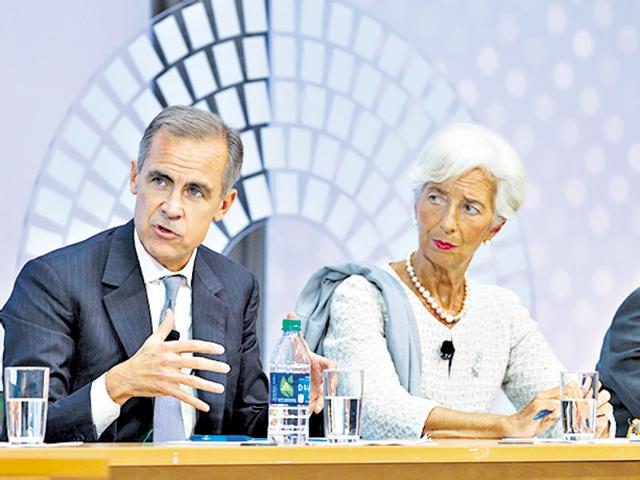
Their comments at the start of the International Monetary Fund (IMF) and World Bank fall meetings signalled frustration with persistently low growth rates and the surge of public anger over free trade and other pillars of the global economic system.
The meetings are the first since Britain voted in June to leave the EU and US billionaire Donald Trump secured the Republican presidential nomination with a campaign that attacked trade deals.
“More and more, people don’t trust their elites. They don’t trust their economic leaders, and they don’t trust their political leaders,” German finance minister Wolfgang Schaeuble said during an IMF discussion. “In the UK, everyone from the elites told the people, ‘don’t vote for a Brexit.’ But they did.”
Schaeuble said Germany was trying to “hold Europe together” in the face of rising nationalism, and failure to do so would bode poorly for global economic cooperation.
Last week, the World Trade Organisation slashed its global trade volume growth forecast to the slowest pace since 2007, saying it expected it to rise just 1.7% this year, down from the 2.8% it forecast in April.
IMF managing director Christine Lagarde launched the meetings by renewing her call for countries to further boost growth by increasing spending when possible, keeping interest rates extraordinarily low and implementing pro-business reforms aimed at improving economic efficiency.
Lagarde singled out Canada, Germany and South Korea as among the nations that could afford to sustainably increase spending, but said that others with no additional capacity could rearrange their budgets towards infrastructure and education programs.
The IMF this week kept its global growth forecast unchanged at a relatively low 3.1% for 2016 and 3.4% for 2017, noting that the US economy had performed worse than forecast while some emerging markets had done somewhat better.


