
 E-Paper



Telecom to Defence: Why Anil Ambani is selling old for new
Reliance Group was set up in June 2005 — it was then called Anil Dhirubhai Ambani Group — as a settlement between the warring Ambani brothers, Anil and Mukesh. Anil got Reliance Infocomm, Reliance Energy and Reliance Capital.


In the beginning of 2015, 10 years after he came to head Reliance Group, Anil Ambani called a meeting of his lieutenants. The message was clear: identify new areas for growth, and reduce debt. For the first time, a go-ahead was given for selling assets in sectors in which the group was not a leader: cement, roads, power transmission and distribution, telecom towers, and optic fibre.
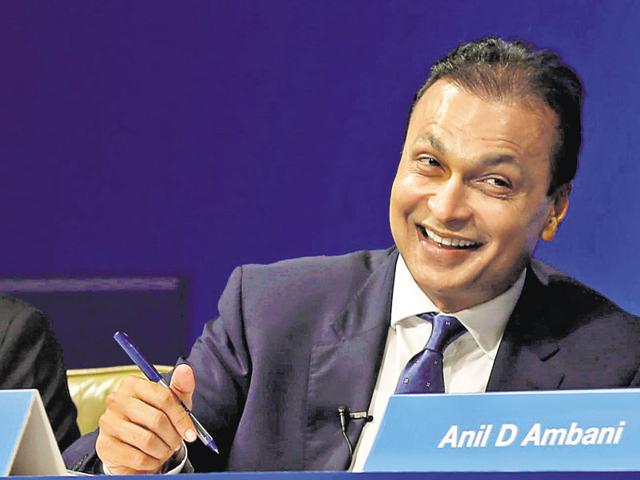
“We looked at sectors that will drive growth, including solar manufacturing and electronics. We zeroed in on defence, looking at the Narendra Modi government’s focus on it. And we decided to concentrate on financial services. We will have special focus on these two sectors, while we continue to grow our other businesses,” said Lalit Jalan, group director of Reliance Group and one of the people present in that meeting early last year.
The hard decisions were understandable. Reliance Group was set up in June 2005 — it was then called Anil Dhirubhai Ambani Group — as a settlement between the warring Ambani brothers, Anil and Mukesh. Anil got Reliance Infocomm, Reliance Energy and Reliance Capital. He immediately announced investments of ₹2,000 crore in Energy and ₹1,000 crore in Capital.
But 10 years, a legal battle with Mukesh, a slowing economy and a CBI probe later, Ambani sounded mellow at Reliance Power’s annual general meeting this year, when he said he needs to look at future opportunities with caution.
Scrubbed accounts, with manageable debt, are critical for at least two of the sectors Jalan mentions: defence, in which tie-ups with foreign majors counts for a lot, and financial services, where the group hopes to get a banking licence.
The scrubbing has been on since last year. The cement business was sold for ₹4,800 crore to Birla Corporation. The group is said to be close to selling stake in its Mumbai power distribution business and exiting 11 road projects. On Tuesday, it signed a deal to sell three transmission networks for ₹2,000 crore. All these projects were under Reliance Group’s listed arm, Reliance Infrastructure (RInfra), which has a debt of ₹21,000 crore. But with these sales the company will become debt-free, say sources close to the company.
Ambani’s telecom towers and optic fibre network have been on the block for some time. But for the first time a sale looks like manifesting, especially once the proposed merger of Reliance Communication’s airwaves business with Aircel is completed.
Reliance Infrastructure and Reliance Communication (RCOM) account for more than half the debt of the group.
The Group is also exiting most of its interests in media.
“The idea is to reduce our consolidated debt by at least 50%. And for that Anil Ambani is ready to let go of businesses that were once close to him,” said a source close to the company.
The result is already showing on Reliance Group’s balance sheets. The consolidated debt of Reliance Group stands at ₹1,08,000 crore from ₹1,21,000 crore as on March 2015. (₹20,000 crore of debt is from the books of Reliance Capital, which is into the business of lending).
“The economy is yet to fully come out of the woods so revenues from investments in infra and power are low. Such investments also have long gestation period. Reliance Group had got caught in the cycle of high debt, low investor interest and impatient share holders,” said an economist with a state-run bank who did not wish to be named.
With relatively low capital needs, small gestation period and minimal regulatory uncertainty, the defence sector seemed a natural choice for the Reliance Group.
“In 2008, if you bid for a road project the market would reward you. But in 2015, the market would punish you for it. The lack of regulatory clarity in infrastructure and some energy sectors also hurt us badly,” Jalan said.
Reliance Group has taken more than 27 licences for defence manufacturing. It is setting up a 289-acre defence park in Nagpur at a cost of ₹6,000 crore. The company will make warships and intelligent body armour for the armed forces. It has acquired Pipavav’s ship-building capabilities in Gujarat for ₹2000 crore and last week announced a tie-up with France’s Rafale-maker, Dassault.


