E-Paper



Google wants to build AI data centres in space, powered by the sun
Google's ‘Project Suncatcher’ explores the idea of a constellation of solar-powered AI satellites in low-earth orbit to serve as AI data centres in space.

 Prefer HTon Google


Google has launched a new research moonshot, called 'Project Suncatcher', to build AI data centres in space powered by the sun.
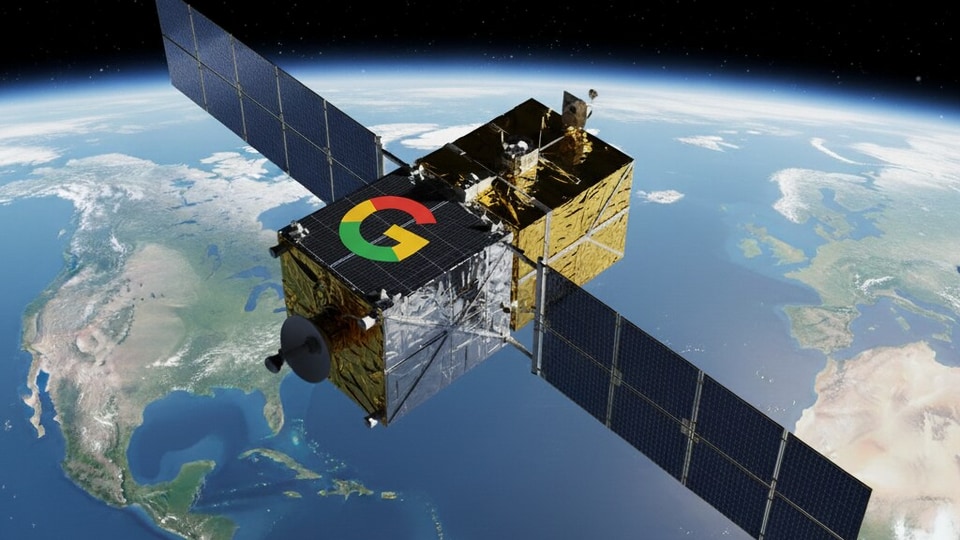
The idea is to build a constellation of solar-powered satellites equipped with Google's AI chips, or tensor processing units, flying in low-earth orbit. These can be interconnected internally and potentially the earth to serve as a kind of AI data centre in space, according to a blogpost on The Keyword.
Google, in partnership with satellite maker Planet Labs, plans to launch two prototype AI satellites by early 2027 to test the harware in orbit.
“In the right orbit, a solar panel can be up to eight times more productive than on earth, and produce power nearly continuously, reducing the need for batteries,” according to a post on Google Research.
Demand for AI compute, data centres
Google's idea for AI data centres in space comes amid an exponential growth in demand for AI compute on earth.
According to a McKinsey & Co. report, the global demand for AI data-centre capacity is likely to clock a compounded annual growth rate of 19-22% during 2023-2030 to reach 171 GW to 219 GW by the end of this decade. A less likely yet possible scenario sees AI compute demand rising by 27% to 298 GW. That compares with the current demand of 60 GW.
Essentially, AI data-centre capacity has to grow fivefold in five years.
Energy consumption by AI data centres
An AI data centre is a sum of parts, all of which require enormous amount of energy to simply function, let alone deliver AI compute power.
- Servers, which process and store data, account for 60% of electricity demand in AI data centres.
- Storage systems, used for data backup, account for around 5% of electricity consumption of a AI data centre.
- Networking equipment—switches, routers, etc.—account for a further 5% of power consumption by an AI data centre.
- Cooling systems make up 7% to 30% of the energy consumption, depending on how sophisticated the AI data centre is.
On top of this, AI data centres need uninterrupted power supply and backup, as well as lighting and office equipment for onsite staff.
Accoring to the International Energy Agency, energy consumption by AI data centres is projected to double to 945 terawatt-hours, or nearly 3% of global energy demand, by 2030. And that's a conservative estimate.
“From 2024 to 2030, data-centre electricity consumption grows by around 15% per year, more than four times faster than the growth of total electricity consumption from all other sectors,” the IEA stated. "However, in the wider context, a 3% share in 2030 means that data centre share in global electricity demand remains limited.
Suddenly, Google's “AI data centres in space” makes a lot of sense, until it becomes a logistical nightmare
Key challeges for AI satellites
To be sure, Project Suncatcher is still an early-stage research, and Google is cognizant of the major hurdles ahead.
- How many are too many?: To mimic a terrestrial data centre, AI satellites must be in very close formation—less than a kilometre of each other—and support tens of terabits per second via optical/laser links. Google’s lab demo achieved ~1.6 terabytes/second in a single optical transceiver pair.
- The earth's wonky orbit: Maintaining a tight formation in low-earth orbit involves dealing with gravity anomalies and atmospheric drag.
- Radiation risk: The space environment exposes chips to radiation risks and solar storms, which earlier this year took out satellite communications over vast swathes of the earth.
- Thermal management, reliability: Launching and maintaining orbital hardware brings many failure-modes and costs.
AI data centres in Space
“The sun is the ultimate energy source in our solar system, emitting more power than 100 trillion times humanity’s total electricity production,” Google Research stated.
“In the right orbit, a solar panel can be up to 8 times more productive than on earth, and produce power nearly continuously, reducing need for batteries.”
“In the future, space may be the best place to scale AI compute.”
Google Research suggests that if the cost of launching AI satellites decline to $200/kg by the mid-2030s, then AI data centres in space can achieve cost parity with those on earth.
If successful, this could shift how data centres and AI compute are structured. Sure, for a tech company like Google, that's a strategic edge in owning AI infrastructure that borders on science fiction. Look up Dyson Sphere, if you may.