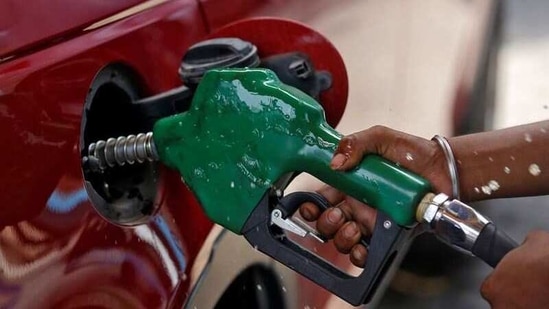
Petrol prices climbed to ₹89.54 per litre in Delhi on February 17, according to data from the Indian Oil website. Petrol prices were ₹83.71 per litre on January 1 and ₹81.06 per litre on November 19, 2020. The current rise in petrol and diesel prices has been driven by a rise in crude oil prices.
According to data from the ministry of petroleum, the price of India’s Crude Oil Basket (COB) increased from an average of $40.7 per barrel in October 2020 to $62.64 per barrel on February 16, 2021. That’s an increase of 54%.
To be sure, fuel prices have been lower in India even when the price of India’s COB was higher than what it is today. But the current high price is also because the central government has significantly increased the tax on petrol and diesel.
States, too, have slapped their own levies on top of this. Data available on the Indian Oil website shows that central excise duty and state value-added taxes add ₹32.9 and ₹20.61 per litre to the cost of petrol in Delhi. The base price, freight and dealer commission, amount to just ₹35.78 per litre for petrol.
The current increase in prices has been brought about by hopes of a faster global economic recovery after a year when the world was roiled by the Covid-19 pandemic. Vaccine drives have begun in many countries (including India). Weak demand for oil pushed prices to record lows last year, and with major oil producers restricting supply in response, prices have strengthened.
{{/usCountry}}The current increase in prices has been brought about by hopes of a faster global economic recovery after a year when the world was roiled by the Covid-19 pandemic. Vaccine drives have begun in many countries (including India). Weak demand for oil pushed prices to record lows last year, and with major oil producers restricting supply in response, prices have strengthened.
{{/usCountry}}Analysts say that prices have now strengthened to an extent that these suppliers (Opec-plus) will now enhance supplies, perhaps as soon as April. Indeed, the current price of crude is already well above the estimates of most energy analysts. Only Goldman Sachs has a higher estimate—$65 a barrel by the middle of the year.
Read more: Petrol hits ₹100/L in Delhi, nears ₹90 in Rajasthan's Sri Ganganagar
It’s possible that the Union and state governments believe, like most analysts do, that oil prices have peaked. But if it doesn’t—for instance, Opec-plus could get greedy—and the governments holds taxes at the current level, the prices of fuel will continue to increase.
By how much?
A simple calculation provides the answer. India’s COB was priced at $62.24 per barrel on February 16. The base price of petrol in Delhi on this date, as per the Indian Oil website, was ₹31.82 per litre. Assuming a constant exchange rate and a similar COB price to petrol base price ratio, we can estimate the retail price of petrol with a future rise in COB price. The dollar rupee exchange rate on February 17 was ₹72.84/dollar. This makes the COB rupee price ₹4,533.6 per barrel, which comes to ₹28.5/litre (one barrel is 159 litres). Assuming the exchange rate and COB-base price ratio on February 16 to remain unchanged, it can be said that base price of petrol is 1.12 times the COB price of crude in Rs/litre. With these assumptions in place, it is possible to get an estimate of how retail price of petrol will change with an increase in COB prices. It will cross ₹90 per litre in Delhi when COB reaches $64 per barrel, ₹95/litre when COB reaches $74/barrel, and Rs100 per litre when COB touches $83/barrel. To be sure, petrol prices are the lowest in Delhi, among the four metropolitan cities. Petrol prices were ₹89.54, ₹96, ₹91.68 and ₹90.78 per litre in Delhi, Mumbai, Chennai and Kolkata, respectively on February 17, according to data on the Indian Oil website.
Read more: On rising petrol, diesel prices, Surjewala makes sharp attack at govt with 'fuel loot' tweet
The situation will be very different if governments are to bring down their taxes. Given the fact that it is the Centre which is getting more from taxes on petrol and diesel, the onus will be on it to bring down prices by reducing the excise duty.