E-Paper



IndiGo among worst-hit as Iran war delivers crude shock to global airline stocks
Shares of IndiGo and SpiceJet fell up to 7.5% today, as the investors offloaded stocks seen most exposed to volatile crude oil prices amid a widening Iran war.

 Prefer HTon Google


India's airline stocks took a severe beating on Monday, leading a broader Asian market selloff as surging crude oil prices and an escalating Iran war threaten to cripple airline profit margins.
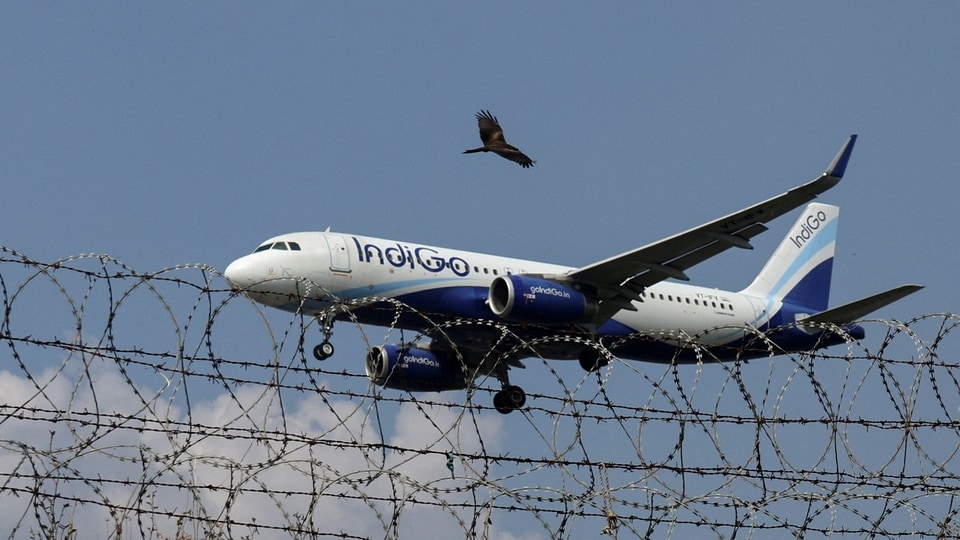
Shares of InterGlobe Aviation Ltd., the operator of India’s largest airline IndiGo, plunged 7.5%, while budget carrier SpiceJet Ltd. dropped 5.6%. Investors are rapidly offloading stocks heavily exposed to volatile crude oil prices, even as the aviation sector braces for extended turbulence.
The Jet Fuel Squeeze
The sharp selloff on Dalal Street is directly tied to the underlying commodity. Crude prices jumped 20% in early Monday trading—hitting levels not seen since July 2022—driven by fears of tighter global supply and prolonged disruptions to Middle Eastern shipments.
For Indian carriers, fuel is the second-largest expense after labour, typically accounting for 20% to 25% of total operating costs. With the rupee historically sensitive to oil shocks, the macro environment presents a dual headwind for domestic airlines.
Furthermore, the pain at the pump for airlines is often worse than the headline crude numbers suggest.
"If crude oil is rising 20%, jet fuel is rising several times more as it is even more scarce," Subhas Menon, head of Association of Asia Pacific Airlines, told Reuters. Most airlines are also facing “significant cost to operations together with crew resources which are stretched due to longer flying times when airspace is closed”.
While some global airlines use derivative contracts to hedge against fuel price spikes, carriers that do not lock in favourable rates are left fully exposed to the spot market’s volatility.
Scramble for airspace and capacity
The geopolitical conflict has severely constrained global airspace, forcing airlines to reroute flights, carry heavier fuel loads, or mandate additional refuelling stops to avoid active conflict zones.
The disruption has essentially choked the primary transit corridors between Asia and Europe. Major Gulf hubs—including those operated by Emirates, Qatar Airways, and Etihad, which traditionally handle a massive volume of India-to-West transit traffic—are facing severe bottlenecks.
Cirium data shows that more than 37,000 flights to and from the Middle East have been canceled since the conflict began on 28 February.
Capitalising on the constraints faced by these Middle Eastern giants, Tata-owned Air India has pivoted rapidly. The flag carrier has added dozens of non-stop flights to European and North American destinations through 18 March, absorbing the massive spillover demand from passengers desperate for direct routes that bypass the Gulf region entirely.
ALSO READ | Sensex, Nifty 50 slump to lowest in 11 months as oil boils amid Iran war
A Broader Regional Crisis
The fallout extends far beyond India's borders. The operating environment for Asian airlines, already strained by supply chain issues and economic uncertainty, has deteriorated sharply. Brendan Sobie, a Singapore-based independent aviation analyst, told Reuters that “already high levels of uncertainty have increased even further”.
Reflecting this anxiety, shares in Australia's Qantas Airways, Hong Kong's Cathay Pacific, Japan Airlines, and major Chinese carriers tumbled between 4% and over 10% on Monday.
Beyond the balance sheets, the conflict is taking a heavy operational toll. With thousands of passengers scrambling for limited commercial services, private charters, or even overland escapes, the aviation network is stretched to its limit. Furthermore, pilots report that the accumulation of restricted airspace—from Ukraine to the Middle East—is increasing mental strain as they are forced to navigate shrinking safe corridors and a barrage of military drones.