
 E-Paper



Retail inflation sees marginal uptick, factory output falters
What surprised analysts, however, was the Index of Industrial Production (IIP) which grew at 3.1%, significantly lower than the Bloomberg forecast of 4.8%.

 Prefer HTon Google


India’s benchmark inflation rate, as measured by the Consumer Price Index (CPI), was flat between September and October. At 4.48% in October, annual growth in CPI was in line with a Bloomberg forecast of economists (4.41%) and only slightly higher than the September reading of 4.35%. While the headline inflation number is a result of a favourable base effect, core inflation—the non-food non-fuel component of the CPI basket—continues to remain high at 6.24%.

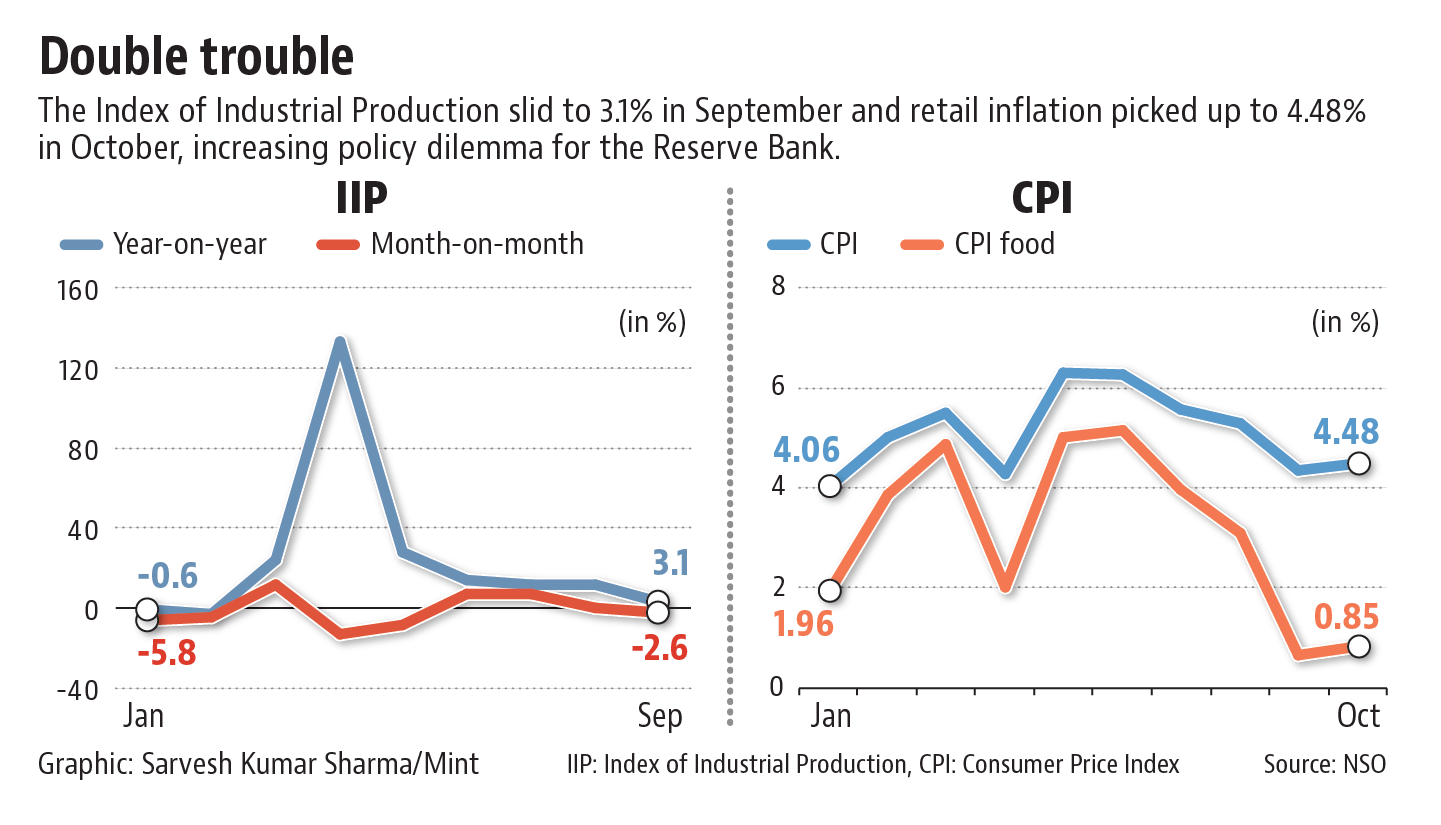
What surprised analysts, however, was the Index of Industrial Production (IIP) which grew at 3.1%, significantly lower than the Bloomberg forecast of 4.8%.
To be sure, the fall in IIP is more likely a reflection of the supply-production disruption in the coal-electricity sector which began in September and persisted through the first half of October than any significant loss of momentum in the ongoing economic recovery.
India’s headline inflation number reversed its declining trajectory from June to September—CPI growth fell continuously to reach 4.35% in September from 6.3% in May—to gain 13 basis points in October. One basis point is one hundredth of a percentage point. The rise in latest inflation numbers is a result of acceleration in both core and non-core components of the CPI basket. While core-inflation increased from 6% to 6.24%, non-core component went up from 2.42% to 2.63%. Food inflation, while it increased from 0.68% in September to 0.83% in October, continued to remain low, as vegetable prices contracted by 19.4% on an annual basis in October.
Prices of edible oil continued to grow at an alarming pace (33.5%) even in October.
There were other contributors to inflation too. Prices of cereals and products came out of contraction zone after eight months in October. And fuel inflation grew at 14.3% in October. But with the central government and many state governments announcing a cut in taxes on petrol-diesel, the inflationary tailwinds from fuel prices are likely to soften from November. Still, prices of fuel remain significantly higher than what they were last year.
IIP, which measures economic activity in mining, manufacturing and electricity generation, suffered a sequential contraction for the second consecutive month in September. The latest value of the index stands at 127.9 compared to 131.4 in July 2021. The unexpected moderation in IIP was largely a result of a disruption in mining and electricity sectors, most likely a reflection of the coal supply crisis which affected India’s thermal power plants. While the mining and electricity sub-indices fell significantly between August and September; 103.8 to 95.1 and 188.7 to 167.9 respectively, manufacturing fell only marginally from 130.5 to 129.9 (and likely as a consequence of the first two). The consumer goods sub-component of IIP increased from 134.5 to 137.7 between August and September, perhaps a reflection of firms ramping up production before the festive season.
“Non-food inflation is expected to continue facing pressures from surging global commodity prices. Nevertheless, the impact of the recent excise duty cuts on petroleum products should manifest in softening fuel inflation in November”, the note added.


