E-Paper



Russian hi-tech firms to join trade fair ahead of Brics Summit
Leading companies from Moscow’s hi-tech industrial sector will showcase their solutions at a collective stand at the trade fair.

 Prefer HTon Google


Russia’s top hi-tech companies will showcase products in areas such as medical equipment, robots, and transport digitalisation solutions at an event in New Delhi ahead of the Brics Summit, as the two sides focus on removing trade barriers.
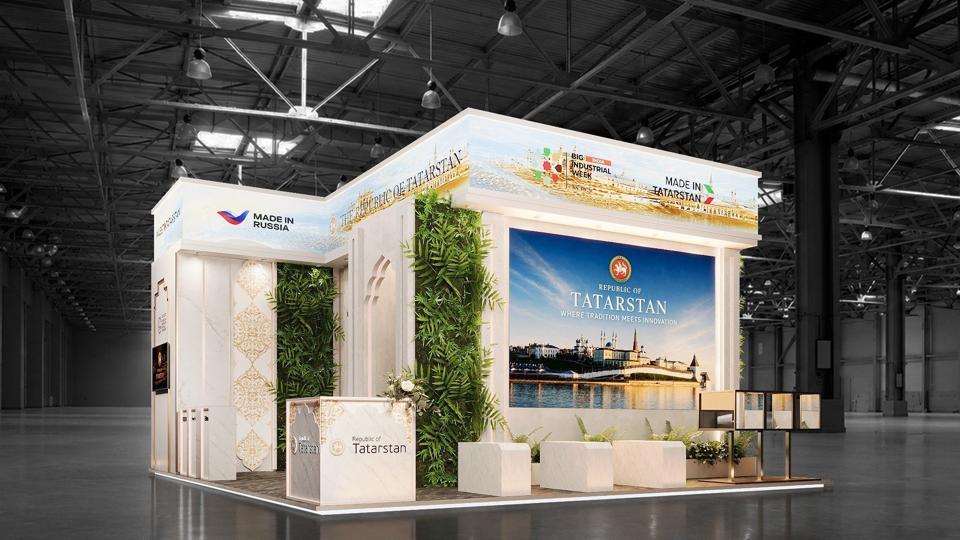
The first Innoprom.India International Industrial Trade Fair will be held on September 9-11, coinciding with the Brics business forum a day ahead of the grouping’s summit over the weekend.
Leading companies from Moscow’s hi-tech industrial sector will showcase their solutions at a collective stand at the trade fair.
“We are supporting the development of trade and economic relations with India. [Moscow] has traditionally ranked first among Russia’s regions in terms of trade [with India],” said Maksim Liksutov, the deputy mayor of Moscow responsible for transport and industry.
In the first half of 2026, the Moscow region accounted for 45% of Russia’s total trade with India. During the same period, Moscow’s exports of engineering products to India increased fivefold.
Leading Russian industrial companies and firms based in the Technopolis Moscow Special Economic Zone will hold talks with potential customers at the trade fair, Liksutov said.
The Institute for Scientific Research Microelectronic Equipment Progress will showcase a high-precision geodetic collaborative platform, while NEX-T will display solutions based on proprietary liquid-crystal modules, including the NextOne all-in-one PC and the NextPanel interactive educational system.
Moscow’s Scientific and Productive Centre Echoplus will exhibit its phased-array ultrasonic flaw detector AVGUR-ART, and Transtelematica will showcase transport digitalisation solutions, including the MTT Arm computing unit for integrating and controlling vehicle systems and a BIO validator enabling biometric fare payment.
Robopro will display its Doka collaborative robots designed to automate repetitive and routine processes.
Moscow is also supporting joint investment and infrastructure projects with Indian partners, said Anatoly Garbuzov, the head of the Moscow government’s department of investment and industrial policy.
“Following the St Petersburg International Economic Forum 2026, an agreement was signed with one of India’s leading pharmaceutical companies to localise the production of medicines at the Technopolis Moscow Special Economic Zone,” Garbuzov said. “Moscow is open to deeper cooperation and ready to offer our international partners the best expertise in critical industrial sectors.”
India and Russia shifted the focus to deepening economic cooperation at last year’s annual summit between Prime Minister Narendra Modi and President Vladimir Putin. However, the trade imbalance remains a key concern for the Indian side.
Indian exports account for only $5 billion out of the total two-way trade of about $60 billion. Trade has grown rapidly in recent years mainly due to India’s purchases of Russian oil.
Kremlin spokesperson Dmitry Peskov said on Tuesday that deepening economic cooperation will be on the agenda for a bilateral meeting between Putin and Modi on Friday. He said this will include more investments by Russian firms in the Indian market and new initiatives in nuclear energy and critical minerals.