E-Paper



Selling your car soon? Unpaid toll dues could now stop the transfer
The government has linked toll clearance to vehicle transfer and fitness renewal, tightening rules ahead of nationwide barrier-free tolling rollout.

 Prefer HTon Google


As India moves closer to a fully barrier-free tolling system, the government has tightened the rules around unpaid toll dues. The Ministry of Road Transport and Highways (MoRTH) has amended the Central Motor Vehicles Rules, 2026, making it compulsory for vehicle owners to clear all pending toll plaza charges before selling their vehicle or renewing its fitness certificate.
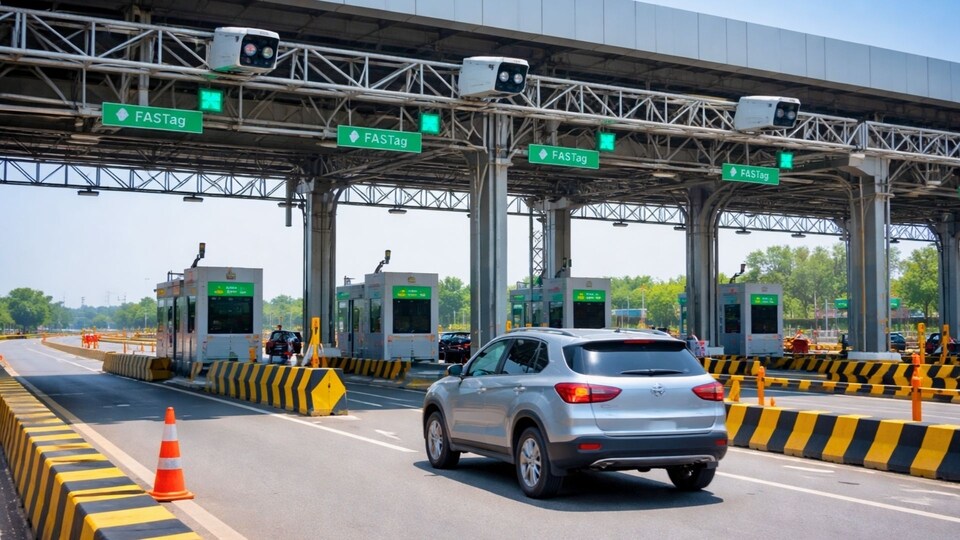
The updated rules are meant to ensure that toll payments are fully settled, especially as the country prepares for the rollout of advanced electronic tolling systems on national highways.
The focus is on plugging loopholes
According to the ministry, the amendments are designed to improve compliance and reduce evasion. “These amendments are aimed at improving user fee compliance, enhancing the efficiency of Electronic Toll Collection and discouraging user fee evasion on National Highways.”
MoRTH also clarified that these changes are closely linked to the upcoming Multi-Lane Free Flow (MLFF) tolling system, which will remove physical barriers at toll plazas. “These amendments will also help in user fee collection after the implementation of the Multi-Lane Free Flow (MLFF) system that will enable barrier-less tolling on the National Highway network,” the ministry said.
No NOC if toll dues are pending
One of the most significant changes is that a No Objection Certificate (NOC) will not be issued if toll dues remain unpaid. This affects vehicle transfers, fitness renewals, and permit-related approvals. In simple terms, owners will need to clear all toll-related payments before completing any major vehicle-related paperwork.
The rules now include a clear definition of “unpaid user fee.” This refers to toll charges that are logged by the Electronic Toll Collection (ETC) system when a vehicle passes through a national highway section, but the fee is not successfully collected under the National Highways Act, 1956.
The ministry said, “These amendments will help NHAI in fostering transparent and technology-driven tolling systems for sustained development and maintenance of the National Highway network across the country.”
Form 28 gets a digital upgrade
Changes have also been made to Form 28, which is required to obtain an NOC for transferring a vehicle. Applicants must now declare whether any unpaid toll demand is pending against the vehicle, along with relevant details. Parts of Form 28 can now be issued electronically through the designated online portal, pushing the process further towards digitisation.
(Also Read: GRAP 4 restrictions lifted: Can I enter Delhi with my out-of-state BS4 petrol vehicle?)
How will barrier-free tolling work?
Union Road Transport and Highways Minister Nitin Gadkari had earlier said that seamless tolling would be a top priority in 2026. “We plan to put up several seamless barrier-free tolling systems on national highways across the country. Initially, we have come out with 10 tenders for that. The cost of tolling will significantly come down from around 15 per cent currently to 3 per cent of the total toll collection,” he said.
The MLFF system will rely on Automatic Number Plate Recognition (ANPR), AI-based analytics, and FASTag. Vehicles will be charged without stopping. If dues aren’t paid, e-notices will be issued, and continued non-compliance could lead to FASTag suspension and other VAHAN-linked penalties.
(With inputs from PTI)