
 E-Paper



Annual Chandigarh Bird Club survey: 429 migratory waterfowls spotted in and around Sukhna Lake
The survey is an annual feature conducted by the club every year on November 12, the birth anniversary of “Birdman of India” ornithologist Dr Salim Ali


The Chandigarh Bird Club has identified 34 species of waterfowl and 43 species of arboreal birds in a survey conducted on Thursday at Sukhna Lake and surrounding areas.
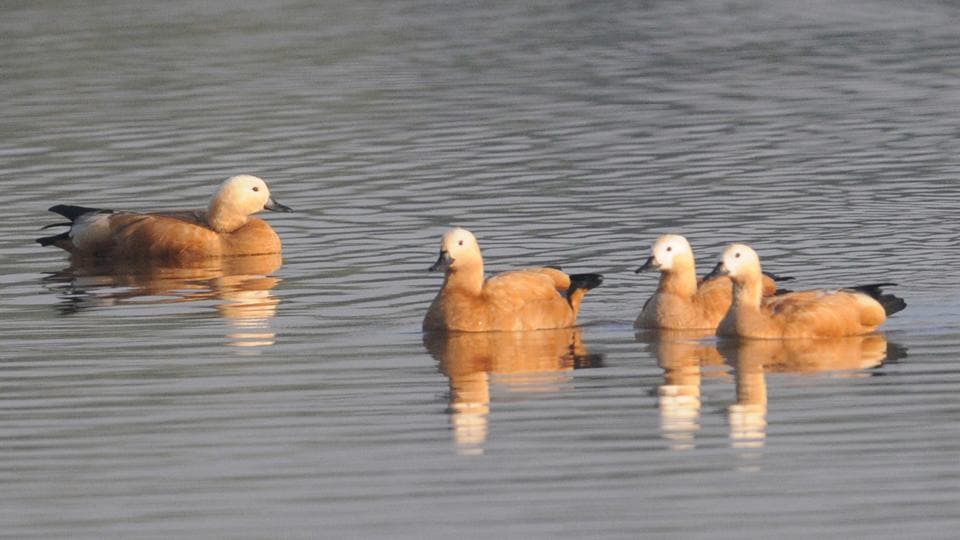
As per the survey, which is conducted strictly between 7am to 10am, 429 waterfowls were identified. Of these, the most common species was the Ruddy Shelduck with 141 sightings followed by 47 sightings of the Great Cormorant and 40 of Indian Spot Billed Duck.
Although the survey indicates a drop in the number of avian species as compared to previous years, final numbers of migratory birds will become clearer in February.
The survey is an annual feature conducted by the club every year on November 12, the birth anniversary of “Birdman of India” ornithologist Dr Salim Ali. The club also conducts a census of birds in February to determine how many migratory birds came to Sukhna Lake in the whole season. This survey is used by various forest and wildlife authorities of the city.
President of Chandigarh Bird Club Mitender Pal Singh Sekhon said there weren’t any species this year that were new, or any of the older species that had decided not to visit Sukhna Lake this year. “We have birds coming from all over the world including Central Asia, Europe, Japan and even the Himalayas. Waterfowl species include water-dependent birds like ducks while arboreal birds live in forests.”
Sekhon added that there were three types of migrations that birds do including latitudinal migration where birds come from Northern areas where it snows in the winters; altitudinal migration where they come from higher altitudes like the Himalayas to its foothills; and breeding migration which takes place in the summers.
Number of birds lesser than 2019
In November 2019, 620 birds were counted in the survey and 33 species of waterfowls were sighted. In November 2018, 417 birds were counted and 31 species of waterfowls were sighted.
The decreased numbers, Sekhon said, were not a big issue: “The November survey is just an initial count and the whole season is still remaining. The February survey will determine whether there was an increase or decrease in the number of migratory birds.”
Adding to this, secretary of the Chandigarh Bird Club Rima Dhillon said, “We expect that the number of birds will increase in December. Ever since desilting of Sukhna Lake was done and reeds were removed, the number of migratory birds has decreased. Shallow waters are needed for diving species of birds for feeding.”
Floating Island made for birds
Saying that it was too early for the UT forest department to prepare their own count of migratory birds, UT deputy conservator of forests (DCF) Abdul Qayum said, “We have made a floating island on Sukhna Lake for the water-dependent species of birds and to draw more numbers.” Qayum added that the comparatively better air quality this year owing to the Covid lockdown earlier this year was unlikely to have any effect on the number of migratory birds.


