E-Paper



337 MT toxic waste from Bhopal gas leak site to be shifted to Pithampur
The Bhopal gas leak killed 3,928 people, according to official data submitted to the SC, although the activists claimed that at least 10,000 people died

 Prefer HTon Google


BHOPAL: Nearly 337 metric tonnes of toxic waste has been packed in leakproof containers to be transported on Tuesday night from the Union Carbide plant in Bhopal to the Pithampur Industrial area in Dhar 250km away.
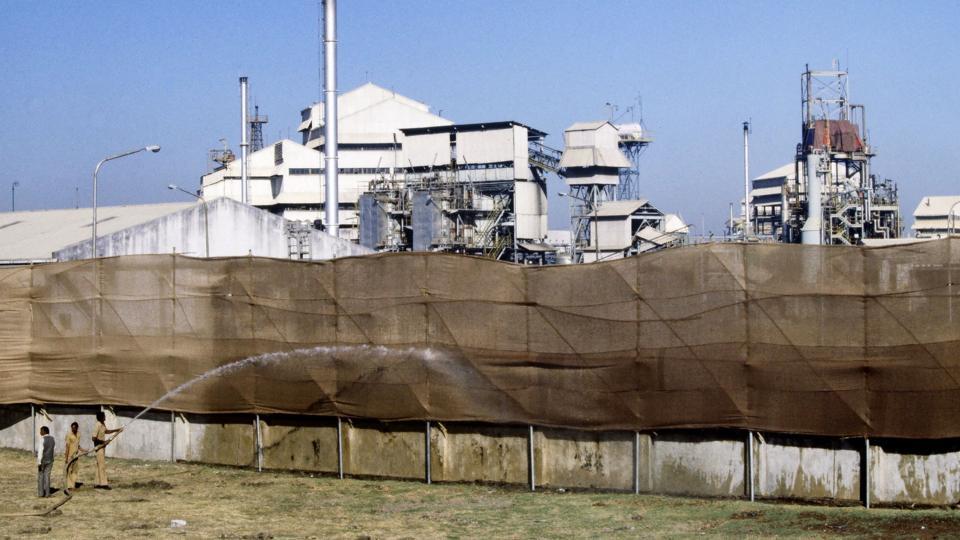
The waste was dumped in the plant after at least 30 tonnes of deadly Methyl Isocynate gas leaked from the plant on the intervening night of December 2 and 3, 1984. The leak killed 3,928 people, according to official data submitted to the Supreme Court, although the activists claimed that at least 10,000 people died in the world’s worst industrial accident.
Officials said the toxic waste would be transported by vehicles equipped with spill-control mechanism via a 250km-long “green corridor” for unrestricted passage across five Madhya Pradesh districts - Bhopal, Sehore, Dewas, Indore and Dhar.
A senior police officer, who is not authorised to talk to the media on this issue, said the Bhopal-Indore highway would be cordoned off for the vehicles carrying the waste. The trucks will stick to a maximum speed of 60 km per hour.
The exercise to pack the waste and load it onto the trucks started on Sunday.
A senior official of Bhopal Gas Relief and Rehabilitation Department said it took them more than 36 hours to pack the toxic waste. 30 metric tonnes of toxic waste was filled in each container. 250 workers in PPE kits were engaged in packing the toxic waste in a shift of 30 minutes every two-three hours. “A medical team keep on continuously conducting health check-ups of the workers while pollution control board officials tracked the air quality.
Swatantra Kumar Singh, commissioner of the rehabilitation department, said, “The disposal of hazardous waste stored at the Union Carbide India Limited (UCIL) site in Bhopal marks a crucial milestone in addressing the environmental and public health legacy of the 1984 Bhopal Gas Tragedy.”
Singh said the Common Hazardous Waste Treatment, Storage, and Disposal Facility (CHW-TSDF) at Pithampur was “a leading-edge facility designed to handle and dispose of hazardous waste with precision and safety. The incineration system at CHW-TSDF is engineered to ensure the complete destruction of hazardous waste in three stages”.
The first was the rotary kiln that operates at 850°C to 1200°C, Secondary Combustion Chamber that operates to destroy volatile organic compounds (VOCs) with 99.99% efficiency and Waste Feeding Systems to introduce bulk solids into the incinerator and use compressed air for fine atomization, ensuring efficient combustion of liquid hazardous waste, he said.
The plant has air pollution control devices (APCDs) for effective emission management, a packed bed scrubber to neutralise acidic gases using caustic solutions, and real-time monitoring systems to track key pollutants, including particulate matter, he added.
Singh said the Pithampur facility includes a state-of-the-art Secured Landfill Facility (SLF) for disposing of non-incinerable hazardous waste. The landfill facility has multi-layered liners constructed with geosynthetics to prevent leachate seepage and safeguard groundwater.