E-Paper



Banchhada community: How a caste certificate can become catalyst for change
Women from the community were often associated with prostitution as a traditional occupation and the stigma stuck

 Prefer HTon Google


He was just 10 when a policeman enquired about his father’s name during a raid in his village. The question stung because he did not know who his father was. With the defiance only a child can muster, he, in return, asked the officer his father’s name. The policeman’s reply stayed with the boy: the uniform is his identity, not his father’s name. On that day, he decided to join the police.
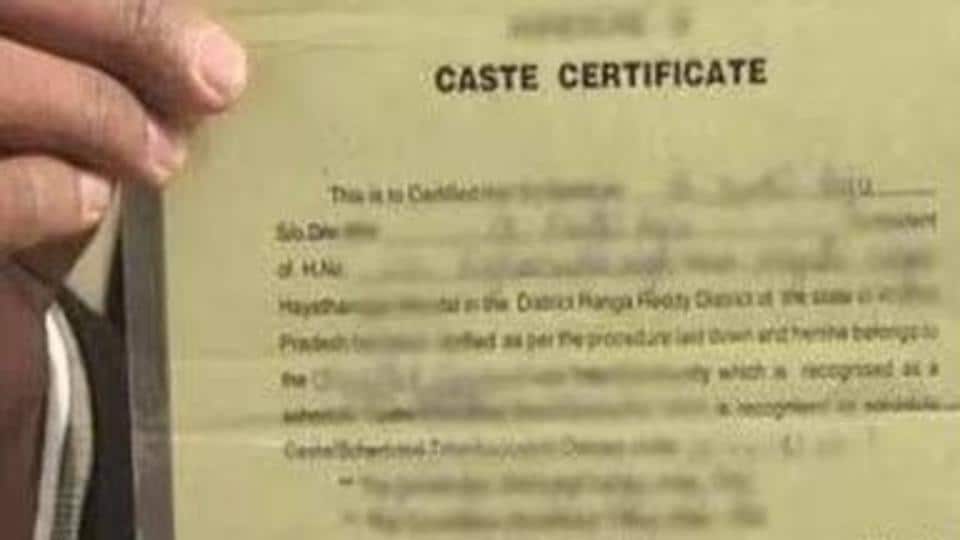
This is the story of a 24-year-old youth from the Banchhada community from Hadpipaliya, Manasa in Neemuch. He had to fight hard through school and college because, although his community falls under the Scheduled Caste (SC) category, getting a caste certificate without a father’s name was difficult, given that his mother was a sex worker like many other women from the marginalised Banchhadas.
Two years ago, a senior police officer helped him get a Scheduled Caste certificate. And, last week, he was selected in the police constable recruitment exam.
Tracking the community
For generations, more than 25,000 members of the Banchhada community living in 75 villages in the districts of Ratlam, Mandsaur and Neemuch have only survived on the margins of society. Women from the community were often associated with prostitution as a traditional occupation and the stigma stuck. Documentaries like ‘Highway Courtesans’ and ‘Highway Bride’ were made on their lives
That situation is now changing. Nine men and women from the community have cleared the police recruitment exam in the past three years.
The man, quoted above, said: “My mother was a victim of old-age tradition in which the eldest daughter of the family was forced into prostitution. She faced trauma. When I was born, the family members didn’t celebrate but when my sister was born, they celebrated it like a winning jackpot. But my mother decided to enroll us in a school and never forced my sister into this old-age tradition.”
Also Read:Rape victims, sex workers among those ineligible for MP scheme
“Our village is infamous for criminal activities like prostitution, robbery, smugglers of drugs and illicit liquor. Police raids are very common. Often, people tried to misguide us that society will never accept us and that the police will torture us for earning livelihood. I was confused between my mother’s dream and community people’s thinking but a dialogue changed my life,” he added.
This is the story of most of the other men from the community who have been selected for the police.
How it started
The change began in 2016 during the tenure of IPS officer Manoj Kumar Singh as the superintendent of police in Neemuch. He started exploring the realities of the Banchhada community with the help of a handful of community members.
What they discovered was startling: women, who made up nearly 65% of the population, were treated like gold, while the condition of men was dire. Singh said, “I saw villages where prostitution was practiced openly. The youth had no direction. Many were pushed into robbery or drug smuggling. With the help of community members, we tried to break this cycle and give them hope.”
The first step was to provide private jobs in industries but that alone wasn’t enough. He said, “A WhatsApp group was formed for youth interested in preparing for government jobs. From arranging coaching institutes to sharing syllabi, every effort was made. Some community members who had left the tradition years ago also stepped in to help.”
There were many challenges. The tradition had grown into a powerful nexus, with women traveling to cities and joining escort networks. Their lavish lifestyles often lured others deeper into the cycle.
Also Read: Despite change, prostitution stigma stays with this Madhya Pradesh tribe
“To counter this, a director from New York, Mystelle Brabbée, who documented the lives for three women for six years and made a documentary Highway Courtesans in 2004, was contacted as two of the documented women died of AIDS, and asked for help. She helped in conveying a crucial message: money alone cannot define dignity, true change means breaking free. We organised many programmes to instill a faith in the system,” Singh said.
It took time, but eventually, a few were convinced. The breakthrough came when Teena Malviya, whose parents had left the tradition long ago, became a ‘nayab tehsildar’. Her success three years ago marked the beginning of a new chapter. Like Teena, another young woman Honey Chauhan from Jaitpura village cleared the constable recruitment exam and became the first woman from the community to join the police.
Chauhan said, “My grandmother broke the tradition years ago and wanted my mother to be an example for other girls. My mother studied hard and became a teacher, though joining the police was a dream too distant to imagine. I carried that dream forward, studied, and finally succeeded.”
The road ahead
The director of NGO, Jan Shaurya, Akash Chauhan, who is himself from the Banchhada community, said “Around 260 youth from Ratlam, Neemuch and Mandsaur are preparing for government exams. One has cleared the UPSC prelims and moved to Delhi. Others are appearing from different states, determined to shed the stigma of being linked to prostitution. But many remain trapped because of one hurdle—a small piece of paper i.e., caste certificate. If the government helps them secure SC certificates based on their mother’s name, more will break free. That will change everything.”
Chauhan also filed a Public Interest Litigation (PIL) in the Madhya Pradesh High Court seeking to end the highway prostitution of girls from the Banchhada community in 2017. It is pending before the court.
A woman’s rights activist, Rolly Shivhare said, “This change is indeed commendable. The state government should help these communities too as most of the women involved in sex trade are from marginalised groups or communities that were declared criminal tribes during colonial period. A few people are involved in child trafficking too under this old-age tradition of prostitution. A little help like issuing caste certificate in the name of mother can bring a major change in the society.”