E-Paper



Non-BJP parties to seek paper ballot in place of EVMs: Kamal Nath
Senior Congress leader Kamal Nath said that soon a meeting of opposition political parties will be held in New Delhi seeking resumption of the ballot paper to replace electronic voting machines (EVMs).

 Prefer HTon Google


BHOPAL: Madhya Pradesh Congress president Kamal Nath has claimed that opposition political parties were coming together to initiate a campaign against use of electronic voting machines (EVMs) in elections alleging that the ruling Bharatiya Janata Party (BJP) was using EVMs to “steal votes”.
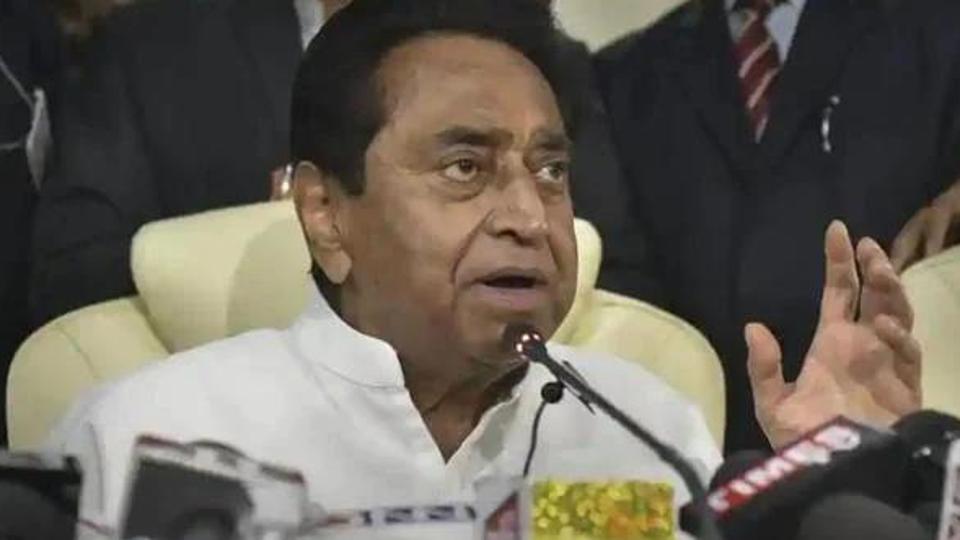
He also said that soon a meeting of opposition political parties will be held in New Delhi seeking resumption of the ballot paper to replace EVMs.
Nath said that no developed country including USA, Japan and European countries use EVMs. “These countries amended the law to resume voting through ballot papers,” the Congress leader said.
“We were raising questions on the theft of votes by misusing EVMs for a long time in India. Eight months ago, a meeting was held in New Delhi and top leadership decided to fight against it with facts. Now political parties including Congress, Samajwadi Party, TMC, TDP, NCP and others have decided to challenge the provisions of the Representation of People Act that led to introduction of EVM,” he said.
In 2019, Telugu Desam Party (TDP) chief Chandrababu Naidu moved an application to the Supreme Court against EVM but it was quashed. Now, another PIL has been filed in the apex court and the matter is pending.
Nath said they have completed research to strengthen the case against the BJP for stealing votes from EVM.
“After UP election, we got classic cases that will easily prove theft of votes. A Congress candidate from UP got only one vote from a booth where his wife and children live. This is not the only incident. We have many such examples,” he said.
The former union minister claimed that except National Democratic Alliance (NDA) parties, all other parties are ready to fight against misuse of EVM and to ensure voting through ballot papers.
“All the 21 parties, who moved the application in 2019, gave their consent and we will present the case before the court strongly. We have set a target to win this fight legally before the election in four states including in MP in 2023,” Nath said.
On the BJP charge that the Congress government introduced EVMs in India, Nath said when EVMs were introduced in India, the technology was safe. “With technological advancement, it is very easy to tamper EVMs,” he said.
On why the Congress and other leaders don’t raise any questions over EVMs when they win, Nath said the misuse of EVMs happens only in selected seats so that nobody ever raises any question. “We will expose everything and i.e., with proof,” he added.
On his claims, BJP state president VD Sharma said this clearly shows frustration of the Congress. “BJP lost in Punjab so what is their logic behind it. Samajwadi Party won 100 seats in UP so how did it happen? Kamal Nathji should understand that the Congress party lost the ground due to a family and now they are looking for a reason to save the family,” he said.
According to Election Commission of India, the EVMs were used for the first time in the general election in Kerala in May 1982. However, the absence of a specific law prescribing its use led to the Supreme Court striking down that election. Subsequently, in 1989, Parliament amended the Representation of the People Act, 1951, providing for use of EVMs in the elections (chapter 3). A general consensus on its introduction could be reached only in 1998 and EVMS were used in 25 legislative assembly constituencies spread across three states of Madhya Pradesh, Rajasthan and Delhi. Since 2004, EVMs have been used in all Lok Sabha and assembly elections.
However, in the past, BJP leaders such as Lal Krishna Advani also raised questions over the possibility of EVM tampering and the Election Commission negated all such claims. The EC introduced voter verified paper audit trail (VVPAT) an independent verification system for voting machines, where the voter can see a paper receipt of whom he or she had cast the vote.