
 E-Paper



Blue revolution: Fisheries dept proposes non-commercial power tariff to boost shrimp farming
According to director and warden of fisheries Jasvir Singh, a proposal of an amended power policy is aimed at bringing down the input cost for shrimp cultivation in the targeted areas of saline-affected districts of southwest Punjab. The government decision might come after the Jalandhar bypoll, he says.


The state fisheries department has submitted a blueprint to the Punjab government to start providing electricity at non-commercial rates to boost shrimp farming.
Top officials of the department said that a decline in shrimp cultivation is a worrying trend and a proposal was sent to the government recently in which it was advocated to lower power tariffs as a pilot project for one year.
According to the director and warden of fisheries (DWF) Jasvir Singh, a proposal of an amended power policy was aimed at bringing down the input cost for shrimp cultivation in the targeted areas of saline-affected districts of southwest Punjab.
He said the government decision might come after the Jalandhar bypoll. The director said the department is also working on possible measures of cost-cutting, including a reduction in transportation charges, as seeds and feed only in the coastal states.
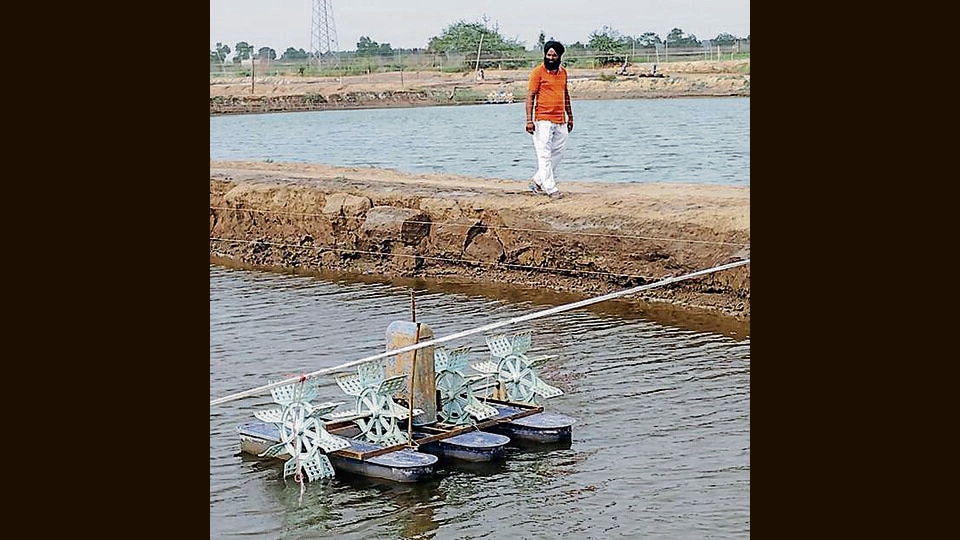
“Lower electricity rates are also proposed for fisheries but since shrimp farming requires more power to upkeep the ponds, it has more significance for the latter due to the use of aerators that help shrimp get an adequate supply of dissolved oxygen. We expect that this incentive may encourage farmers to adopt aquaculture while other options to promote shrimp cultivation may be considered in the next phase,” the director said.
Shrimp farming is undertaken in zero-earning saline areas of southwest districts of Punjab including Muktsar, Fazilka, Faridkot, Mansa, Bathinda and Ferozepur.
It was introduced in Punjab in 2016-17 to boost farmers’ income from the agriculturally unproductive land.
Shrimp farming is an aquaculture business that exists in marine environments mainly in soil having salinity ≤ 5 ppt. The shrimp season lasts four months, from July to October. Shrimp farming started on a positive note as the experiment contributed to the economics of several farmers.
In 2023, Punjab produced around 2,700 tonnes of shrimp, an export-oriented aqua crop.
However, it failed to attract more farmers and an aquaculturist like Sarup Singh Sandhu, president of the Punjab shrimp growers association, attributed it to a lack of support from the state government.
“Besides commercial rates on electricity connections, shrimp growers face the problem of travelling to Andhra Pradesh to get seeds and feed for the aqua crop. Both factors significantly enhance cost input for the risky crop whose rates depend upon the international market,” said Sandhu, who is among the first five farmers to adopt shrimp farming in 2016.
“We have about 250 members, and the acreage under shrimp farming was about 1,200 acres in 2023. But discouraged by the unfriendly attitude of the state and low demand from the international market in the last two consecutive years, this year the area is likely to drop to 800 acres,” Sandhu added.
Harjinder Singh from Muktsar, who started shrimp farming in 2022, said this aqua crop has the potential to improve the economic condition of farmers having waster-logged lands.
“This unconventional farming requires high investment but returns are lucrative. The government should consider concessional power rates, if not free like conventional agriculture, to encourage making wasteland into a profit-making asset,” he added.
Harminder Singh from Mansa said the government should also consider subsidies on seeds and feed or provide the resources in Punjab to cut down the transportation cost for farmers.
“The government should intervene in forming farmer cooperatives so that waterbodies of 15-20 acres are formed and hiring experts for aquatic health becomes viable. Though a sizeable waterlogged land has been reclaimed still thousands of hectares, belonging to poor farmers, completely unfit for agriculture can be converted into shrimp farms. Shrimp farming has a huge potential and long-term organised efforts should be made through a policy,” added the seasoned aquaculturist.


