
 E-Paper



Chandigarh | Mosquito fish introduced in Butterfly Park
The fish species, also known as ‘mosquito fish’ predominantly feeds on the insect’s larvae. The department of animal husbandry and fisheries in coordination with the forest department will release the fish in other stagnant water bodies.

 Prefer HTon Google


Mosquito-killer fish Gambusia was introduced in the Butterfly Park pond on Thursday to maintain the ecological balance in the waterbody and control the insect’s population.
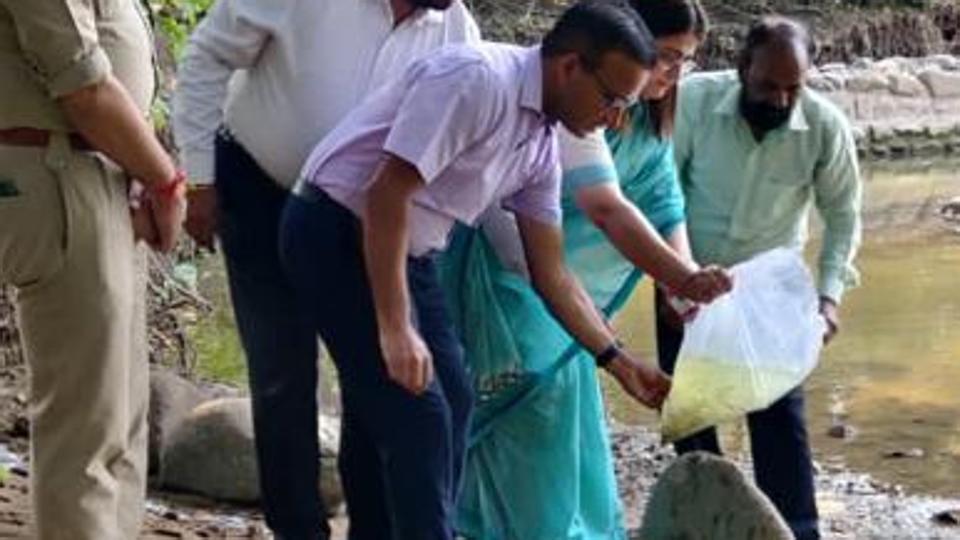
The fish species, also known as ‘mosquito fish’ predominantly feeds on the insect’s larvae. The department of animal husbandry and fisheries in coordination with the forest department will release the fish in other stagnant water bodies.
Deputy conservator of forests (DCF) Abdul Qayum said, “After the fish was introduced in different water bodies around four years ago, migratory birds such as common cormorants and kingfisher, are spotted in the area. Such sightings are a good indicator of the local ecology and health of a water body.”
“The Gambusia released in the water bodies was produced from a ‘fish seed’ farm at the regulator-end of the Sukhna Lake,” said animal husbandry and fisheries director Palika Arora said, adding, “The farm is the only one in north India that breeds the rare fish and supplies it free of cost to check mosquito breeding.”
The farm, , which is run by the department of fisheries, breeds the fish species from April to September and releases the fish in water bodies from October, as per requirement.
On the larvae-eating capacity of the fish, animal husbandry and fisheries joint director Kanwarjit Singh said, “A single full-grown fish eats around 100 to 300 mosquito larvae per day, which in turn helps to control the spread of vector-borne diseases such as dengue and malaria, in an ecological manner.”
“Residents can approach the farm and submit an application to request the department to release this fish in stagnant water bodies and the department officials will inspect the spot and release fish as per requirement,” the officials added.


