
 E-Paper



Chandigarh: PU forms panel to examine Haryana students’ demands
The committee, notified by the vice-chancellor Renu Vig, held its first meeting on November 17 in the office of the dean student welfare (DSW)

 Prefer HTon Google


Amid escalating tensions on campus over the senate election schedule, Panjab University (PU) has constituted a seven-member committee to examine a memorandum submitted by Haryana students seeking the restoration of the state’s historical, legal and constitutional representation in the university’s governing bodies.
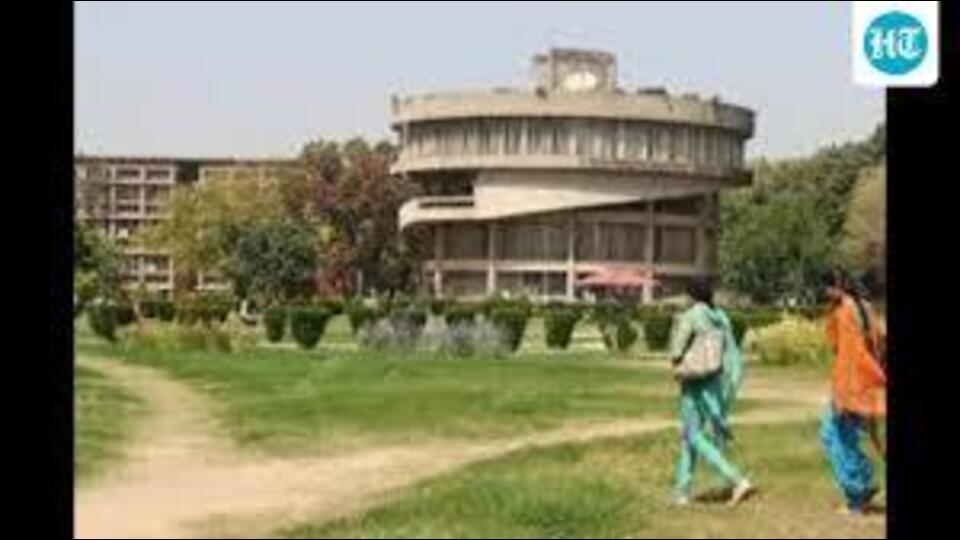
The committee, notified by the vice-chancellor Renu Vig, held its first meeting on November 17 in the office of the dean student welfare (DSW). It has been tasked with reviewing Haryana students’ demands for representation in PU’s senate, syndicate and other governing bodies and for implementation of the reservation policy as per University Grants Commission(UGC) guidelines of August 25, 2006.
Haryana students have submitted archival documents and a detailed memorandum tracing the state’s historic stake in PU. V-C Vig said the administration had to formally respond after receiving the memorandum. “After students gave us the memorandum, we formed a committee to look into their demands,” she said.
Committee chairperson Sukhbir Kaur said members reviewed the documents during the November 17 meeting. “We went through the material and have asked the students to authenticate the documents and return them in verified form,” she said. The committee’s next meeting is yet to be scheduled.
The notice of the November 17 meeting was circulated widely on Sunday, sparking criticism from Punjab-based student organisations. The SATH Party condemned the committee’s formation, saying Punjabi student groups had long demanded implementation of Punjab Civil Service Rules and the state reservation policy but received no response.
A long, layered Haryana-PU history
PU’s inter-state legacy dates back to the post-Partition era when its jurisdiction extended across the composite Punjab region. After the Punjab Reorganisation Act, 1966, PU continued as an inter-state body corporate, with many Haryana colleges still under its affiliation. This arrangement ended when the Ministry of Home Affairs issued a notification on November 1, 1973, terminating PU’s jurisdiction in Haryana effective June 30, 1974. Haryana subsequently built its own university structure, giving up representation in PU’s senate and syndicate.
The debate resurfaced in 2015, when the Punjab and Haryana high court initiated a suo motu case on PU’s finances and governance. The Union government told the court that PU was neither a state nor a central university but an inter-state body corporate-opening interpretive space for Haryana to revisit its erstwhile association.
From 2017, Haryana began formally pressing for re-affiliation and financial participation. In 2023, six colleges in Ambala and Panchkula were expected to seek affiliation, with Haryana offering to cover 5% of PU’s annual budget. In 2025, outgoing PUCSC president Anurag Dalal sparked controversy by proposing to rename PU as “Panjab and Haryana University,” which received backing from Haryana MPs.
The tensions rose further at the North Zonal Council meeting, where Haryana reiterated its demand for restored representation. Punjab chief minister Bhagwant Mann opposed the move firmly, saying PU was an emotional and historical symbol of Punjab and that Haryana “cannot return 50 years later to alter its character.”
However, despite the committee’s formation, university officials acknowledge that PU has limited authority in deciding questions of inter-state representation or affiliation. These matters are rooted in the Punjab Reorganisation Act, shaped by decades of state-level withdrawals and ultimately fall within the purview of the central government. The committee’s review, therefore, can only examine the students’ submissions – not resolve the larger political and constitutional dispute that continues to define the Haryana-PU question.


