
 E-Paper



Chandigarh’s air quality drops to poor
The average AQI over the past 24 hours till 7 pm on Thursday was worst at Chandigarh’s Sector 53 CAAQMS, where it went up to 233, followed by 216 at the Sector-25 CAAQMS and 207 at the Sector-22 CAAQMS. At the “moderate” level through the week, Chandigarh’s air quality plunged to “poor” on Thursday.


At the “moderate” level through the week, Chandigarh’s air quality plunged to “poor” on Thursday. The air quality index (AQI) had remained below 200 (moderate) since Monday. But on Thursday, it crossed the 200 mark (poor) at all three Continuous Ambient Air Quality Monitoring Stations (CAAQMS) in the city.
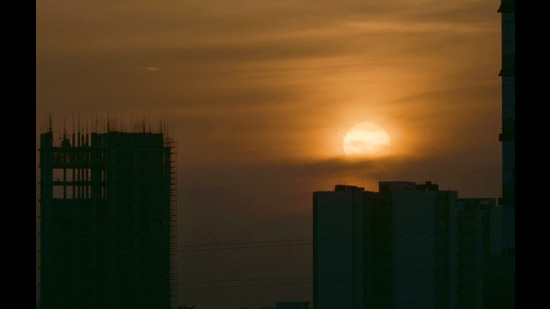
The average AQI over the past 24 hours till 7 pm on Thursday was worst at the Sector 53 CAAQMS, where it went up to 233, followed by 216 at the Sector-25 CAAQMS and 207 at the Sector-22 CAAQMS.
An AQI between 200 and 300 can cause breathing discomfort to most people on prolonged exposure. When it’s between 100 and 200, it can cause discomfort to people with lung and heart diseases. An AQI between 50 and 100 can also cause minor breathing discomfort to sensitive people.
The Sector 53 CAAQMS is related more closely to vehicle pollution, as it has been constructed near the Sector-43 ISBT, while the Sector 22 CAAQMS has been set up near the sector’s densely populated market and residential area, and that in Sector 25 on the outskirts of the city.
Speaking about why the air quality deteriorated, UT environment director Debendra Dalai said, “It’s due to a meteorological phenomenon. An anti-cyclonic movement has formed over the region that is not allowing the pollutants to get dispersed. Winds are also active that scatters pollutants like sand in the air.”
Dalai added that the AQI readings were not a cause of concern as of now and the Chandigarh Pollution Control Committee (CPCC) will continue to monitor them in the coming days.
Day temperature increases further
After reaching 27°C on Wednesday, making it hottest February day in two years, the city’s maximum temperature rose further to 27.7°C on Thursday, 4.6 degrees above normal.
This is the highest that the maximum temperature has gone in February since 2021 when the maximum temperature had soared to 32.7°C on February 26.
With spring around the corner, the day temperature is likely to increase further in the coming days and may even jump to 30°C by the start of the next week, as per weather department.
The minimum temperature also went up from 10.7°C on Wednesday to 11.6°C on Thursday, three degrees above normal. Over the next three days, the maximum temperature will remain between 28°C and 29°C, and the minimum temperature between 13°C and 14°C.


