
 E-Paper



Chandigarh’s Covid response fraught with lapses
The hospital infrastructure that is being pushed to the extreme is crumbling, able to hold only 850 patients at present,

 Prefer HTon Google


Call it laxity, insensitivity, incompetence or short-sightedness, Chandigarh’s fight against the deadly second wave of Covid-19 is fraught with lapses and the administration’s response is failing on the focus points of testing and treatment.
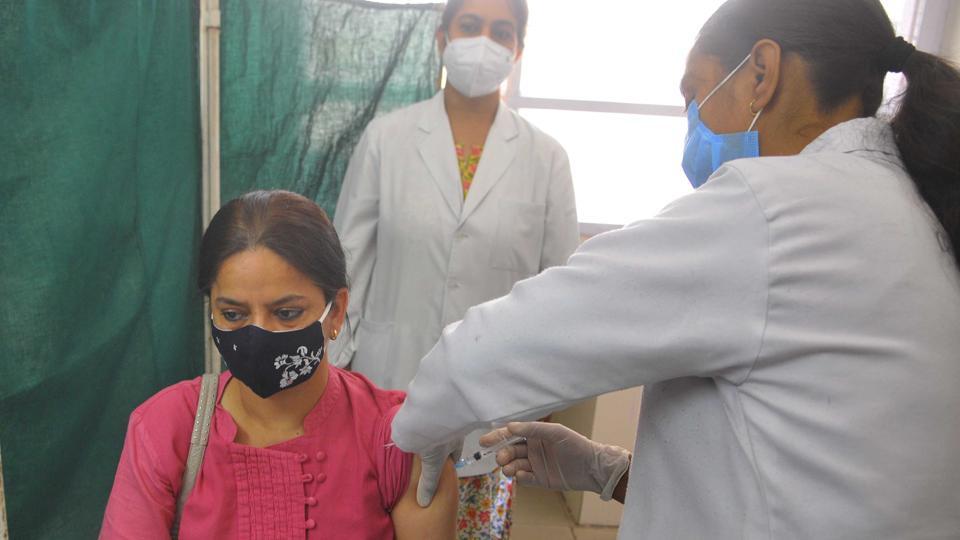
In fact, the hospital infrastructure that is being pushed to the extreme is crumbling, able to hold only 850 patients at present, even though the infection number is expected to hit more peaks.
At a time when new cases are rising at a rapid pace, hospitals have started making provisions for adding new beds, mostly equipped with ventilators, which are the need of the hour.
Deepak, whose 62-year-old mother was admitted at Government Multi-Specialty Hospital in Sector 16, was told to arrange for a ventilator when her oxygen level dropped to 60 on Monday evening.
“I could not arrange it and she died. I cannot speak a word beyond it,” the Dadumajra resident said.
Badnore satisfied with UT’s efforts: Admn
Meanwhile, the UT official statement on Monday said that administrator VP Singh Badnore was satisfied with the efforts made by UT, and directed that more ventilators and oxygen concentrators should be arranged for future needs.
UT, however, has been able to mobilise only 126 ICU beds for Covid-19 patients, which are clearly not able to accommodate the rush of those requiring intensive care.
Painting a rosy picture, the UT official release also stated that the administration had set up 100 beds at the Sector-48 hospital and 21 more oxygen beds were being added. At Government Medical College and Hospital in Sector 32, 155 beds were available, which had now been increased to 200 oxygen beds. At GMSH-16, with the addition of 48 more beds, the total capacity will increase to 248.
Former vice-president of the Indian Medical Association Dr RS Bedi said, “We are not prepared on the scale we could have been after we witnessed the first wave. The last eight months, we could have created specialists to run more ICUs efficiently. But we were sleeping during that time.”
‘No concrete plan to deal with crisis’
Hospitals in the city have said that due to non-availability of a trained workforce, they were unable to expand ICU facilities. But there was no concrete plan on how to deal with the crisis, they have said.
While the administration is turning to the Post Graduate Institute of Medical Education and Research (PGIMER) for more beds, the institute has said that expanding Covid-19 services would hit routine health-care.
UT adviser Manoj Parida said, “We have created enough infrastructure for Chandigarh residents keeping in mind the requirement. PGIMER should push their capacity as they have enough workforce. Every resource at administration-run hospitals is being utilised but that is not proving to be sufficient.”
Our capacity is limited: PGIMER director
PGIMER director Dr Jagat Ram said, “Our beds have been increased from 50 to around 360, which are almost full; around 50 patients in the emergency block are yet to be adjusted. There is a limit to our capacity. If it comes to arranging more beds, our non-Covid services will be badly affected.”
Meanwhile, issue of test reports from government-run facilities are experiencing considerable delays, with not more than 1,000 samples being processed in a day due to the involvement of private players in the process of sample collection by UT hospitals. Only now, GMCH-32 has placed an order for two new testing machines, while the work at Virus Research and Diagnostic Laboratory has been pushed.
A city-based social activist, RK Garg, said, “A sample of a relative was given on April 29 and the report was delivered on May 3 and the patient had to stand in this summer for more than one hour at the civil hospital in Sector 45. This should be stopped immediately and reports should be delivered on the mobile within 24 hours.”


