
 E-Paper



Chandigarh: Work on emergency & trauma centre at GMCH-32 continues to drag
Back in 2019, the Chandigarh administration had given the go-ahead for the construction of the centre, with an expected expenditure of ₹52.77 lakh

 Prefer HTon Google


Green-lit in 2019, the 259-bedded emergency and trauma centre at Government Medical College and Hospital (GMCH), Sector 32, has run into one hurdle after the other.
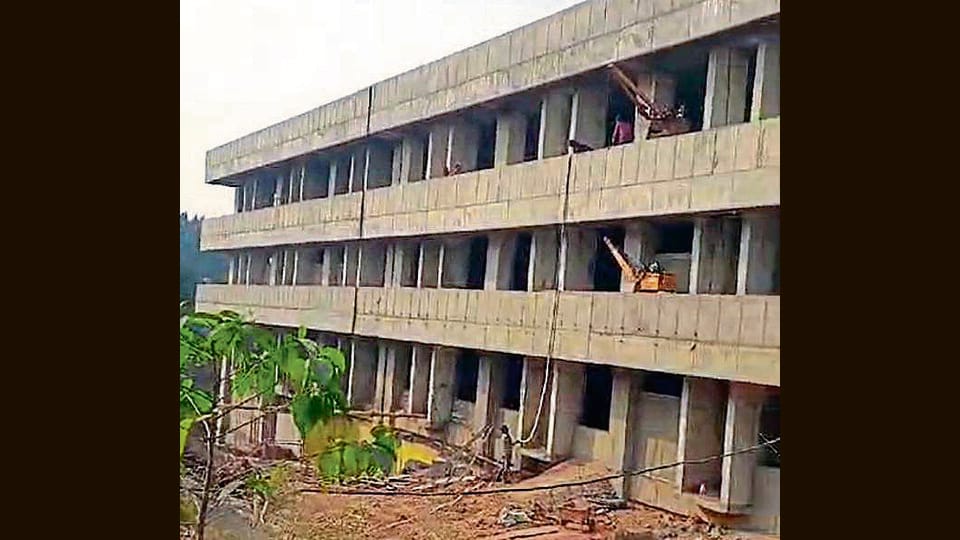
Back in 2019, the UT administration had given the go-ahead for the construction of the centre, with an expected expenditure of ₹52.77 lakh.
The plan outlined the completion of the 259-bedded emergency and trauma block within 18 months post the allocation of work, with the deadline being set for February 2022, but the work is still incomplete.
The facility assumes significance as the only operational trauma centre catering to the patients and victims of natural/man-made disasters, road accidents and other major immediate medical needs is at the Post Graduate Institute of Medical Education and Research (PGIMER).
As per the GMCH-32 administration, the construction of the building is nearing completion.
Medical superintendent Sudhir Garg said, “We have not been given a new deadline by the engineering department, but the contractor assures us that the work will conclude by June, with only minor flooring tasks remaining.”
GMCH-32 attends to patients not only from Chandigarh but those from neighbouring states of Punjab, Haryana and Himachal Pradesh as well.
The current emergency block, equipped with a mere 45 beds, witnesses a daily influx exceeding 400 patients.
Amid heavy rush, patients are examined on stretchers and trolleys.
Block A is slated to host the forthcoming emergency-cum-trauma centre, supplanting the existing emergency facility, which is set for demolition.
Simultaneously, the Block K section of the hospital is earmarked for the establishment of a new mother and child care centre.
The emergency block is designed to incorporate clinical laboratories, along with X-ray, CT scan, and MRI facilities. Besides, it will house a pharmacy, two emergency operating theatres, a minor operating theatre, post-operative wards, an isolation ward, and parking in the twin basements, accommodating 59 four-wheelers and 144 two-wheelers. The block is also set to include provisions for central air-conditioning, firefighting and fire sensing systems.
A cutting-edge intensive care unit (ICU) with 24 beds, a 64-bedded ward for stable patients, two isolation wards comprising 33 beds, and a 47-bed ambulatory care ward are part of the upcoming plans.


