
 E-Paper



Check on speed can reduce accidents by half in Punjab: DGP
Was speaking at a roundtable conference on road safety and socio-economic assessment of national highways in Punjab organised by Chandigarh-based Institute for Development and Communication


Punjab’s Director General of Police (DGP) Dinkar Gupta said keeping a check on vehicle speed can reduce accidents by half in Punjab. He was speaking at a roundtable conference on road safety and socio-economic assessment of national highways in Punjab organised by Institute for Development and Communication in Sector 38 on Thursday.
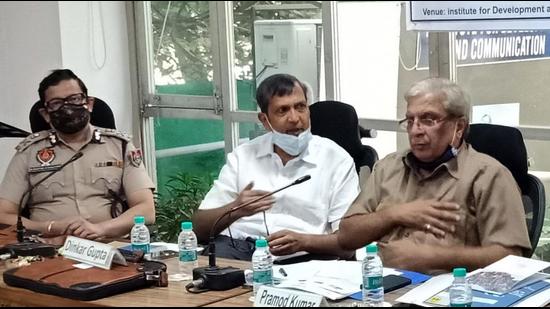
Gupta said, “Traffic cops are the face of the police who interact with the public on a daily basis. There are only eight traffic cops in Punjab per 1 lakh people, which is still higher than the national average.”
The DGP also spoke about how the same people who follow all traffic rules in Chandigarh adopt a casual approach when they enter Punjab. He said the Punjab Police are now using equipment such as traffic enforcement cameras to monitor vehicles’ speed in cities.
Punjab’s Additional Director General of Police (ADGP) (traffic) SS Chauhan discussed how techniques such as predictive analysis can be employed to manage traffic in a better way.
Talking about road safety assessment of national highways in Punjab, state’s traffic adviser Navdeep Asija said, “Accidental death rate on the patch of NH 152 that passes through Mohali is 2.15 deaths per kilometre, five times higher than the state and national average. Most of the pedestrians were killed when they were walking along the road rather than trying to cross it. Maximum accidents were caused by cars and the highest number of mishaps were recorded on Saturdays, when people tend to venture out in their cars and the volume of transport vehicles is lower.” He also mentioned how most of the fatalities were caused between 6pm and midnight.
Asija added that 45% of 175-km stretch of NH 44 has been declared as black spot and the highest rate of fatalities is in Ludhiana and Fatehgarh Sahib due to the industrial nature of these districts.
The socio-economic impact of NH 44 was also discussed by Shuchi Kapuria, who showed how schools close to the highway have higher enrolment rates, especially in higher classes, and also how more crimes are also witnessed close to the highways.
Deputy director of Institute for Development and Communication, Chandan Awasthi, speaking on the sideline of the event, said this research was prepared by the traffic psychology unit recently formed by their institute and will be used to spread awareness among those living close to the national highways in Punjab as well as the first responders.


