
 E-Paper



Daily Covid cases soar to 331, Chandigarh clamps night curfew
Public movement once again restricted from 10pm to 5am after a gap of five months; all educational institutes closed

 Prefer HTon Google


The UT administration reintroduced night curfew in the city after a gap of nearly five months as the daily Covid-19 cases surged to 331 on Thursday, a 331% spike from 70 cases on New Year day.
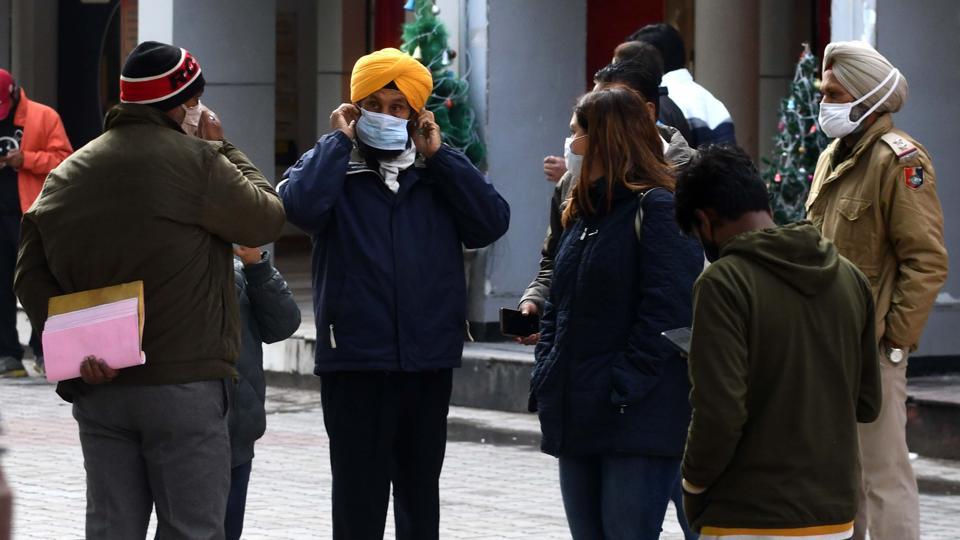
The administration had eased the last night curfew on August 17, 2021, after the second wave waned.
However, noticing the sharp rise in cases once again, the UT administration imposed a slew of fresh restrictions on public movement and also closed down all educational institutions till further orders.
The decisions follow the latest restrictions imposed by Punjab and Haryana.
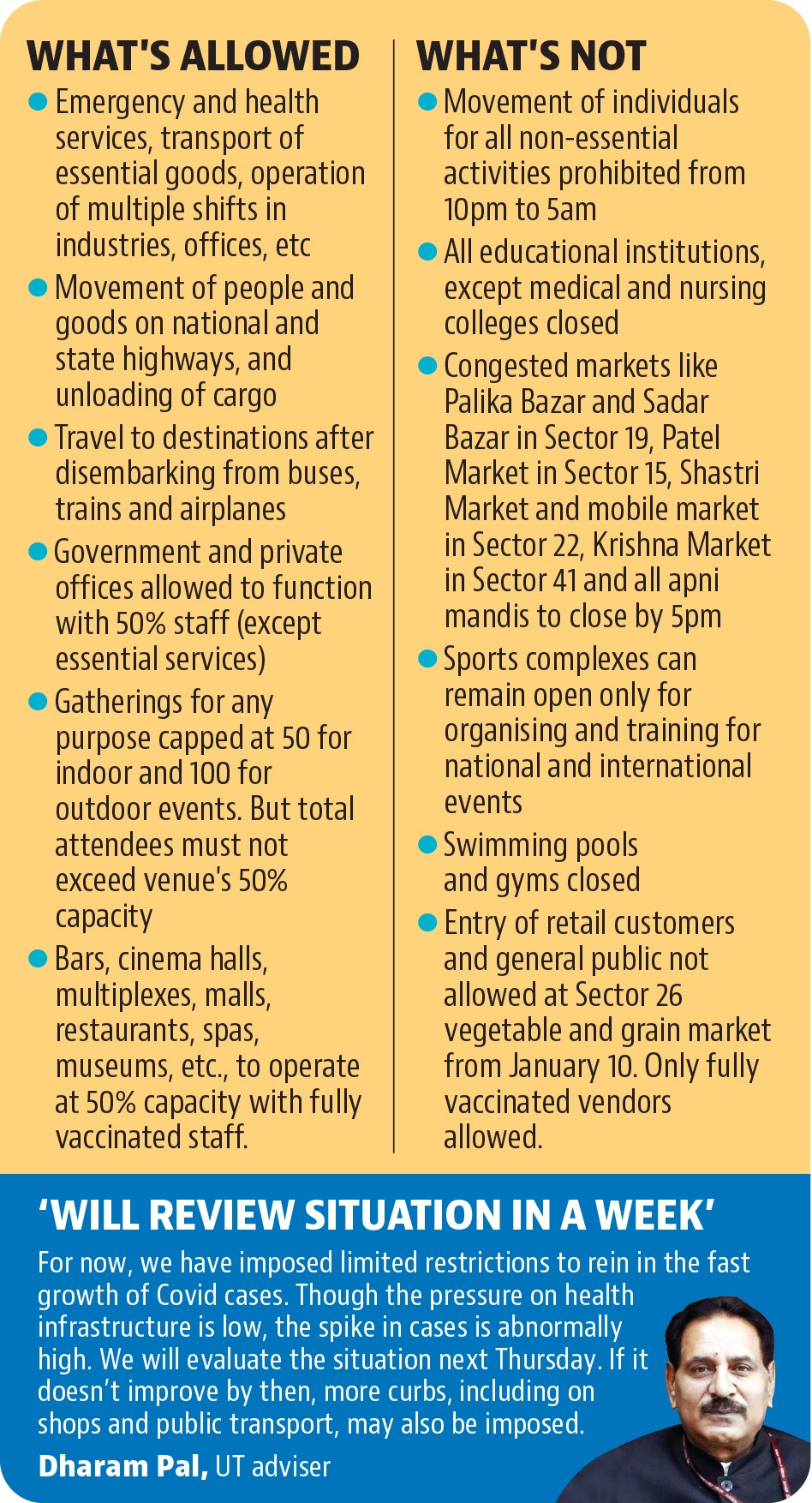
As per the order issued by UT adviser Dharam Pal, movement of individuals for all non-essential activities will remain prohibited between 10pm and 5am.
However, essential activities, including emergency and health services, transport of essential goods; operation of multiple shifts in industries and offices, movement of people and goods on national and state highways, unloading of cargo, and travel to destinations after disembarking from buses, trains and airplanes will be permitted.
The decisions were taken in the Covid review meeting chaired by UT administrator Banwari Lal Purohit.
Only online teaching at educational institutes
All educational institutions, including schools, colleges, universities and coaching institutions, have been closed and told to maintain their academic schedule through online teaching. However, medical and nursing colleges may continue to function normally.
Government schools were set to reopen on January 8 after the winter vacations, while private schools were reopening gradually with different schedules.
At Panjab University, most classes are already being held online and due to the ongoing protest by teachers, the December semester exams had been postponed.
Market restrictions
Congested markets, including Palika Bazar and Sadar Bazar in Sector 19, Patel Market in Sector 15, Shastri Market and mobile market in Sector 22, Krishna Market in Sector 41 and all apni mandis will close by 5pm.
At the Sector 26 grain and vegetable market, only fully vaccinated vendors will be allowed, and entry of retail customers and general public will be prohibited from January 10.
Offices to work with 50% staff
All government offices in Chandigarh, except essential services and departments, will function with 50% staff. All heads of offices will devise rosters to implement the order.
Services of any staff of the UT administration can be utilised in the essential services and departments, including health, revenue, municipal corporation and police.
All private offices will also function with 50% staff and rest will be required to work from home.
Restrictions on hospitality industry
All bars, cinema halls, multiplexes, malls, restaurants, spas, museums, etc., will operate at 50% capacity with fully vaccinated staff.
Gatherings for any purpose have been restricted to 50 persons for indoor and 100 persons for outdoor events. However, the total number of persons should not exceed 50% of the venue’s capacity
Swimming pools and gyms have been ordered shut, while sports complexes can remain open only for organising and training for national and international events.
Thrust on vaccination
During the review meeting, Purohit directed the officials to place maximum thrust on vaccination.
Ordering vaccination on a war footing, he directed that 100% of the eligible 15 to 18 years population be administered the first dose of vaccine within a month and simultaneously, in the same period, the eligible people aged over 18 be covered with the second dose.
“It has been brought to my notice that most of the testing burden as of now is on PGIMER, which needs to be rationally divided among various health facilities,” said Purohit and directed that by the end of the month, facility for RTPCR testing be made functional at GMSH-16.
Creating testing infrastructure at the civil hospitals in Sectors 22 and 45, and Manimajra may also be explored, Purohit told the health secretary.
Expressing serious concern over a number of doctors of PGIMER testing positive in the past few days, the administrator, at the behest of the director, approved tele-consultation as well as curtailing of elective surgeries.
Incomplete Covid testing data on the requisite portal, resulting in projection of high-positivity rate, was taken seriously by the administrator.
“Incorrect data can cause undue panic in public. It also obstructs research of scientists working on different aspects of the third wave of pandemic and will mandate imposition of uncalled-for restrictions,” said Purohit, while directing the health authorities to rope in more data entry operators for immediate uploading of data on the portal.
Earlier, he reviewed the availability of medical infrastructure, including oxygen and beds, and expressed satisfaction over the arrangements.


