
 E-Paper



Damage to load-bearing structure led building to come crashing down in Industrial Area Phase 2 tragedy: Probe
The inquiry concluded that the failure in the load-bearing walls was the main cause of the collapse as the RCC beams and slabs were found to be intact

 Prefer HTon Google


Damage to a load-bearing wall during renovation likely triggered the collapse of a nearly 50-year-old building in Chandigarh’s Industrial Area, Phase 2, on July 5, killing two people, a preliminary inquiry has found.
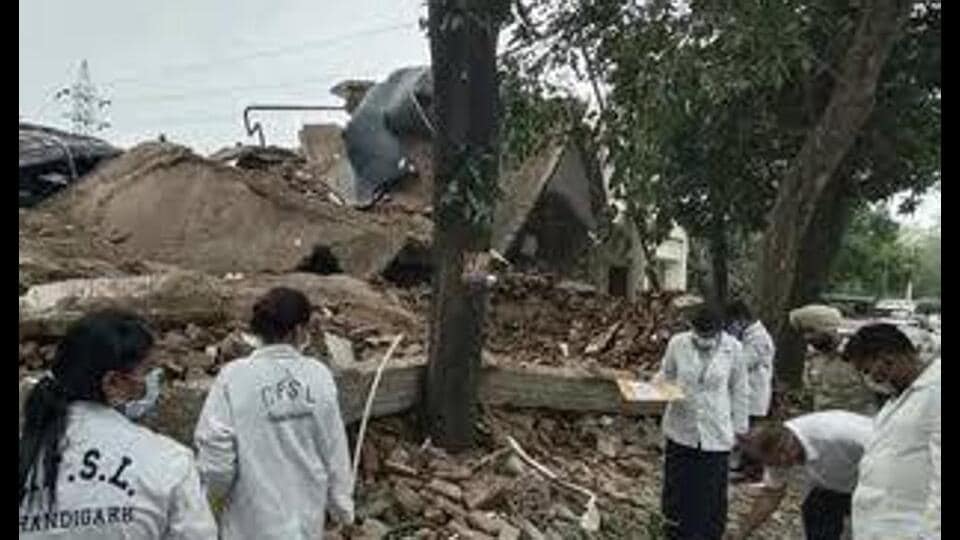
A report submitted by the sub-divisional magistrate (East), based on an expert study by the National Institute of Technical Teachers Training and Research (NITTTR), found that the building relied on brick load-bearing walls, along with reinforced cement concrete (RCC) beams and slabs, to support its weight.
The inquiry concluded that the failure in the load-bearing walls was the main cause of the collapse as the RCC beams and slabs were found to be intact. The collapse appears to have started from the front wall that was carrying the load, which then led to a chain reaction, bringing down the rest of the structure.
The report also flagged several weaknesses in the building, including the lack of proper roof or seismic support bands and large window openings with thin supporting walls. These factors made the structure less stable.
Importantly, the report found no signs of long-term damage such as rusting of steel, poor concrete, or weather-related wear that could have caused the collapse on their own.
The property, located beside The Fern Residency Hotel and opposite a Porsche dealership, comprised a single-storey tin-shed structure and a two-storey office block. Four partners had taken the property on rent, around 10 days before the incident, to open a two-wheeler dealership. The building collapsed while workers were replacing a glass panel as part of the renovation.
Statements recorded suggest that changes may have been made to the front load-bearing wall on the instructions of Tarun Kaushik, one of the partners who was supervising the work and died in the mishap, along with his associate Tarun Jain.
While Kaushik and Jain had remained trapped under the debris for over five hours, five labourers had been rescued from the spot.
Officials said the building plan had been approved and a fire safety certificate obtained, but an occupation certificate had not been taken. “Any modification to a building, especially older ones, requires proper structural evaluation. This is a step many neglect,” said an official.


