
 E-Paper



Ever-expanding Ghepan Ghat glacial lake poses flash flood threat
Long-term satellite imagery covering the Ghepan Ghat glacier in Himachal sets off a warning for glacial lake outburst flood. Satellite imageries reveal that the lake that was formed due to the melting of the Ghepan Ghat glacier in the tribal Lahaul and Spiti district has expanded majorly in the last 25 years.

 Prefer HTon Google


The ever-expanding glacial lake due to global warming in the Himalayan ranges is posing a grave threat of flash floods downstream the river basins in Himachal Pradesh.
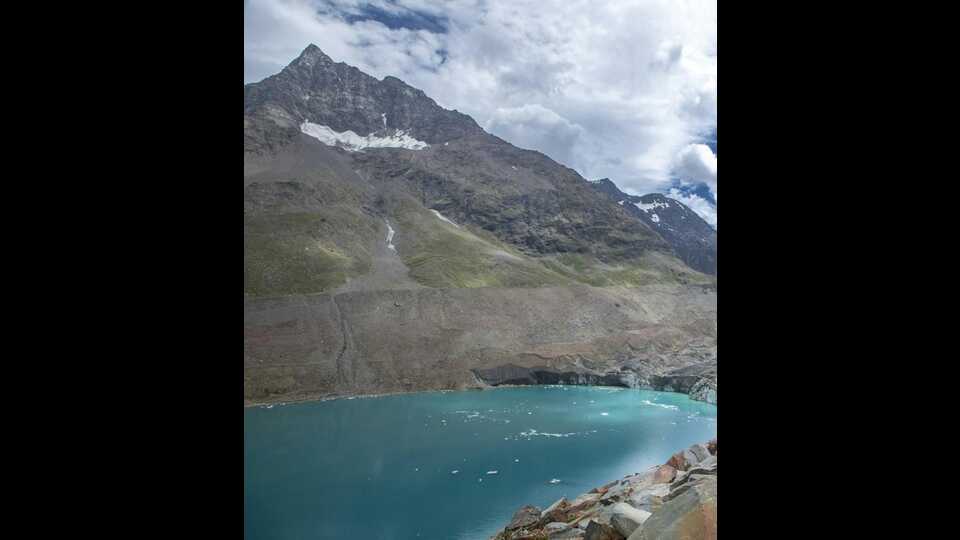
Long-term satellite imagery covering the Ghepan Ghat glacier in Himachal sets off a warning for glacial lake outburst flood. Satellite imageries reveal that the lake that was formed due to the melting of the Ghepan Ghat glacier in the tribal Lahaul and Spiti district has expanded majorly in the last 25 years.
Hydrological studies conducted using satellite imageries revealed a 178% increase in the size of Ghepan Ghat glacial lake from 36.49 hectares to 101.30 hectares, which poses grave flood threats to the habitation downstream and can cause extensive damage to the strategic Manali-Leh Highway and the habitations downstream. Ghepan Ghat is located at an elevation of 13,346 feet above sea level in Lahaul and Spiti district
“Such alarming rate of lake expansion and the rapid urbanisation of its downstream settlements have increased the possibility of a catastrophic impact due to GLOF events in many ways,” highlighted the study, GLOF risk Assessment of Ghepan Ghat Glacial Lake Indus Basin, compiled by the National Remote Sensing Centre, Hyderabad.
The National Remote Sensing Centre (NRSC), Indian Space Research Organisation (ISRO), Hyderabad, as one of the implementing agencies under the National Hydrology Project (NHP), is carrying out hydrological studies using satellite data and geospatial techniques. As part of the NHP, a detailed glacial lake inventory, prioritisation of glacial lakes, glacial lake outburst flood (GLOF) inundation simulation, and GLOF risk assessment for selected lakes are taken up for the entire catchment of Indian Himalayan rivers covering the Indus, Ganga, and Brahmaputra river basins.
“The findings of the study are alarming for the state. We are directing the department concerned to take appropriate preventive and precautionary measures,“ says DC Rana, director, State Disaster Management Authority.
Himachal witnessed the worst flooding last year when the torrential rains took a toll on 560 lives and caused immense damage to properties across the state, forcing the government to rethink its plans.
“The report not only highlights the pace at which the glacial lakes are being formed on the different river basins in the Himalayas and region but also the risk of a breach in them. A total of 28,043 glacial lakes have been mapped in the entire catchment area of India Himalayan river basins using a total of 397 high-resolution multispectral resource sat images, with a total lake water spread area of 1,31,070 hectares,” said SS Randhawa, principal scientific officer, HP Centre for Climate Change.
The People for Himalaya, a campaign of civil society organisations, and social and environmental justice activists, working towards securing the Himalayan region from disasters expressed concern over the glacial melting. Wildlife biologist Tsewang Namgyal expressed concern over glacial health in the high Himalayas. “Mountains don’t need this development, which is hasty and haphazard,” said Namgyal.


