
 E-Paper



Fund, staff crunch hamper health care at Faridkot medical college
The medical college, established in 1973, caters to seven districts of the south Malwa region of the state and bordering areas of Haryana and Rajasthan. Out of its annual budget of around ₹110 crore, ₹84 crore are spent on salaries.


The Guru Gobind Singh Medical College and Hospital (GGSMCH) at Faridkot celebrated its golden jubilee on Sunday, but the facility is facing a shortage of budget and manpower, adversely impacting the healthcare at the facility.
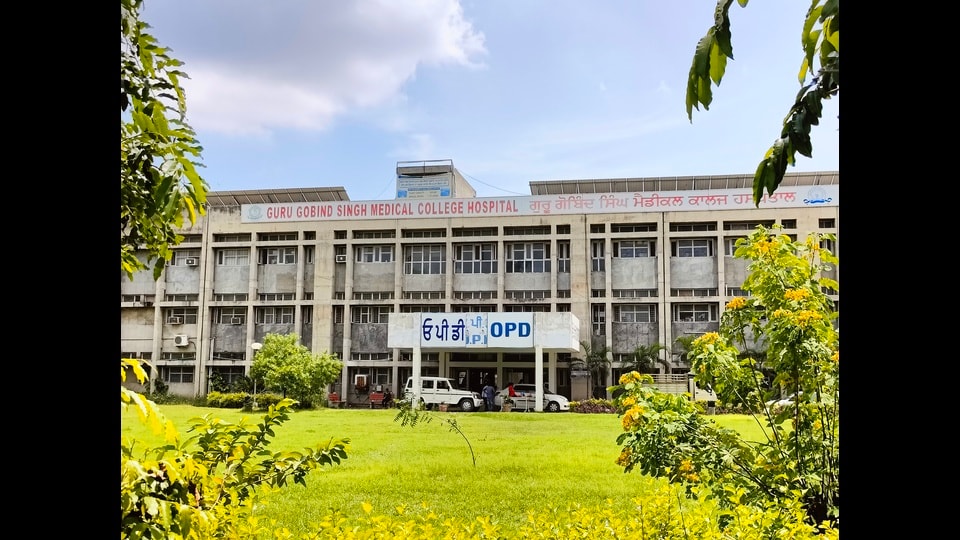
The medical college, established in 1973, caters to seven districts of the south Malwa region of the state and bordering areas of Haryana and Rajasthan. Out of its annual budget of around ₹110 crore, ₹84 crore are spent on salaries.
GGSMCH gets ₹40 crore grant from the state government and has an annual income of ₹90 crore.
Contrastingly, the government medical colleges in Amritsar and Patiala annual budgets of ₹350 crore and ₹250 crore, respectively.
Dr Rajeev Sood, vice-chancellor of Baba Farid University of Health Sciences (BFUHS) in Faridkot said that the management was aware of the issues and was working on it.
“Recently, during the silver jubilee celebrations of the university, we handed over a letter to chief minister Bhagwant Mann regarding the requirements for the medical college,” he added.
Requesting anonymity, a GGSMCH official said that the young doctors were not willing to join the government medical colleges as the entry-level salary has been decreased by the government.
“Two decades ago, the pay scale for entry-level doctors in Punjab was among the highest in the country, but it is among the lowest now,” the official added. In the past four years, 14 super-specialist doctors have resigned from the GGSMCH.
An official said that there was an acute shortage of radiologists and technicians to operate MRI and CT scan machines. The facility has only one expert for the repair of the equipment and machines.
Alongside the lack of staff and funds, the work at GGMSCH is also marred by “outdated and non-functional equipment”.
In a college with 28 departments, there are 141 professors and associate professors, and 49 senior residents. Of these, six departments, including cardiology and neurology, have associate professors as heads.
The 1,100-bedded hospitals caters to 3,000 patients every day, making the functioning as battle of “making do with more or less”. With around 1,000 of these patients admitted to the various wards, there is a huge shortage of nurses at the facility. Although the South Malwa region, which the hospital caters to, is considered as the cancer belt of the state, there are no oncology surgeons at the facility.
In contrast, the hospital is running a 40-bed cancer ward with 200 patients every day in the OPD.
BFUHS registrar Dr Deepak Bhatti said that there was no set budget.
“The university receives budgetary allocation from the state government for salaries of GGSMCH staff and other expenses are being handled by the university. There are some departments where we don’t have superspecialist doctors and are trying to bring in more doctors,” he added.
According to reports, a lone neurologist attends around 250 patients in the OPD every day. Additionally, the waiting period for the surgery at GGSMCH reportedly over a month, and even double than that in some departments.
The records also show that there are no gastroenterologists and gastro surgeons, and the hospital is not performing heart surgeries as there is no cardiac surgeon.
The patients alleged that the medical shop at the hospital was mostly out of medicines.


