
 E-Paper



Guest Column| Dissolution of panchayats in Punjab technically flawed decision
Shorn of the due process, decisions are bound not only to be technically flawed, but may also turn out to be blatantly illegal and ethically barren. In such an eventuality, suspending an officer or two is par for the course and is an easy way out of a sticky situation.


The recent unsavoury episode involving the suspension of two senior Punjab IAS officers, howsoever sad, offers an opportunity to look into the process by which far-reaching decisions are made by the government. At the centre of the issue is the decision of the government of Punjab to suspend, by government fiat, all panchayati raj institutions (PRIs) in the run-up to their elections. At its very core, this decision is political in nature. However, it has crucial constitutional, legal and administrative aspects that needed to be examined, beforehand, by the appropriate government department according to the Rules of Business. In practice, however, these rules are observed more in breach than in compliance. To get around the rules, a number of stratagems are adopted, which results in shadowy, non-transparent and unaccountable decision-making.
While this writer is not privy to the process adopted to arrive at the decision in question, details appearing in the media offer sufficient clues to reconstruct the familiar pattern. In this pattern, important decisions are made on the basis of pre-emptive announcements, pronouncements and, at times, even denouncements emanating from important quarters. Once the ball is thus set rolling, the entire effort is to cloak such decision in sham legality/sagacity.
Opaque decision-making
The ploys adopted for this purpose are constituting a committee, holding a meeting chaired by the chief minister or the chief secretary, seeking a favourable advice from the advocate general and, above all, to get every entity concerned overruled by getting the required decision stamped by the council of ministers. There is no denying the utility of such consultations to flesh out the issues involved and to present options along with their impact on the stakeholders. It becomes, however, problematic when such consultations are presented as decisions, pre-empting examination by the administrative department and advice of the finance, law and personnel departments, wherever required under the rules. Doing so, results in opaque, arbitrary and unaccountable decision-making.
Viewed in light of details gleaned from media reports, the controversial decision to suspend all PRIs with a stroke of the pen is a typical example of opaque decision-making. It appears to have originated with a nudge from the chief minister, got concluded in a meeting taken by the minister for rural development and was notified without getting it vetted by the law department. Even the familiar cloak of having it approved by the council of ministers seems to have been dispensed with in this case. To be fair, such decision-making is not a novelty attributable to the present government alone. Successive governments have followed it.
Due process over due procedure
Though it is not for the first time, one eternally hopes it to be for the last time. For that to happen the remedy, perhaps, lies in the following:-
*Right-size the chief minister’s office to a clean and lean outfit, managing by exception, rather than running a parallel government.
*Decentralise and delegate decision-making, by strictly following the due process, to the line departments.
*Entertain an opposite viewpoint.
·*Once taken, own up the decision and face its consequences.
*Hold the decision-makers accountable.
A notable feature of this write-up is a distinctive emphasis on the due process, in contrast to the due procedure. While the due procedure is fungible, due process has an ethical dimension i.e. doing justice by all. Shorn of the due process, decisions are bound not only to be technically flawed, but may also turn out to be blatantly illegal and ethically barren. In such an eventuality, suspending an officer or two is par for the course and is an easy way out of a sticky situation. krlakhanpal@gmail.com
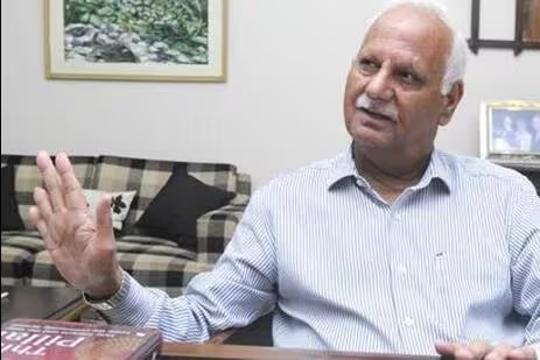
The writer is a former chief secretary of Punjab. Views expressed are personal


