
 E-Paper



Guest Column | In Punjab, water stewardship is need of the hour
Punjab’s water crisis is rooted in over-extraction, reduction in river water supplies, outdated infrastructure, and decades of political stalemates. Despite its critical dependence on water, the state lacks a formal water policy, relying instead on ad hoc measures shaped by immediate economic needs and political pressures.

 Prefer HTon Google


In Punjab, water is more than a natural resource—it is the lifeblood of its agriculture-driven economy, fuelling industrial growth and sustaining millions. Yet, this lifeline is in crisis. Across the state, the groundwater table is plunging at an alarming rate, and many villages now drill borewells deeper than 300 feet, often with little success. The situation is dire, demanding a comprehensive approach that marries sound water economics with practical, solutions-driven governance and politics.
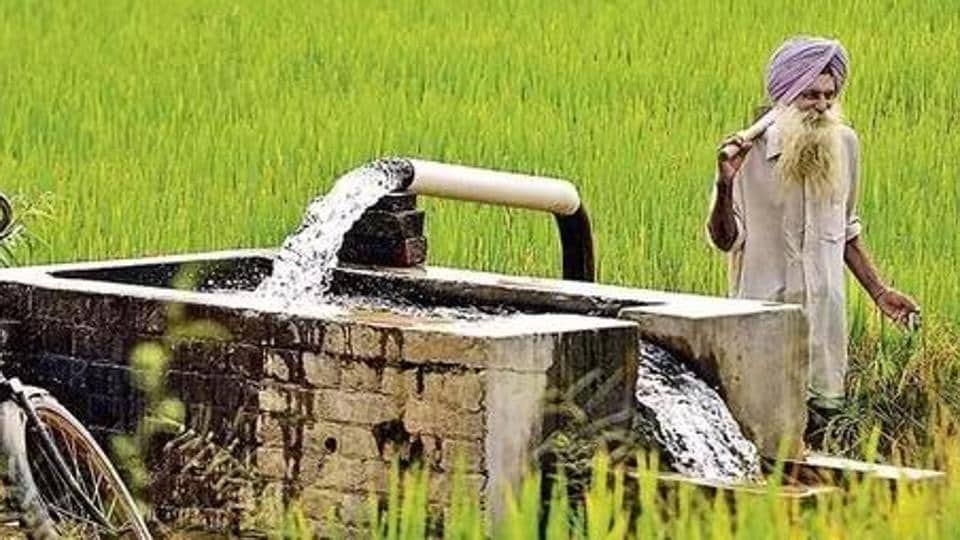
Punjab’s water crisis is rooted in over-extraction, reduction in river water supplies, outdated infrastructure, and decades of political stalemates. Despite its critical dependence on water, the state lacks a formal water policy, relying instead on ad hoc measures shaped by immediate economic needs and political pressures.
Agriculture, which underpins Punjab’s economy, consumes 80-85% of the state’s water (Punjab State Development Report, 2018). Rice and wheat dominate the crop patterns despite their water-intensive nature, leading to severe groundwater depletion, with levels dropping by 3-5 feet annually in many regions (Central Ground Water Board, 2022). Over the last two decades, Punjab has lost 25% of its surface water resources, increasing its dependence on groundwater (Punjab Remote Sensing Centre, 2020). This over-reliance is unsustainable, with the state’s water demand projected to outstrip its renewable supply by over 10 billion cubic meters by 2025 (Water Resources Department, Punjab, 2021). The state’s water use efficiency is also assessed to be low to medium.
Steady decline in water quality
Compounding these challenges is a steady decline in water quality, which threatens both human health and agricultural productivity. Untreated industrial effluents, agricultural runoff laden with pesticides and fertilisers, and domestic sewage are polluting surface water and groundwater alike. The Central Pollution Control Board (2021) estimates that only 30% of Punjab’s wastewater is treated and the rest discharged untreated into rivers and canals. This pollution exacerbates the water crisis, as contaminated water cannot be safely used for drinking or irrigation. High levels of nitrate, fluoride, and heavy metals in groundwater have been linked to rising waterborne diseases and long-term health issues. Tackling this issue requires strict regulation of industrial discharge, investment in wastewater treatment plants, and widespread adoption of pollution control measures.
Governance challenges further aggravate the crisis. The Punjab Water Regulation and Development Authority (PWRDA), charged with managing water resources, lacks the resources and political backing to enforce effective policies. Groundwater extraction routinely exceeds permissible limits, yet violations are rarely penalised. Nearly 30% of groundwater extraction in the state occurs beyond allowable thresholds (Punjab State Council for Science & Technology, 2020). Meanwhile, Punjab’s aging water infrastructure, much of which dates back to the British colonial era, is plagued by inefficiencies and significant water losses. Renovation projects, such as the Indira Gandhi Canal, are bogged down by bureaucratic delays, with annual maintenance costs exceeding ₹1,000 crores and modernisation requiring an additional ₹1,500-2,000 crores (Water Resources Department, Punjab, 2023).
Free power incentivises over-extraction
Punjab’s water utilisation and economic practices have also failed to ensure sustainability. The state does not prepare a formal water budget that tracks demand and supply, leaving decision-makers without a clear understanding of resource allocation. Such a budget is critical for balancing the needs of agriculture, industry, commercial, and domestic sectors while planning investments in water infrastructure. Moreover, water pricing remains inconsistent, with farmers receiving free or heavily subsidised electricity for groundwater extraction. This policy, while politically expedient, incentivises over-extraction and discourages conservation. Introducing tiered water tariffs based on consumption levels and promoting community-led water management practices could help optimize resource use.
Interstate water disputes further hinder progress. Political disagreements, particularly with Haryana over the Sutlej-Yamuna Link (SYL) canal, exemplify how political rivalries derail sustainable water management. The Riparian Principle, which grants states rights over waters flowing through their territories, has complicated water-sharing agreements. The Indus Waters Treaty, a framework for managing waters shared with Pakistan, adds another layer of complexity. These political impasses often overshadow the need for long-term solutions, diverting attention from critical issues like groundwater depletion and infrastructure renewal.
Key is to align state’s agri practices with its resource constraints
Punjab’s water crisis requires a bold shift in agricultural practices. Rice, a water-intensive crop, continues to dominate despite its unsuitability for the region’s dwindling resources. Studies by the Indian Agricultural Research Institute (2020) indicate that rice cultivation consumes 40-50% more water than necessary when flood irrigation is used. Adopting efficient irrigation methods, such as drip and sprinkler systems, could dramatically reduce wastage. Furthermore, transitioning to less water-intensive crops like pulses and oilseeds would help align Punjab’s agricultural practices with its resource constraints.
Infrastructure modernisation is equally critical. Renovating Punjab’s canal systems and attendant infrastructure, investing in rainwater harvesting, and expanding wastewater recycling could diversify the state’s water supply and reduce reliance on groundwater. Climate-resilient water management strategies are also essential, as rising temperatures and shifting precipitation patterns threaten surface water and groundwater availability. The Indian Meteorological Department predicts Punjab’s average temperature could increase by 2-3°C by 2050, further stressing the state’s water systems.
Governance reforms must accompany these changes. Empowering PWRDA and strengthening the Punjab Preservation of Subsoil Water Act with greater authority and resources, making these immune to bureaucratic or political vicissitudes would enable enforcement of sustainable water use practices effectively. Implementing an annual water budget to track demand and supply would provide policymakers with the data to make informed decisions. The management and development of river basin areas and laying underground pipes for more effective and adequate farm water supplies need to be prioritised. Public awareness campaigns could foster a culture of water conservation while integrating these principles into school curricula would prepare future generations to manage resources responsibly.
The clock is ticking for Punjab. Every day of inaction inches the state closer to economic and environmental disaster. Resolving this crisis demands bold leadership, practical reforms, and a collective will to prioritise sustainability over short-term gains. By stating on oath that Punjab does not have surplus water, embracing sustainable practices, fostering regional cooperation, and modernising water governance, the state and central governments can safeguard this most precious natural national resource and secure prosperous future generations with positive peace in the state.
The writer is a retired Punjab-cadre IAS officer. Views expressed are personal. He can be reached at sureshkumarnangia@gmail.com


