
 E-Paper



Guest column | Let’s make each day bicycle day
When the unit out went out on picnics, everyone would ride their cycles to the picnic site with children balanced on carriers, wives perched on the cushioned handles in front (how romantic!) and eatables and refreshments were stuffed in the basket.

 Prefer HTon Google


While commemorating ‘World Bicycle Day’ (June 3) last month, I was reminded of my days as a young officer in the 4 Horse regiment in 1974 -75. In those days, young officers were only allowed to ride cycles, irrespective of what they could afford. Motorcycles were allowed once we became captains, and cars only after marriage.
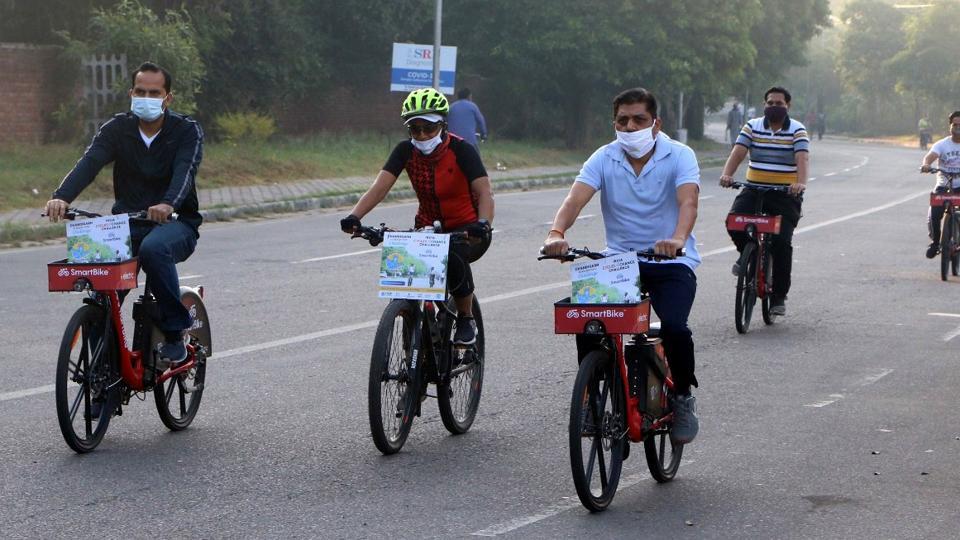
When the unit out went out on picnics, everyone would ride their cycles to the picnic site with children balanced on carriers, wives perched on the cushioned handles in front (how romantic!) and eatables and refreshments were stuffed in the basket.
Thankfully, the army has preserved the cycling culture at the National Defence Academy (NDA), Indian Military Academy (IMA), and Officers Training Academy (OTA) where cadets only use cycles. As a 68-year-old veteran, cycling through the countryside is one of my biggest joys. The bright sun, green fields, chirping birds, and children’s smiles is enough to make one’s day. Today, my cycle is my primary means of conveyance, be it to schools (for heritage activities), the market for shopping, or just to drop by to meet friends. It is convenient and hassle- free, apart from being healthy.
There is only one problem: I have to constantly be conscious about my safety, lest some motorist knock me down. Other commuters rarely pay any mind to cyclists, stereotyping them as ordinary and poor. This is because most of us judge the status of people by their attire and the size of their car. We must get rid of this misconception and sensitise commuters. We must learn to value simplicity and a down-to-earth lifestyle, the way Mahatma Gandhi did. We also need good cycle tracks along the major roads, and a proper mechanism to protect cyclists. These cycle tracks should be well-maintained, and authorities should not allow their misuse. This will reduce traffic congestion on roads and will reduce mishaps .
While cycling, I often look at the speeding vehicles and wonder how the rich keep adding cars to their already over- flowing garages. Government officials and politicians, who are provided official vehicles, also do not pay attention to the rising number of vehicles on the road. More vehicles on the roads mean more accidents, more pollution, traffic blocks, time wastage, and the common man is usually at the receiving end.
Change has to be initiated from the top. Our leaders and senior government officers should also start commuting to their workplace on cycles at least thrice a week. This should not be mere tokenism and officials must set an example for the public, and their subordinates. The government officials taking the cycle to work, and students cycling to schools and colleges should be given due incentives.
Cycling is an excellent way to keep fit and those who cycle need not throng to slimming centres, where they lose money and health, but not fat. It is also environment friendly and will help raise awareness about the same. If we are able to introduce a cycling culture in our country, we may be able to check global warming and pollution. Moreover, it is economical, especially with the price of petrol and diesel sky high at the moment. It does not even require too much parking space.
Last but not the least, cycling will ease the tension and help people stay relaxed as they will not get stuck in traffic jams. Let’s all make concerted efforts to adopt a cycling culture. Here I go cycling!
ripu_d2003@yahoo.co.in
(The writer is an Ambala-based freelance contributor.Views expressed are personal.)


