
 E-Paper



Guest column: What post-vax world looks like for kids
Statistics reveal that 0.5-2% of paediatric cases were seen during the first wave, which has now increased to an alarming 8-10%.


“Vaccines are magic.” The words of our microbiology professor in the ‘honeymoon phase’ of medical college resonate with me all the more now that I am a paediatrician.
While the world was grappling with the novel coronavirus, scientists over the world were busy launching a defence of their own: vaccines. Much has already been said, heard and read about them, which can be summarised in three words – get your jab!
For the time being, the vaccine will protect parents while the kids patiently wait for their turn. This divide prompts the question: What is the world going to look like for kids? The rules do not change for children. India is still at war with the virus, and a third wave, which is also likely to target children, looms large. Statistics reveal that 0.5-2% of paediatric cases were seen during the first wave, which has now increased to an alarming 8-10%.
The reason for the virulence of the new strain among children is that the previous strain was known to attach itself to the ACE 2 receptor and multiply, which was not seen in paediatric cases due its low expression rates in kids. Thus, children mostly remained unscathed during the first wave of the pandemic.
The B 1.617 strain has undergone mutations, which allow it to surpass antibodies and weaken immune defences. All age groups from newborns to teens have been testing positive for the virus. The second wave is expected to peak in mid-May and last for another four to six weeks. The Centre for Disease Control and Prevention has thus issued some guidelines on how to keep kids healthy during this grim time.
What can parents do?
In these difficult times, parents have a lot on their plate be it work from home, household chores or home-schooling. However, they can take a slew of steps to create a friendly environment at home by “being creative and searching for safe alternatives,” says epidemiologist Dr Yvones of Stanford. The alternatives include:
•Visual Socialising : Going for online play dates, hobby classes, doing crafts or even watching a movie together once a week.
•Outdoor activities: Kids may wear a mask and play outside with their friends in groups of two to three, which could include playing ball, lemon race and relay races. Infrequent play dates with the same family or friend who is also practising everyday preventive measures poses medium risk.
•Birthday parties: Set up zoom calls, plan a movie night , fancy dress in the family, face painting or set up a bowling alley at home.
What kids should do?
The best way to teach children is to set an example. Since the virus is literally in our hands we must teach and re-teach the importance of:
•Washing hands : With an alcohol-based soap for 20 seconds
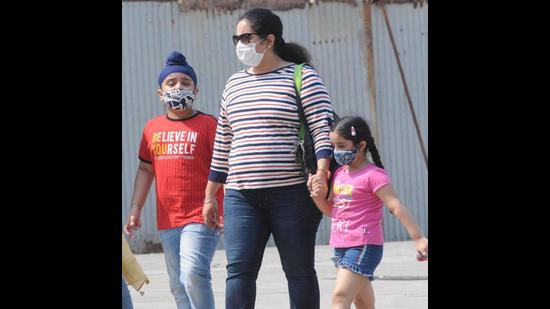
•Mask up: Children over five years require to wear a mask outside . They can wear a cloth mask but make sure it is washed before each use. Children less than two years should not wear a mask as they may suffocate. A surgical mask should be worn by children above five years in high-density areas or around Covid positive cases in their household. The mask should snugly fit and cover the nose.
•Sanitisation: Sanitising hands before going for and after coming from grocery runs, playing outside and meeting people should be practised. Though the CDC does not recommend that children go out to grocery stores or to their friends’ houses.
How to boost your child’s immunity?
A well-rounded diet, good sleep and three basic supplements will do the trick:
•Vitamin C : Co-factor to many metalloproteins, collagen formation and a powerful antioxidant, it is used in the defence mechanism of our bodies and is widely known to delay the progression of cold.
•Vitamin D : Breast-fed children tend to have vitamin-D deficiency. It is imperative to treat the underlying deficiency as it may lead to increased inflammation and increased risk of pneumonia.
•Zinc: Deficiency leads to stunted linear growth and impairs immune response towards infections.
•Vaccination: Due to the pandemic, parents have not vaccinated their children against other diseases, which also influences and affects immunity. According to the Indian Academy of Paediatrics (IAP) guidelines, there is no contraindication of vaccination during the pandemic. Children in containment zones who have missed vaccines can have multiple vaccines in one sitting and using the minimum permitted interval between two doses of the same inactivated vaccine can be practised to complete the schedule in the shortest possible time.
The light at the end of tunnel is vaccination for our kids. Pfizer has already formulated a vaccine for kids between 12-15 years of age, which will be produced by the end of this year or early 2022.We must understand that we do not live in a zero-risk world and need to evaluate our risks prudently before letting our guard down since our children do not live in bubbles anymore.
( The writer is a senior resident at the Mohali civil hospital. Views expressed are personal.)


