
 E-Paper



Half of all Covid deaths in Ambala recorded in May alone
The second highest number of fatalities were recorded in April this year, at 82, followed by 59 deaths in September last year


The second wave of coronavirus wreaked havoc in the country, with scores of families losing their loved ones, and Ambala wasn’t left untouched.
As per the data provided by the district health department, almost half of all deaths reported in Ambala since the pandemic began were recorded in May alone.
Out of the total 488 fatalities as of June 4, 239 (48.9%) were recorded in May alone. May also accorded for the highest number of positive cases, 8,584, as well as recoveries, 11,056.
The second highest number of fatalities were recorded in April this year, at 82, followed by 59 deaths in September last year. As per the data, the highest single-day fatalities, 13, were recorded on May 9, a day after Ambala recorded its single-day peak of 548 fresh cases.
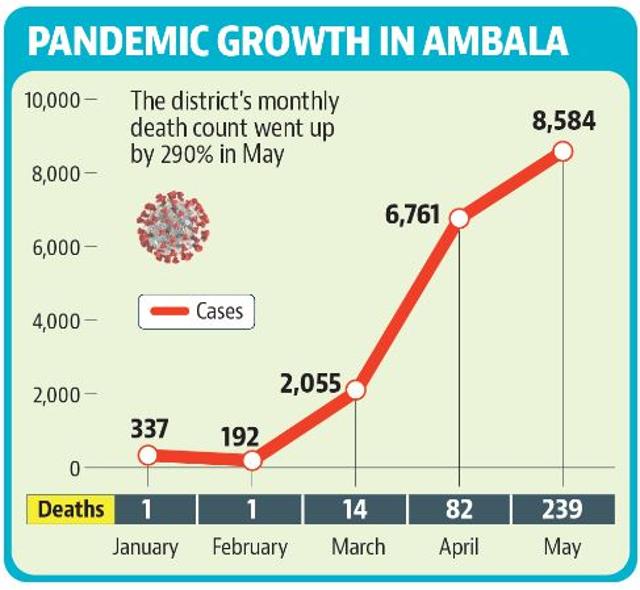
A cumulative comparison by the health department between the first and the second wave reveals that the highest number of deaths during the first wave were recorded in the second week of September at 17, while the number stood at 70 in the first week of May this year.
District epidemiologist Dr Sunil Hari said that the number of deaths rose, as the cases surged in May. “We learnt that the time frame of both the waves was almost 2.5-3 months when it peaked and plateaued, which also hints that if there is a third wave that might be within the same period,” he said.
Almost 200km away from the national capital, Ambala hospitals witnessed a sudden inflow of patients from Delhi-NCR in the last week of April as beds remained unavailable in Rohtak, Hisar, Karnal and other districts of the state.


