
 E-Paper



Haryana records season’s worst air quality amid dip in farm fires
The air quality index (AQI) for the state reached 184, categorising it as ‘moderate’; however, stubble burning has also impacted the air quality of most of the cities, especially the National Capital Region


Despite a 40% drop in the cases of stubble burning in Haryana compared to the previous year, the state on Saturday recorded the worst air quality of the ongoing kharif harvesting season so far.
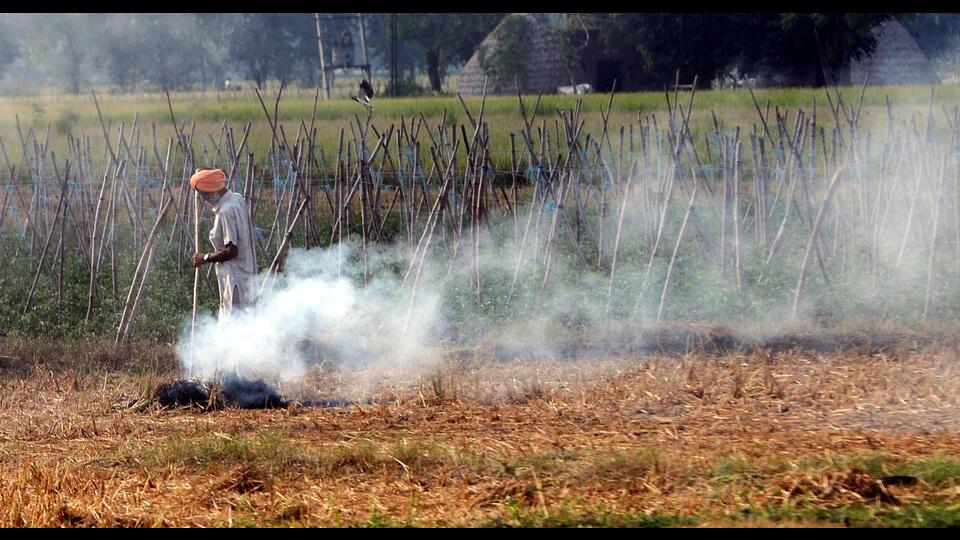
The air quality index (AQI) for the state reached 184, categorising it as ‘moderate.’ However, stubble burning has also impacted the air quality of most of the cities, especially the National Capital Region (NCR). The latest bulletin from the Central Pollution Control Board (CPCB) highlights that the air quality in Kurukshetra, Jind, Bahadurgarh and Sonepat deteriorated to the ‘very poor’ category, with AQI values ranging between 300 and 400.
Additionally, eight other cities within the NCR reported ‘poor’ air quality, with AQI readings between 200 and 300. According to data from the Haryana Space Applications Centre (HARSAC), the state witnessed 14 fresh cases of farm fires on Saturday, bringing the total number of stubble burning incidents to 1,049. Even this marks a 40% reduction from last year’s 1,701 incidents; the alarming air quality situation ahead of the festival season has raised concerns.
The Haryana government has implemented various measures, including subsidies and cash incentives, aimed at motivating farmers to adopt alternative methods for crop residue management. Despite these efforts, achieving a complete check on farm fires remains a challenge for the authorities. The deteriorating air quality in Haryana, despite the reduction in stubble burning cases, underscores the complexity of addressing the issue ahead of the festival season.


