
 E-Paper



HERC notifies new rules for EV charging stations
An HERC notification said that for high-tension energy connections for e-vehicle charging stations for load up to 200 kilowatts, the cost of dedicated transformer along with allied equipment shall be borne out of corporate social responsibility fund (CSR) of two power distribution companies to rein in the cost of installation.


The Haryana Electricity Regulatory Commission (HERC) has come up with new regulations for setting up of charging infrastructure for electric vehicles (EVs) in the state.
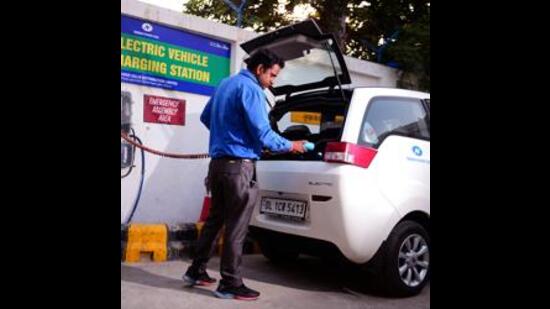
An HERC notification said that for high-tension energy connections for e-vehicle charging stations for load up to 200 kilowatts, the cost of dedicated transformer along with allied equipment shall be borne out of corporate social responsibility fund (CSR) of two power distribution companies to rein in the cost of installation. In the event of a shortfall in the CSR fund of power distribution companies, the distribution licensee shall claim it in its aggregate revenue requirement true up petition.
Separately, the commission has also waived the requirement for technical feasibility for rooftop solar systems with a capacity of up to 10 kilowatts.
A commission spokesperson said that HERC chairman Nand Lal Sharma and member Mukesh Garg held a public hearing in this regard. After listening to the suggestions of both sides, these regulations were notified. “This will provide significant relief to electricity consumers. For a long time, electricity consumers have been demanding simplified regulations to promote solar energy. For rooftop solar photovoltaic systems up to 10 kW capacity, complete applications will be deemed approved without the need for a technical feasibility study, and any necessary increase in the sanctioned load of the consumer will be carried out by the two power distribution companies,’’ the spokesperson said.


