
 E-Paper



Himachal aims GI tag for Chamba ‘thaal’, Salooni maize
Two items in Himachal’s list for which the administration is aiming to get a GI tag are Chamba “thaal”, handmade embossed metal craft, and maize varieties grown in the Salooni area of the district

 Prefer HTon Google


Chamba, known for its untameable ferocity of its natural world, splendid landscape, and stunning wilderness, is an epitome of royal grandeur. Much more than that, it also is a treasure trove of art, culture and handicraft. To support these products, provide them with better market prospects and protect the individuals’ rights, the Chamba administration is aiming to get a Geographical Indication (GI) tag for more products exclusively made or naturally produced in the district.
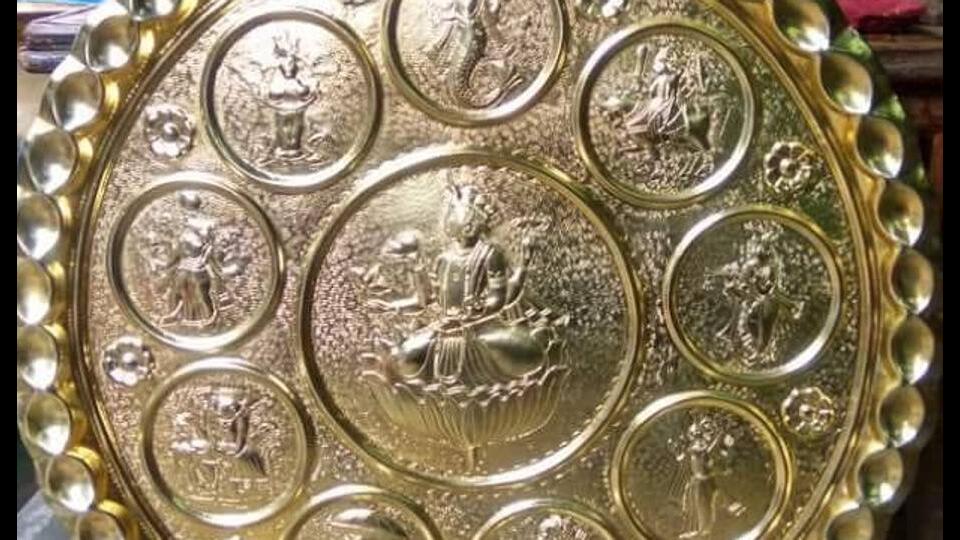
The two items in their immediate list are Chamba “thaal”, the handmade embossed metal craft, and maize varieties grown in the Salooni area of the district.
The Geographical Indication is a sign that can be used on a particular product indicating the qualities, geographical origin or reputation that the product possesses. To date, Himachal Pradesh has received GI for 10 natural or manmade products, including two products from Chamba, Chamba “rumal” and Chamba “chappal”. Others are Himachali chulli oil, Kangra tea, basmati rice, Himachali kala zeera, Kangra paintings, Kinnauri shawl, and Lahauli socks and gloves.
Chamba “thaal”, a unique metal craft
Chamba deputy commissioner DC Rana said that the district administration was working with the Himachal Pradesh Council for Science, Technology and Environment on preparing a proposal to get a GI tag for Chamba “thaal”.
The decorative premium brass plate with vibrant images of gods and goddesses are used in rituals such as offering “poojas” at temples, marriages or any other pious occasion.
It is a unique metal craft with its origin in Chamba, Rana said, adding that these are entirely and meticulously handmade.
The artisans first make a sketch of the deity on paper which is pasted on a metal sheet. They then chisel these images onto the plate. Most commonly embossed images are the 10 incarnations of Lord Vishnu, nine incarnations of Goddess Durga, Radha-Krishna and Ganesh.
Surender Thakur, the curator at the Bhuri Singh Museum in Chamba, said that Chamba “thaal” gained popularity recently when Union minister of youth services and sports Anurag Thakur presented these artworks to the Tokyo Olympics medal winners.
Chief minister Jai Ram Thakur had also presented a Chamba “thaal” to Prime Minister Narendra Modi during his visit to Himachal in December last year.
The GI tag will definitely help to revive the metal craft of Chamba.
Salooni maize — the old cereal
The deputy commissioner said the district administration is also expecting GI tag for traditional maize verities Haachi (white), Retti (red) and Chitkuri (popcorn) soon.
He said a proposal was received for the GI registration from the Salooni White Maize Organisation, a farmer association that had preserved the traditional varieties of maize.
The proposal has already been submitted to the Chennai-based office of the GI registrar by the Patent Information Centre of the Himachal Pradesh State Science, Technology and Environment Council.
As per a study conducted by Chaudhary Sarwan Kumar Himachal Pradesh Agriculture University (HPAU), Palampur, the three varieties of the local maize, cultivated in the Salooni area for centuries, are of superior quality, rich in protein, sucrose, fibres, vitamins and antioxidants.
Hachchi kukdi (chitti), high in protein content and resistant to several diseases, ratti maize, a very tall plant with dark and red grains, and chitku maize, creamish white pointed grains. These are used as a staple food which is easily digestible. They are helpful in controlling diabetes and are good for the heart.
These varieties are sown in 158 hectares in a dozen panchayats of the Salooni area including Bhandal, Sanuh, Kihar, Dand, Pichhla Diur, Kandhwara, Bhadela, Khadjauta, Himgiri, Panjei, Kilod and Suri panchayats.
Farmers of Bhandal panchayat were awarded the “Plant genome saviour community award” of ₹10 lakh by the Protection of Plant Varieties and Farmers’ Rights Authority of the Union ministry of agriculture and farmers welfare in 2019 for preserving these varieties.


