
 E-Paper



Himachal govt bans cheap sale of fossil souvenirs in Spiti valley
Majority of the fossils found in Spiti valley of Himachal are marine ones and in high demand; these have been systematically destroyed due to construction activities as well as sale at cheap rates to tourists visiting the valley.

 Prefer HTon Google


After years of destruction, Himachal Pradesh government has finally banned the cheap sale of marine fossils, dating back to hundreds of years, to tourists visiting the scenic Spiti valley.
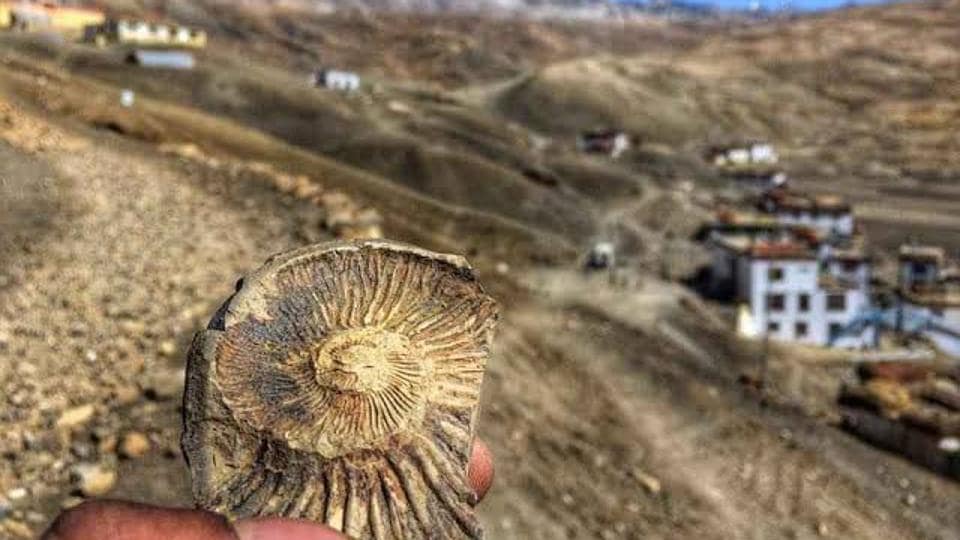
Marine fossils are found in the hills near Lalung, Mud, Komic, Hikkim and Langza villages of Spiti Valley and sold at rates as low as ₹50 to ₹5,000.
The common fossils on sale include coral reefs of the Triassic period (250 to 199 million years old), and ammonoids of the Triassic-Jurassic period (199 to 145 million years old).
“Rise in tourist footfall, including from foreign countries, has been leading to the destruction of geological artefacts. Many tourists visiting the valley are aware of the availability of fossils. Some of these are displayed for sale at various eateries and restaurants. Spiti fossil souvenirs are even promoted through blogs, travel sites and other internet platforms and there is a high demand for these,” said Lara Tsering, a travel operator and hotelier in Kaza.
Tsering added, “A lot of fossils were also destroyed during the construction of roads and other buildings.
State geologist Piyush Guleria said, “Majority of the fossils found in Spiti are marine ones. It’s very significant; it helps to provide details of ancient geography. Steps have to be taken to preserve them.”
“The fossils are older than the Himalayas. A lot of studies have been conducted on these fossils. Geologists from the region have been studying the isolation of Indian plate, its collusion and evolution. This provides the geological history of the country,” he said.
Spiti valley contains almost a continuous succession, ranging from the Cambrian (542 million to 488 million years old) to the Cretaceous (between 145 million and 65 million year old), making it a popular destination for paleontologists.
“We have to stop the exploitation of fossils. Locals promote the sale of fossils. So we have passed an order to prevent the sale of fossils. These will be preserved in the museum; if someone wants to study it, we will allow them to take it on the condition that they return it,” said Mahender Pratap Singh Rana, Kaza sub-divisional magistrate.
A museum construction is underway and will be completed by the next year, he added.
Some locals too have been making efforts at the preservation of fossils. “We hold camps from time to time to spread awareness among locals about preserving the heritage,” said Rajinder Bodh, a hotelier from Spiti.
How the fossils were destroyed over the years
Giant scorpion trace fossils along with trilobite traces found in Parahio valley have been destroyed during the construction of a road to Pin valley. Giant scorpion traces are unique and found only in Antarctica, Australia and Spiti Valley.
During the construction of a canal, the Middle Norian coral reef in Ratangnala, a tributary of the Spiti river, was mined to provide building materials. The excavated earth has covered what is left of the reef.
Another geologically significant feature belonging to the era when continents first stabilised, a paleoproterozoic paleosol in Sutlej valley, was exposed during the construction of the Hindustan-Tibet Road in Himachal Pradesh. Walls have been constructed on either side and nothing can be observed now.


