
 E-Paper



Himachal govt unlocks temples’ treasure trove
The Himachal Pradesh government has revamped rules governing the use of precious metals stored in temples under its control, unlocking over 600 kg of gold and 235 quintals of silver.


The Himachal Pradesh government has revamped rules governing the use of precious metals stored in temples under its control, unlocking over 600 kg of gold and 235 quintals of silver.
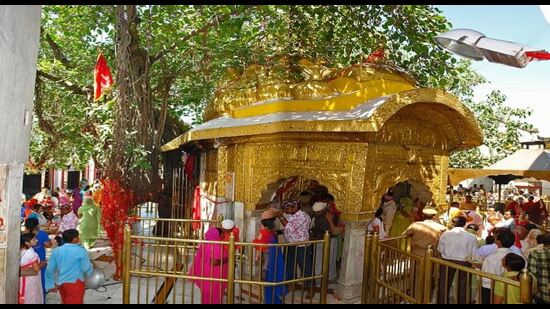
The treasure trove will now be used for enhancing the facilities for pilgrims. Temples will add wall-sized screens for the live telecast of the main idol, and provide souvenirs to the devotees
“The decision comes after nearly four decades of unchanged regulations and aims to put the valuable resources to better use, including temple development and facilitating devotees,” said secretary, language and culture, Rakesh Kanwar.
As part of the revisions, the Himachal Pradesh Hindu Public Religious Institutions and Charitable Endowments Rules, 1984, were amended, removing the Minerals and Metal Trading Corporation (MMTC) from the regulations. The MMTC, a Government of India entity, was previously responsible for producing gold and silver coins and handling these precious metals.
The government has ceased interest rates or commissions previously associated with gold bonds. The archaic rules, dating back to 1986, had hindered the state government’s ability to tap into the considerable gold and silver reserves stored in the temples.
Following the amendments, the onus is now on the temple trusts to decide on the best course of action for the gold and silver holdings. The trusts will be required to submit proposals to the state government outlining their plans, which will subsequently be subject to government approval.
“Some of the temples have drawn the proposal and started to work on the suggestions given by the government, while others are yet to submit their plans to the government,” said Kanwar.
Himachal Pradesh currently has 32 temples under government control, with Chintpurni Temple in Una and the Shri Naina Devi Ji Temple in Bilaspur standing out as the wealthiest. Chintpurni Temple boasts of reserves of 200 kg of gold and 53 kg of silver, while Naina Devi Temple holds 200 kg of gold and 45 kg of silver. Collectively, the 32 temples house a substantial sum of ₹320 crore in cash, besides treasure trove of gold and silver reserves.
This landmark decision not only provides an opportunity for the state government to harness the wealth within the temples for public welfare but also marks a significant step toward modernising regulations that have remained stagnant for decades. The move is expected to enhance transparency and ensure responsible use of the assets for the benefit of the devotees and the broader community.
Chintpurni first temple to offer paid darshan
Chintpurni temple also known as Chhinmastika Dham in Una district has become first temple in the state to offer paid darshan. The scheme named ‘Sugam Darshan’ is aimed at earning more resources which can be used for development and other purposes.
Under this scheme a group of five people can have darshan at the temple without queuing up in the line by paying ₹1,100 as a fee.
Under the Sugam Darshan Pranali (system), a pass will be given to five people for a fee of ₹1,100 and these devotees would get hassle-free darshan. In total, 500 people can use the facility per day. Plans are afoot to provide Sugam Darshan scheme at other temples under the government trust. Chintpurni temple has earned more than ₹1 crore under this scheme so far.
“Chintpurni temple is the first temple in the state to make such arrangements and the step would avoid chaos when VIPs come for darshan besides increasing the income of the temple administration,” an official said.
The temple commissioner-cum SDM, Amb, Vivek Mahajan said that there be four categories.
In the first category, one can get darshan without waiting by paying a fee of ₹1,100.
In the second and third categories, devotees of 65 years and above and Divyang (disabled person) will get VIP darshan without paying any fee. However, the person accompanying such people will have to pay ₹50 for darshan.
Ministers, MLAs, MPs and other VIPs as decided by the administration are also exempt from paying fee for the darshan.
A waiting hall has been made in Baba Maidas Sadan for the devotees in these categories.
Arrangements have been made for the devotees to sit about one km away from the temple and they would be brought to the lift in an electric golf cart operated by the temple trust and dropped back after darshan. Online booking facility for ‘havan’ is already available on the temple premises.


