
 E-Paper



Himachal’s scenic passes turn summer hotspots for tourists
Manali and Lahaul-Spiti districts in Himachal Pradesh see a surge in tourism post-Atal Tunnel opening, leading to full hotel occupancy and environmental concerns.

 Prefer HTon Google


The picturesque mountain passes in the state have fast emerged as tourists’ go-to escape from the scorching plains, drawing hundreds of tourists. Visitors flocking Manali are increasingly venturing into the cold valleys of the Lahaul-Spiti district, with a whopping 74,918 vehicles crossing the Atal Tunnel in just one week.
Atal Tunnel, which has the distinction of being the longest tunnel in the world at an altitude of over 10,000 ft, has bumped up tourist inflow to the tribal districts of Lahaul and Spiti. The all-weather tunnel has led to a spurt in tourist activity in the region, providing a fillip to the hospitality sector.
Locals are increasingly tapping into the tourism sector. Many have listed their traditional-style houses as homestays, so much so that their number has shot up to 594 from 74, ever since the tunnel was thrown open for traffic.
Tourists venturing into the hills are travelling to the high mountainous regions for cooler weather. Rohtang Pass 13,051 ft above sea level, remains the top choice for tourists visiting Manali.
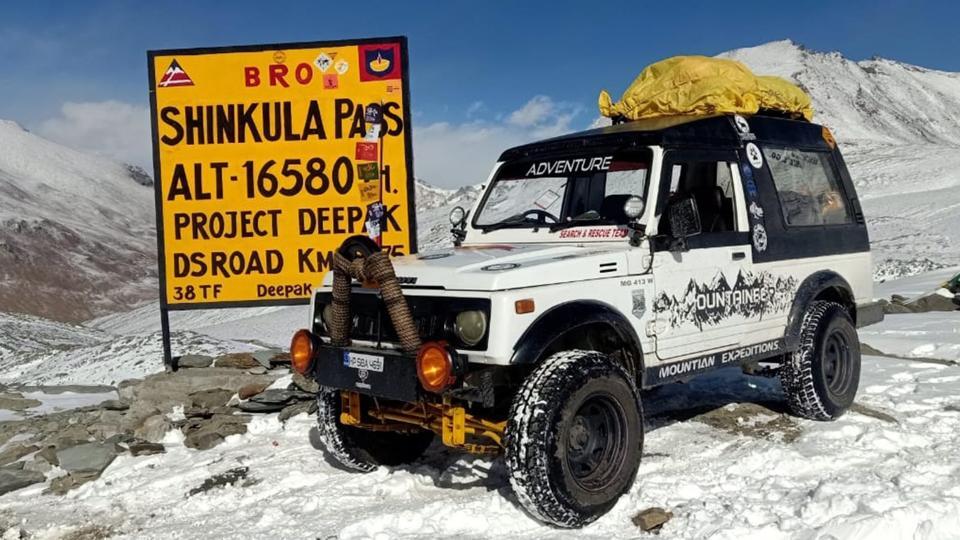
Daily, hundreds of visitors make the journey to the popular destination, but the cold valleys of Lahaul-Spiti have also gained significant popularity. The completion of the Atal Tunnel has boosted tourism activities in Lahaul, making the 16,040-ft high Baralacha La and the 16,702-ft high Shinku La more accessible.
Chandra Tal, one of the high-altitude wetlands located in the cold desert at 13,940 ft, is witnessing an influx of tourists.
Hotels in Kaza, the headquarters of Spiti Valley are also reporting full occupancy. “For the last week, all hotels and homestays are full. The belt is overcrowded and some tourists are unable to find a place and even spend nights in their vehicles,” says Lara Tsering, a leading tour operator in Kaza.
Notably, there are nearly 150 hotels and homestays registered with the Himachal Tourism Department in the Spiti valley alone.
In addition to the major passes, tourists are flocking to Sissu, located at 10,235 ft and Koksar for recreational activities.
Police data reveals that of the 74,918 tourist vehicles that crossed the Atal Tunnel in a week, 30,031 headed towards Lahaul, while 44,887 returned to Manali. Superintendent of police Lahaul-Spiti Mayank Chaudhary said 9,000 to 14,000 vehicles crossed the tunnel daily in the past week.
”We are taking the help of drone cameras to regulate traffic. There is huge traffic between Atal tunnel and Jispa,” said Lahaul and Spiti Superintendent of Police, Mayank Chaudhary.
Manali sees influx year after monsoon tragedy
The tourism boom has led to near-full occupancy in Manali’s hotels. Major hotels are packed, while smaller establishments report 70% to 80% bookings.
Tourism businessman Narendra Sood said arrivals were at a peak, with most accommodations being fully booked. “It’s nice to see Manali bustling with tourist activity, at the times of floods last year it seems that tourism will take a long time to revive,” Sood says.
Manali, situated on the banks of Beas, had suffered intensely due to flooding. Many vehicles were washed away in floods while the 30-km national highway stretches connecting Mandi and Manali were damaged. Nearly 70,000 tourists stranded in Kullu and Lahaul al Spiti during the floods were evacuated by the government last year.
Tourism experts call for better planning.
“Mass tourism is characterised by large concentrations of tourists at the same place at the same time. The travel and tourism industry facilitates mass tourism through organised group tours, and package deals. Himachal’s hill stations are clogged with tourists and there have been several discussions on developing them, however, little has materialised on ground. Himachal needs to develop more tourist destinations,” says Nitin Vyas, head of the tourism department at the Himachal Pradesh University.
The surge in tourism, meanwhile, has also raised concern for environmentalists.
“The unattended surge in tourism, especially at higher altitudes and passes, has escalated air pollution from vehicle emissions and contaminated water bodies. Investing into green vehicles at high altitudes with a very streamlined approach benefiting both the local community and ecology is the way forward. It’s high time to introduce these steps,” says Pradeep Sangwan of the Healing Himalayas, an environmental protection NGO.


