
 E-Paper



Hit by pink stem borer infestation, farmers in several Malwa districts re-sow wheat
Farmers from Patiala, Barnala, Mansa, Bathinda, Sangrur and other Malwa districts have reported “pink stem borer” infestation in their fields, adding that they had to re-sow wheat because of this


Already reeling under losses due to poor paddy yield, farmers in several Punjab districts are faced with a new challenge in the wheat-sowing season — moth infestation.
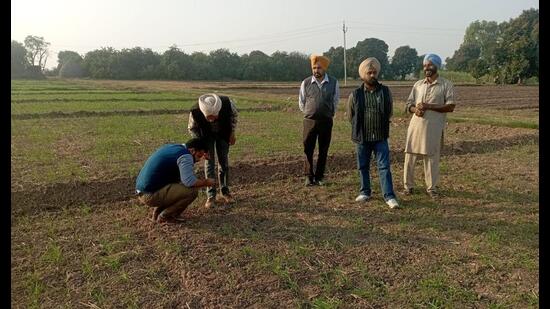
Farmers from Patiala, Barnala, Mansa, Bathinda, Sangrur and other Malwa districts have reported “pink stem borer” infestation in their fields, adding that they had to re-sow wheat because of this.
They demanded that the government compensate them for the losses, as they had to buy wheat seeds and DAP fertiliser again.
Several farmers claimed that the infestation was seen in fields where paddy residue was not burnt.
Ajaib Singh, a farmer of Patiala’s Balbera village, said, “I had to re-sow wheat on eight acres after the pink stem borer attack. I had sown wheat with super-seeder to manage stubble without burning it, as per the directions of agriculture department and Punjab Pollution Control Board.”
Another farmer, Satnam Singh of Qila Bharian village in Sangrur, said, “Moth infestation was found only in those fields where in-situ management of paddy stubble was done. In fields where stubble was burnt before wheat sowing, no moth attacks were reported. On the government’s persuasion, I had used happy seeder for in-situ management of stubble. But now, I am facing losses.”
Punjab Agricultural University (PAU) vice-chancellor Dr SS Gosal said there was nothing to worry as the growth and development of the pest is expected to decline once the temperature drops further. He added that pink stem borer was usually seen in rice fields but now it is being seen on wheat crop as well.
Dr Manmeet Brar Bhullar, head of the department of entomology, PAU, said the pink stem borer attacks the central shoot. “It starts with the infested tillers of wheat going pale brown before ultimately drying up,” she added.
Agriculture department officials are already carrying out field inspections to assess the crop damage.
Chief agriculture officer Dr Jaswinder Singh advised farmers to use insecticides instead of re-sowing the crop. “The temperature was high during sowing which resulted in the spread of pink stem borer. As soon as the temperature drops further, the spread will decline. Instead of re-sowing, farmers should spray insecticide,” he said.


