
 E-Paper



In Mohali, Metro to run only on elevated tracks: RITES
Both phases of the Tricity Metro project zigzag through various parts of Mohali district; for Chandigarh, the Union ministry of housing and urban affairs has already approved fully underground Metro lines in heritage sectors (1 to 30)

 Prefer HTon Google


While Metro lines will run fully underground in parts of Chandigarh, in Mohali district, these will be entirely on elevated tracks, as presented by Rail India Technical and Economic Services (RITES) in its findings.
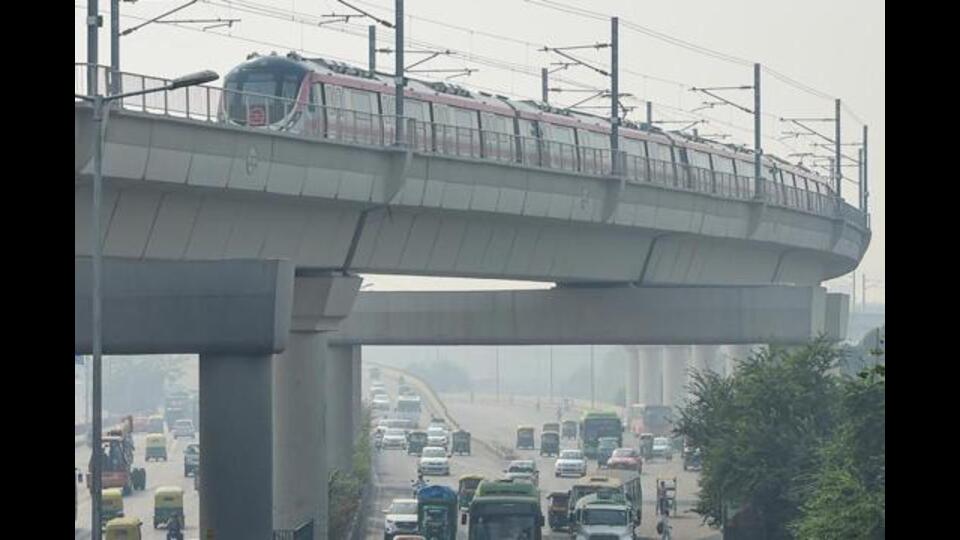
As part of the committee constituted to study the feasibility of the Metro project, including all aspects such as Comptroller and Auditor General (CAG) reports on Metro projects in other Indian cities, RITES shared its findings about Mohali district with officers of the Greater Mohali Area Development Authority (GMADA) last month.
On November 1, 2024, UT administrator Gulab Chand Kataria had established an eight-member committee to evaluate the financial and economic feasibility of the proposed system. This committee is tasked with assessing the overall feasibility of a Metro project for the region, analysing CAG reports on similar projects, and submitting its findings by mid-January 2025.
For Chandigarh, the Union ministry of housing and urban affairs (MoHUA) has already approved fully underground Metro lines in heritage sectors (1 to 30).
Presenting its report before GMADA officers, RITES stated that the section of the Mass Rapid Transit System (MRTS) in Zirakpur, running from the Zirakpur bus stand towards Panchkula, lies on the right side of the national highway. Portions of certain buildings fall under the proposed Metro alignment, necessitating a detailed ground survey to recheck the corridor alignment.
The presentation further detailed Corridor 1, which extends from Paroul in New Chandigarh to the Panchkula extension. This corridor will feature 28 stations, and the travel time is estimated at around one hour. An additional extension of 2-3 km to the Kurali-Siswan Road T-point has been proposed to address future demand.
Regarding Corridor 2, which runs from Rock Garden, Chandigarh, to Zirakpur ISBT via YPS Chowk, Gurdwara Singh Shaheedan, Jail Road, Airport Chowk, Aerocity Road, and NH-7 Junction in Mohali, RITES specified that part of the alignment between the gurdwara and the airport lies in the central median. However, GMADA raised concerns about existing stormwater pipelines in the area, necessitating a shift in the alignment to the road’s right side.
RITES clarified that utility relocation costs are included in the project’s capital expenditure and can be accounted for during implementation.
Navdeep Asija, traffic adviser to the Punjab government, presented an additional proposal during the meeting. He suggested interlinking the Kalka-Kurali rail corridor with the under-construction Baddi-Kalka section by creating a 21-km rail connection between Kurali and Baddi. This circular rail loop could facilitate train movement in both clockwise and counterclockwise directions, catering to 25,000–50,000 passengers per hour per direction.
Phase 1 estimated to be completed by 2032
Estimated to cost around ₹24,000 crore overall, the Metro project’s Phase 1 is expected to be completed by 2032, as per RITES’ Alternatives Analysis Report (AAR). Under this phase, a stretch of 85.65 km has been planned, comprising both overhead and underground routes, with 16.5 km of underground route falling in Chandigarh’s heritage sectors.
The first phase includes three routes: Sultanpur, New Chandigarh, to Sector 28, Panchkula (34 km); Sukhna Lake to Zirakpur ISBT via Mohali ISBT and Chandigarh airport (41.20 km); and from Grain Market Chowk, Sector 39, to Transport Chowk, Sector 26 (13.30 km), along with a 2.5 km depot entry line.
In Phase 2, which will be developed after 2034, a 25-km line has been proposed from Airport Chowk to Manakpur Kallar (5 km) and ISBT Zirakpur to Pinjore (20 km), primarily an elevated network.
Metro on shaky ground
In a move that further delayed the already slow-moving Tricity Metro project, UT administrator Gulab Chand Kataria on September 2, 2024, had directed authorities to assess the financial and economic viability of Metro systems in similarly sized cities before moving forward. An eight-member committee in this regard was constituted two months later on November 1. The committee is expected to submit its report before the administrator next week.
On September 14, 2024, during a meeting of the Administrator’s Advisory Council (AAC), former MP Kirron Kher had voiced strong opposition to the project, arguing that it would severely disrupt the city and was not financially viable. Conversely, current MP Manish Tewari defended the Metro project as a forward-thinking solution to Chandigarh’s escalating traffic problems, urging expedited implementation.
Further signalling the uncertain future of the Metro project, Union minister of power and housing and urban affairs Manohar Lal Khattar in November expressed concerns over low ridership, which could impact the project’s viability.
He had suggested exploring alternative transportation solutions, such as pod taxis, introducing a new layer of complexity to the long-awaited project.


