
 E-Paper



Roundabout: Lahore if you must exile me
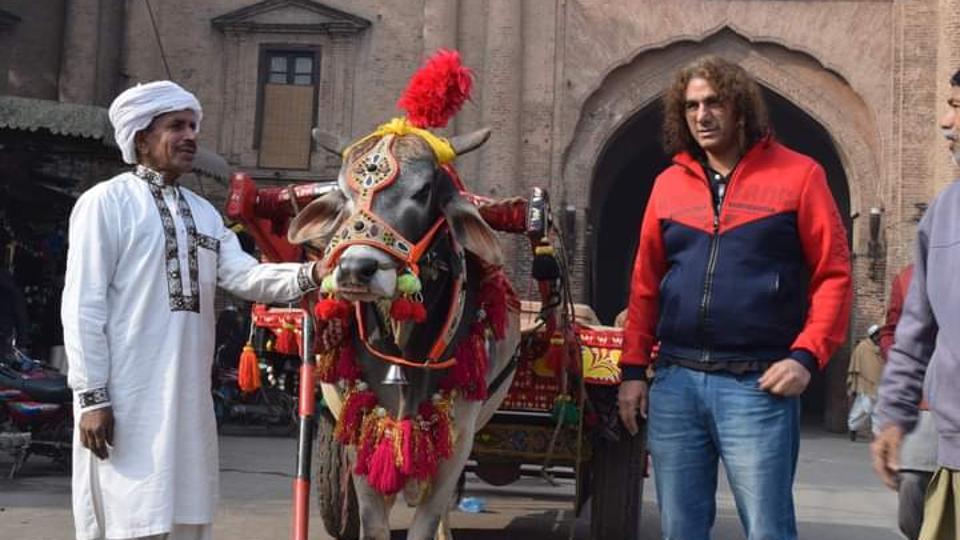
Those who have longed for Lahore for years now have a friend in Zeeshan Hussain (Baal Wala) to take you to the lanes and bylanes of the city once also known as the Paris of the East for its culture


Often one finds oneself reciting the opening line of poet-editor Pritish Nandi’s classic wherein he creates the life, landscape and love with brutal honesty on bidding adieu. The difference is that unwittingly one substitutes the name of the city as Lahore. This has been the lament of thousands who left Lahore with a heavy heart 76 years ago before and after the dawn of Independence.
It has also been the wonder of the generations to come: “Jis Lahore Nai Dekhea, O Jameya Nain (One who has not seen Lahore is unborn)”. This was the name of a poignant Partition play. Even now the Lahoris, who have moved onto Western shores, yearn for their coveted city. One may leave Lahore, but Lahore never leaves the soul of one who has lived there it’s said.
How old is Lahore? That indeed is a question. When fact and fiction befriend one another for ages then the city goes onto become a legend and so it is with Lahore. While some say that Lahore has seen some 2,000 years, there are others who take it all the way back to Treta Yug of Hindu thought. When the Lord banished his pregnant Sita from Ayodhya, she is believed to have wandered until she got shelter at the Valmiki Ashram near Amritsar. The “kitchen of Sita” is created at the Ram Tirath Mandir to mark the space where she cooked. Her twins Lav and Kush were also supposed to have battled the forces of Rama there. As myth has it, Lav built the city of Lahore and Kush the city of Kasur.
Haroon Khalid, a contemporary Pakistani writer, with a background in anthropology, and interesting books like “Walking with Nanak” and “Imagining Lahore” to his credit, points out: “A grand city also requires a grand history, an ancient past, perhaps even a portent at its birth that was to foretell its magnificence. While Lahore’s recorded history dates back around a thousand years, this antiquity was just not grand enough in a subcontinent where complex cities have thrived for more than 4,000 years. How could Lahore claim to be a grand city when across the subcontinent ancient cities much older than it were still alive and flourishing, even though nowhere as significant as Lahore? There were therefore possibly signs that were earlier missed, an ancient, magnificent past that was never recorded.”
Through the gates of Lahore
The grand city that has so many claimants to its past, unrecorded and recorded, the Hindus, the Muslims the Sikhs and the British is undoubtedly a place to know. And now it is time to be with Baalwala, the name he chooses to go with because of his tinted brown hair curling down to his shoulders, inside and outside the gates of Lahore finding many hidden secrets and enjoying every moment of it.
Of himself, he says he is an explorer of people, places, stories, music and more. Content to be known as Baal Wala Youtuber. Of course he has thousands of followers for his videos. And a little effort makes one find out that he is Zeeshan Hussain, who came to Lahore a young man of 16 from Khanewal in the Multan division of Pakistan. His father had migrated from Jullundur on the Indian side of Punjab at the time of Partition.
The lure of Lahore proved to be magnetic for him and his latest contribution is a beautifully illustrated e-book “Inside The Gates of Lahore”, which he offers for free to one and all. The gates of Lahore were built by Mughal Emperor Akbar and Maharaja Ranjit Singh built the Sheranwala Gate and as the legend goes, he even put two lions in cages on each side as a warning to invaders. Coming to the spirit of Lahore, playfully describes the city’s camaraderie thus: “I have been in Lahore for 35 years in this city, but I am not considered a Lahori for many reasons. First, I was not born in the walled city, I don’t know how to fly a kite. Then I don’t win hard times by resorting to fun and humour. I don’t seek pleasure in teasing my friends for their political affiliations.”
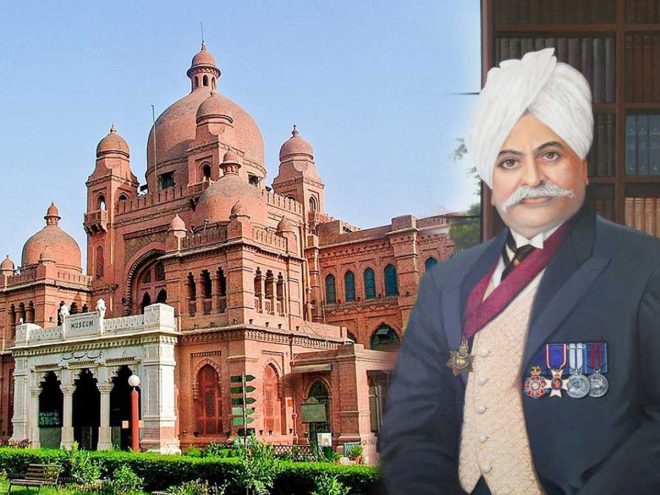
The treasures that our Baalwala brings in his videos are in keeping with the multicultural spirit of Lahore in which he traces the stories of the pioneers of varied religions who peopled Lahore and made it the wondrous place that it is. He traces the last living Mughal princess-poet, who lives in a 400-year haveli and lets no one enter it, but speaks to him from her door and offers sweets and chocolates to all gathered at the door. He revisits remnants of the glorious Sikh Raj, including the mosque that the Maharaja built for his love Moran, remembered as the dancing girl of Lahore, and the ruins of the Dhian Singh Haveli. He talks about the culture of the Parsi population and clears the various misconceptions that surround it. He pays homage to Sir Ganga Ram, the architect of Modern Lahore who built the famous hospital, designed and built the famous General Post Office of Lahore, the Lahore Museum, the famous Mayo College of Art and much more.
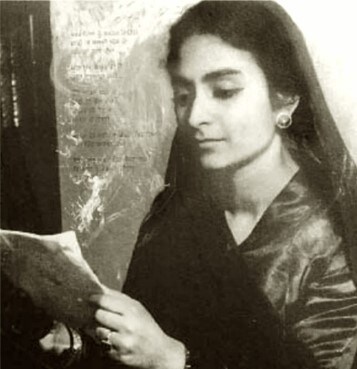
He visits the once abodes of Alama Iqbal when he was a student, the place where Mohammad Rafi worked in the salon of his brother before becoming the legendary singer and traces the homes of late Bollywood actors like Om Prakash and Pran. Interestingly, plaques by the city committee still mark the places with names of those who once lived there. There are times when the Baalwala travels out to Peshawar to see Prithviraj Kapoor’s ancestral haveli in Peshawar or Gulzar’s Dena in Jhelum district. There is no stopping him and he creates docu-dramas to remember Princess Bamba daughter of the exiled Sikh prince Dalip Singh and remember the poet Amrita Pritam who came of age in Lahore’s Anarkali.
Hopefully, one will meet him one day in the “androon (walled)” city of Lahore and share some of the famed Lahori savouries with him. Until then, one bows before his aim of rediscovering Lahore is to draw the attention of investors and heritage lovers to invest in converting the dying material culture of the city into Museums. His dream is: “Let our children be proud of their history and heritage: let them own mosques, temples, shrines, Gurdwaras and churches equally.”


