
 E-Paper



Ladakh tourist footfall up 60% in Sept as off-season travel surges
High-altitude safaris, expanded air and road connectivity, and cultural festivals drive a 65% rise in January–September arrivals, already outpacing total 2025 figures.

 Prefer HTon Google


Ladakh recorded a 60.6% year-on-year surge in tourist footfall in September 2026, welcoming 55,582 visitors compared to 34,610 during the same month last year.
Driven by off-season initiatives, overall tourist arrivals in the first nine months reached 4,60,667—a 65.38% increase from the 2,78,599 visitors logged between January and September 2025. The cumulative total has already surpassed the 3,35,872 arrivals recorded across all 12 months of 2025 by 37.16%, with a quarter of the year still remaining.
Growth spanned both domestic and international travel segments. Between January and September 2026, domestic arrivals grew 38.54% to 4,20,927 (up from 3,03,838 in the corresponding nine-month period of 2025), while foreign tourist visits increased 24.06% to 39,740 (up from 32,034 in 2025). For September alone, domestic visits rose to 49,188 from 29,888 in September 2025, while international visits grew to 6,394 from 4,722.
Lieutenant governor VK Saxena attributed the sustained growth to improved regional air and all-weather road connectivity, alongside novel attractions such as high-altitude lilium flower fields and India’s first high-altitude wildlife safari.
Saxena cited the importance of promoting festivals and events to extend tourism beyond the traditional peak summer season. The administration’s objective is to encourage travel during off-season periods, diversifying the tourism economy and creating sustained livelihood opportunities for local residents, he said.
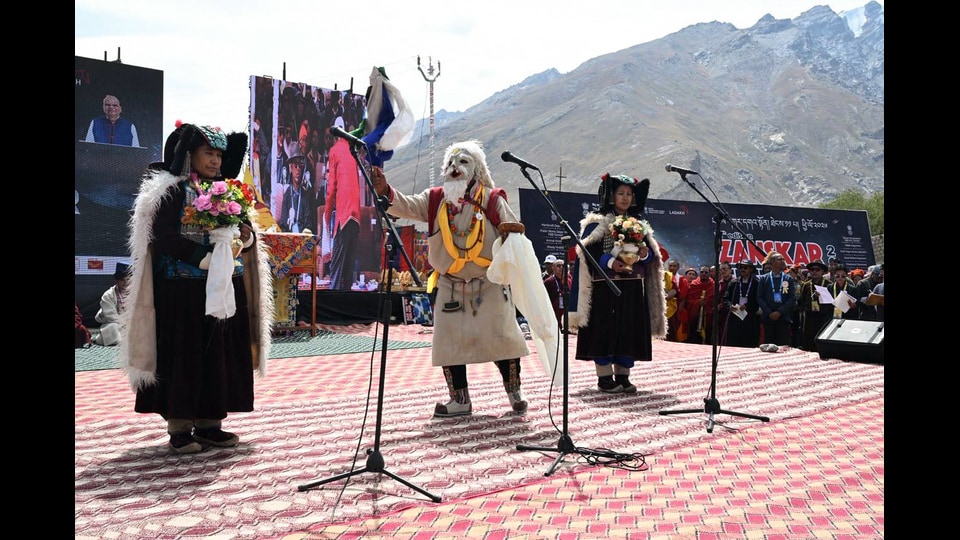
He said the focus extends beyond increasing visitor numbers to ensuring growth translates into tangible community benefits through events like the Ladakh Marathon, Ladakh Bike Week, and the Zanskar Festival to distribute footfall throughout the year.
However, the rapid escalation in visitor numbers presents ecological considerations for the high-altitude region. As tourist numbers increase during traditionally quiet months, local stakeholders call for the need for robust infrastructure management to handle waste, conserve water, and regulate visitor density across fragile ecosystems like Pangong Tso and the Nubra Valley.


