
 E-Paper



Ludhiana: Faceless RTO rollout has added to our troubles, say transporters
Transporters in Ludhiana criticize Punjab's faceless RTO system for complicating procedures, causing delays, and increasing costs instead of easing processes.


Nearly a month after the Punjab government introduced a faceless system for several Regional Transport Office (RTO) services, transporters and vehicle owners in Ludhiana say the move has complicated routine procedures instead of easing them. Services such as obtaining vehicle permits, applying for international driving permits (IDPs) and seeking corrections in documents, which are now routed through seva kendras, have reportedly caused delays and confusion.
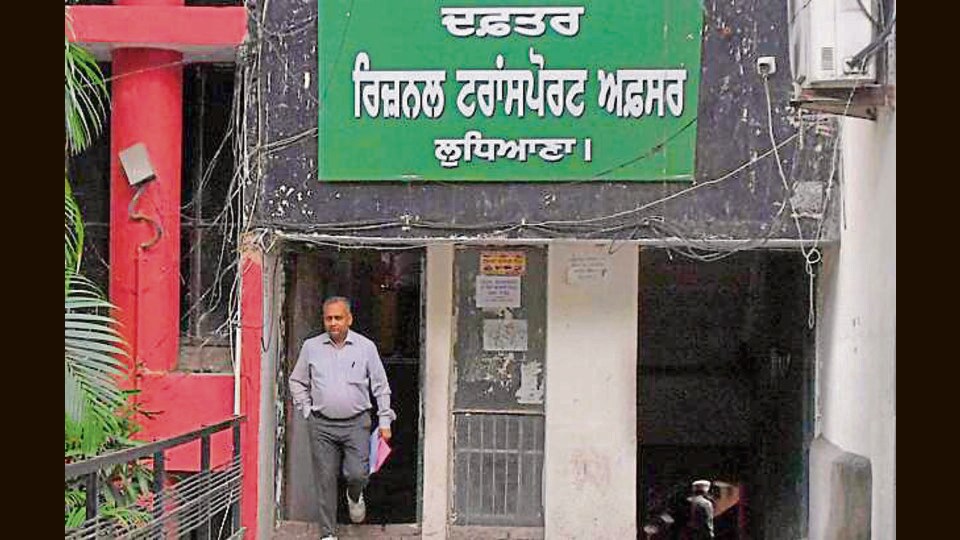
On October 29, Punjab chief minister Bhagwant Mann and Aam Aadmi Party (AAP) national convenor Arvind Kejriwal launched 56 key services related to driving licences (DL) and registration certificates (RC) in a fully faceless mode. The initiative allows residents to access these services through seva kendras or via the 1076 helpline, eliminating the need to visit RTO offices in a bid to reduce corruption and bureaucracy.
However, transporters say the system is failing to deliver on its promise.
Darshan Singh, president of the Ludhiana Goods Transport Association, said, “The faceless RTO system was introduced for convenience, but we are facing more difficulties than ease. It has been days since I am struggling to acquire vehicle permits for my commercial vehicles, which are necessary for interstate travel. My vehicles are standing idle for weeks, causing losses, all because the system is not functioning properly.”
He added that the system needs changes for better implementation as applicants face increasing hassles.
Jagdish Jassewal, press secretary of the association, said, “Since transport services have shifted to seva kendras, it has become difficult to get work done because operators there are not trained enough to handle the intricacies of transport services.”
“Except for the seva kendra at the mini secretariat, no other centre in the city has a designated window for RTO-related work. Whenever we visit Seva Kendras, staff are already occupied with multiple government services and usually ask us to apply online. This leaves us no choice but to depend on agents,” Jassewal added.
He also highlighted the rising costs for applicants.
“We need approval from RTO officials before applying for an IDP at Seva Kendras. Earlier, the licence charge was ₹1,000, but now we have to pay an additional ₹1,200 just for printing the permit, which is burdensome for many drivers. On top of that, seva kendras charge their own facilitation fee for every service, so the total expense has gone up,” Jassewal added.
A senior RTO official, requesting anonymity, said that despite faceless services, the backend system remains unchanged.
“There is a single website named ‘parivahan’ for the entire country. In Punjab, it is ‘sarathi parivahan’”, where these services were already available. Anyone can apply online for DLs, RCs and other documents,” the official said.
He clarified that seva kendra operators only fill and submit applications in return for facilitation charges.
“After submission, documents are sent to RTO officials for verification and approval. The problem arises because people assume seva kendras can complete the entire process instantly, but most work still requires RTO-level clearance,” he added.
Assistant transport officer (ATO) Deepak Thakur said, “There is no need for prior approval before applying for an IDP at seva kendras.
However, applicants must visit the RTO office to get the permit printed, as it requires stamping with the national emblem.”


