
 E-Paper



Ludhiana: Over 500 calls flooded control room during Indo-Pak tensions
To address potential critical situations, the administration has made comprehensive arrangements for essential commodities, including food grains, diesel, medicines, and necessary equipment like search and rescue tools, basic medical kits, fire-fighting apparatus, and public announcement systems


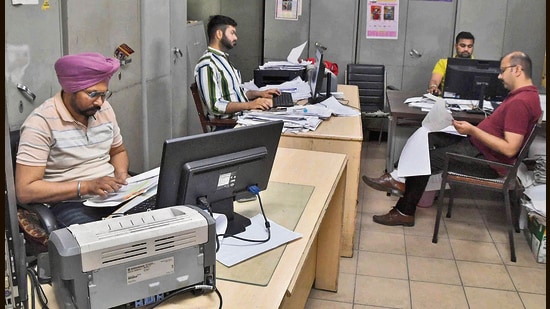
In response to escalating tensions between India and Pakistan, the Ludhiana district administration has intensified its emergency preparedness measures to ensure the safety and well-being of residents. A control room established at the District Administration Complex received over 500 calls, with the majority concerning safety concerns such as the advisability of venturing outdoors and adherence to blackout protocols.
To address potential critical situations, the administration has made comprehensive arrangements for essential commodities, including food grains, diesel, medicines, and necessary equipment like search and rescue tools, basic medical kits, fire-fighting apparatus, and public announcement systems. These provisions aim to ensure uninterrupted access to necessities during emergencies.
Deputy commissioner (DC) Himanshu Jain stated that a coordinated effort involving various departments has been initiated, with officials designated as nodal officers for specific duties. These responsibilities encompass control room operations, coordination with PSPCL and police following air raid signals, identification of tall buildings and vulnerable populations, and management of essential item stocks and first aid kits.
He further added that control rooms have been established at key locations, including Verka milk plant, and offices of GMDIC, PSPCL, municipal corporation (MC), Railways, civil surgeon, district fire officer, NDRF, police commissioner, Jagraon SSP, Khanna SSP, and all sub-divisional offices. Officials are on round-the-clock duty to manage these operations effectively.
Recognising the importance of reaching rural and remote areas, the administration has implemented a multi-pronged communication strategy. Gram panchayats, village headmen, Anganwadi workers, and school staff are mobilized to distribute advisories, organise shelters, and identify vulnerable individuals. Loudspeakers in villages, All India Radio broadcasts, and activated toll-free numbers are utilised to disseminate information.
Local volunteers, health workers, civil defence personnel, and police are mapped to assist with evacuation and provide essential services. Pre-identified safe zones like schools and community centres are designated as relief camps, with NGOs engaged to deliver emergency relief kits and psychological counselling.


