
 E-Paper



Mismatch in data hindering Apaar registration: Educators
Inaccuracies in data on birth certificates and Aadhaar cards have been causing delays, the educators say

 Prefer HTon Google


Schools in Ludhiana are grappling with challenges in implementing the Automated Permanent Academic Account Registry (Apaar), a government initiative aimed at assigning unique 12-digit IDs to students. Despite the government’s statement that the IDs are optional, schools are under increasing pressure to ensure every student is registered for the ‘One Nation, One Student ID’ programme, launched to align with the New Education Policy and National Digital Education Architecture.
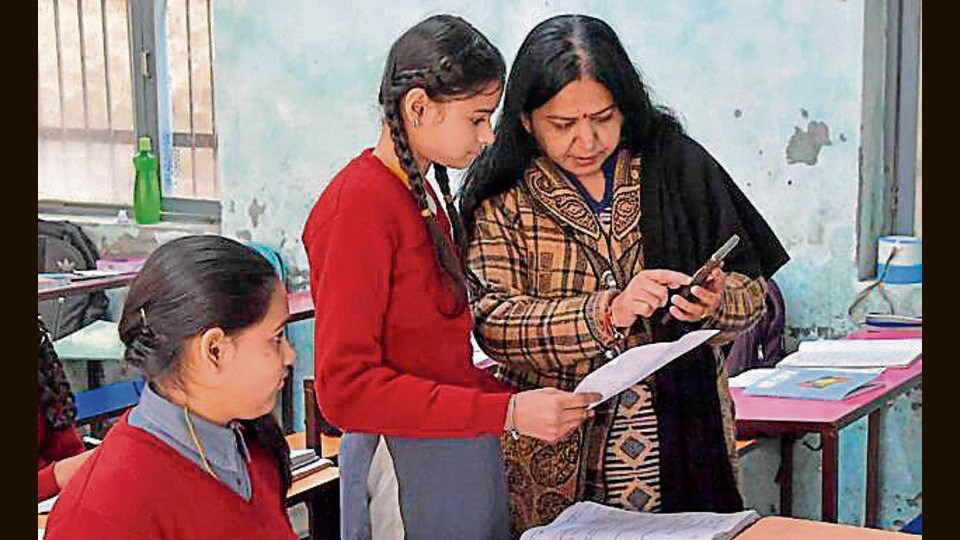
The Apaar initiative aims to streamline academic records and support students’ educational progress, but educators have highlighted multiple obstacles in the registration process. One of the key challenges is the mismatch of data between students’ birth certificates and Aadhaar cards, a requirement for creating Apaar IDs.
“A significant number of students don’t have Aadhaar cards, and teachers are expected to assist with the application process. However, without parental consent, which is mandatory, we cannot proceed with registering Apaar IDs,” said Davinder Singh Sidhu, district vice-president of the Democratic Teachers’ Front (DTF).
The lack of Aadhaar cards among students is causing delays, adding to the administrative burden on teachers.
For families of migrant workers, discrepancies in Aadhaar addresses have further complicated the process.
“Children of migrant workers often have Aadhaar cards with addresses that don’t match their parents’. The children’s cards show the rental address, while the parents’ cards reflect their native state,” said JP Bhatt, general secretary of the Joint Action Front, Punjab. This mismatch has become another hurdle for teachers, who are already struggling with the growing demands of the initiative.
Additionally, discrepancies in birthdates between school records and Aadhaar cards have added to the confusion.
A head teacher from a government primary school said: “Students are admitted based on their birth certificates, but we often discover that the birthdates on their Aadhaar cards are different, which further complicates the process.”
Also, as the final exams approach, educators are increasingly frustrated with the timing of the Apaar implementation.
“This process should have been initiated at the start of the academic session. Now, with exams near, our focus should be on teaching, not administrative tasks,” said Dharamjeet Singh Dhillon, state finance secretary of the Lecturer Cadre Union.
Despite these challenges, district education officer (elementary) Ravinder Kaur shared that 40% of Apaar IDs for primary government school students and 18% for private elementary schools have been generated so far in the district.
“This initiative is vital for maintaining students’ academic records and preventing fraud. We are counselling parents to clear their doubts,” she said.
However, the progress for secondary schools remains unclear. Repeated calls to the district education officer (secondary), Dimple Madan, went unanswered.
Educators are urging the government to address these issues by organising workshops for teachers and counselling parents.


